
Why does your Phalaenopsis look totally fine in October and then start dropping buds by December?
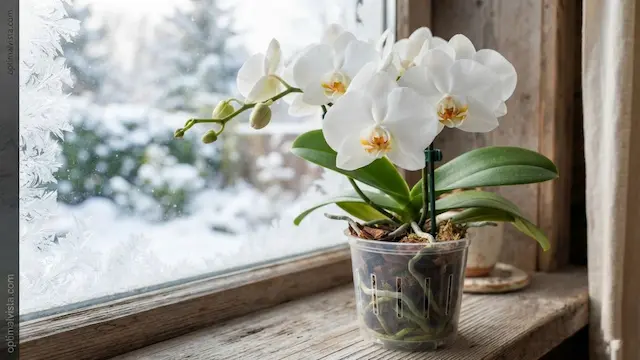
Most people blame “the cold,” but it’s usually the small stuff watering on the same schedule you used all summer, dry air from the furnace, or a window that’s colder than you think once the sun goes down.
Good phalaenopsis orchid winter care isn’t complicated once you know which five or six things actually matter, and I’m going to walk through all of them.
Why Winter Changes Everything for This Plant
Phalaenopsis (moth orchids) come from warm, humid forests in Southeast Asia, not from anyone’s living room in January.
Indoors, four things shift at once: less daylight, drier air from your heating system, cooler drafts near windows, and much slower water uptake. I lost two orchids my first winter by watering on the same schedule from summer, straight through into December.
Adjust for these four factors and reblooming gets a lot more consistent, year after year. If you’ve been searching for how to care for Phalaenopsis orchid in winter without losing another one, these are the areas that actually move the needle.
Phalaenopsis Orchid Winter Care: Getting the Watering Schedule Right
- Summer watering (weekly) doesn’t work in winter stretch it to 10 to 14 days.
- Check the medium, not the calendar: bark should look dry and roots should look silver-grey.
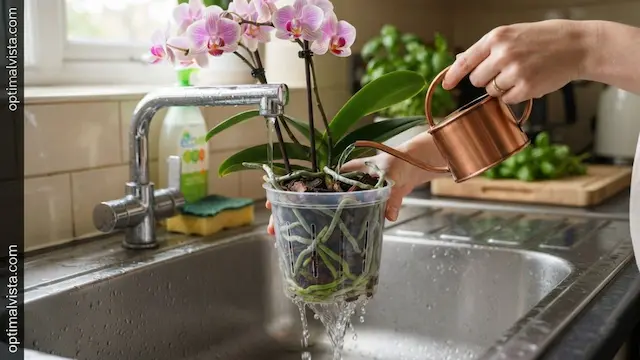
- Water thoroughly with roughly 1 cup at the sink, then let it drain completely never let the pot sit in standing water.
- Skip the “three ice cubes a week” trick. Missouri Botanical Garden’s growing guide is blunt about this: Phalaenopsis roots are shocked by cold water and ice simply doesn’t deliver enough moisture (source).
Bark, sphagnum moss, and semi-hydro setups all dry at different speeds, so honestly, your finger poked an inch into the mix tells you more than any calendar will.
Signs you’re overwatering:
- Mushy, brown, or hollow-feeling roots.
- Yellowing leaves and a sour smell coming from the pot.
Signs you’re underwatering:
- Wrinkled or floppy leaves.
- Roots turning papery, dry, and overly silver.
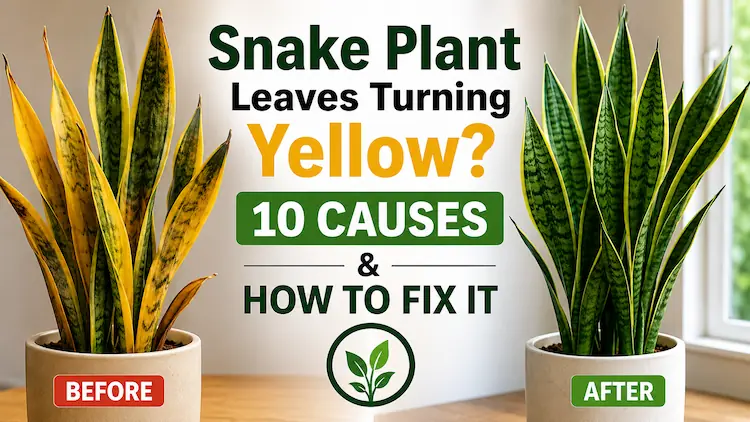
If you’re also unsure about how often to water your snake plant in winter, the same check-don’t-guess rule applies there too.
Temperature: The Number Beginners Get Wrong
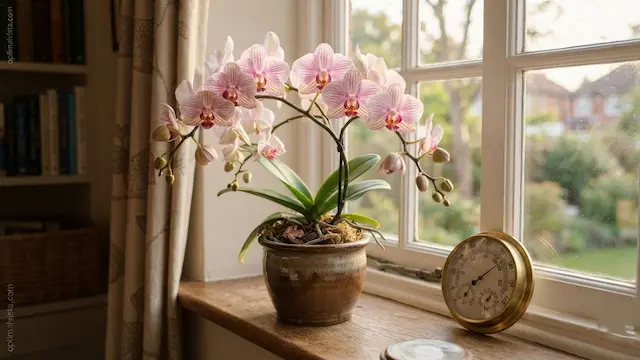
Phalaenopsis want daytime temps around 72°F to 78°F and nighttime lows no colder than 65°F. Anything under 60°F for more than a night or two risks bud blast, where buds dry up before they even open.
Keep the pot at least 1 to 2 feet away from window glass and off any sill that gets properly cold overnight.
Light Needs During Short Winter Days
An east-facing window works best. If natural light is thin where you live, a simple LED grow light set 12 to 18 inches above the plant, run 12 hours on and 12 off, makes a real difference.
Rotate the pot a quarter turn every week so growth doesn’t lean toward one side.
Humidity: Where Winter Care for Phalaenopsis Orchids Falls Apart
Furnace heat can drop indoor humidity to 20-30%, and these plants want 40-60%. A few things that actually work:
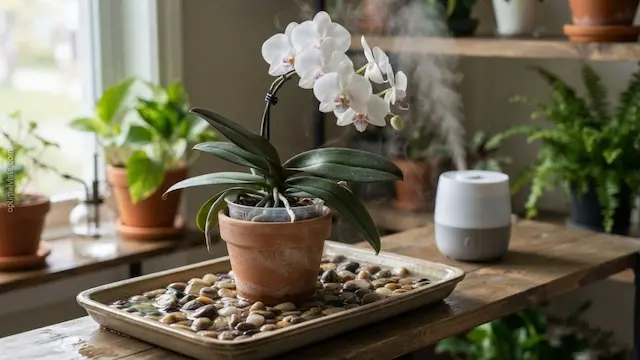
- A pebble-filled humidity tray placed under (not touching) the pot.
- A small humidifier even a 1-gallon tank refilled twice a week helps.
- Grouping a few plants together to build a mini humid pocket the same trick that works for peace lily winter care too.
- Keeping it near a bathroom with a window, since daily showers naturally raise humidity.
One thing that trips people up: misting the leaves and crown at night is a bad idea, because standing water plus cool air invites fungal rot. Misting exposed aerial roots once in a while is fine it’s the leaves you want to keep dry after dark.
Fertilizing Less, Not More
Growth slows way down in winter, so cut fertilizer to quarter strength every 3-4 weeks, or skip it entirely if the plant isn’t actively growing.
Flush the pot with plain water once a month to clear salt buildup that white crust on the bark means you’ve been feeding too heavily.
Honestly, this one habit alone fixes half the phalaenopsis winter care questions I hear from other growers. And the same over-feeding trap shows up in the rest of the yard too even something like brewing compost tea with molasses needs to be diluted and used sparingly, or you end up with the same salt buildup problem.
Getting It to Rebloom in Winter
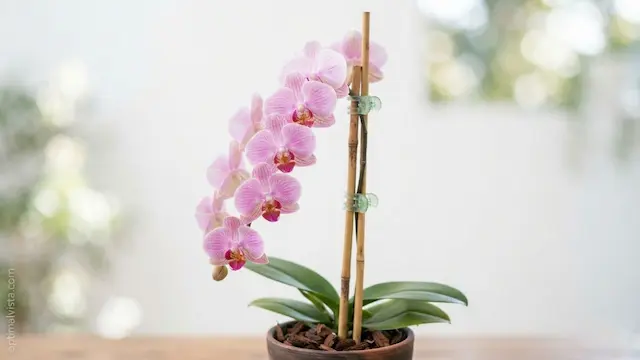
With their bright color and weeks-long blooms, Phalaenopsis are a favorite centerpiece on plenty of tables even between flowering cycles.
Here’s the part most guides gloss over: a nighttime temperature drop of about 10°F below daytime highs, held for two to three weeks, is what actually triggers a new spike.
The American Orchid Society explains this comes down to respiration cooler nights slow the plant’s energy use, leaving more reserves for flowering (source). Once a spike forms, stake it early with a thin bamboo support and soft clip so it grows upright.
After the Flowers Drop: Post-Bloom Care
Nobody talks about this part enough. Once every flower on a spike has faded:
- If the spike is still green, cut it just above a node with clean pruners you may get a second, smaller bloom.
- If the spike has turned yellow or brown, cut it back to the base.
- Toss any diseased trimmings straight in the trash/garbage, not your compost pile.
This is honestly my favorite part of growing orchids indoors. You get a quiet rest period, then a second show a few months later.
Repotting: Wait Unless It’s an Emergency
Winter is not the season for repotting a healthy plant. Only repot now if roots are visibly rotting, the medium has completely broken down, or the orchid is loose and falling out of its pot.
Otherwise, wait for spring, when active growth resumes and roots recover faster the same timing logic that applies when deciding when to repot a ZZ plant.
Bringing Outdoor Orchids Indoors Before the First Frost
If your Phalaenopsis spent summer on a shaded porch or in the backyard, bring it in well before your area’s first frost date. Across USDA Zones 4 through 8, that can mean anywhere from late September through mid-October depending on where you garden.
If you’re a community gardener who parks tropicals outside seasonally, check leaves and the base of the pot closely for pests before anything comes inside.
Watch for Winter Pests and Rot
Low airflow combined with humidity trays can invite mealybugs, scale, and fungal spots. Check under leaves weekly, and if you spot anything, isolate the plant before it spreads to your other houseplants.
Common Winter Problems and Fixes
| Problem | Likely Cause | Fix |
|---|---|---|
| Wrinkled leaves | Underwatering or low humidity | Water thoroughly, raise humidity |
| Buds drying before opening | Sudden temperature swing | Keep conditions stable, avoid drafts |
| Yellow leaves | Overwatering or too much fertilizer | Cut back watering, flush the pot |
| No new growth | Normal winter slowdown | Be patient, it’s seasonal |
Top Beginner Mistakes I See Every Winter
These orchid winter care tips only work if you’re also avoiding the mistakes that undo them:
- Watering on a fixed calendar instead of checking the medium.
- Leaving the orchid on a cold windowsill overnight.
- Misting the crown and leaves late in the day.
- Fertilizing at full strength once growth has already stalled.
- Panicking over slow growth that’s completely normal for the season.
Tools That Make This Easier
A cheap moisture meter and a small hygrometer take the guesswork out of watering and humidity I think they’re worth the $10 to $15 for anyone who’s overwatered an orchid before.
For humidity, a small 1 to 2 gallon cool-mist humidifier with a built-in auto shut-off is the easiest pick you don’t need anything fancy or expensive, just something you’ll actually refill on a schedule.
If you manage other houseplants indoors too, the routine overlaps quite a bit with the pothos winter care, snake plant winter care, and zz plant winter care guides same core idea of checking the plant instead of the calendar.
A Simple Weekly-to-Monthly Routine
- Daily: keep the plant away from drafts, open blinds early for max light.
- Weekly: check moisture before watering, inspect leaves and roots, rotate the pot.
- Every 2 weeks: light fertilizing at reduced strength if it’s actively growing.
- Monthly: flush the pot, check the humidity tray’s water level.
Final Thoughts:
At the end of the day, phalaenopsis orchid winter care comes down to paying attention rather than following a rigid schedule. Water less, watch the temperature, keep humidity up, and don’t panic when growth slows that’s normal. Pick one thing from this guide you haven’t tried yet, whether it’s stretching out watering days or adding a humidity tray, and start there this week. That’s usually all it takes to turn a struggling winter orchid around.
Pingback: Sunflower Winter Care: 9 Proven Tips for Healthier Blooms