
Ever notice how some tomato plants quit in July while the neighbor’s keep loading up until the first frost?
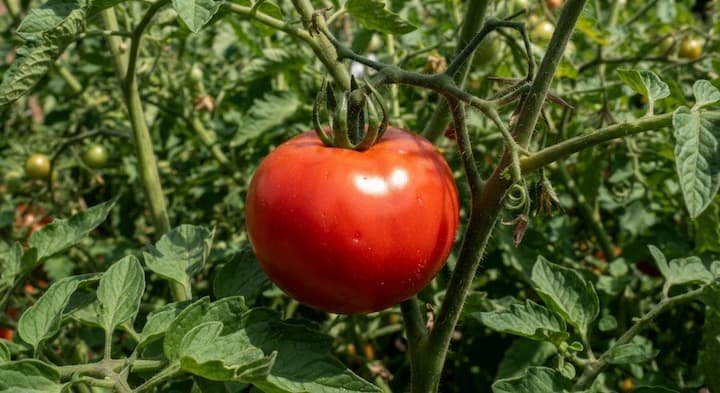
The difference usually comes down to plant type. Once you know how to grow indeterminate tomatoes properly, a single planting can feed your backyard from early summer well into Fall.
The catch is that these plants want more room, stronger support, and steadier attention than most gardeners expect.
What Indeterminate Tomatoes Are and How They Grow
These are vining tomatoes that keep making new stems, flowers, and fruit until frost shuts them down. The payoff of growing indeterminate tomatoes is a long, steady harvest, but it comes with a price.
- Flowers and fruit keep coming all season, right up to frost.
- Plants reach 8 to 10 feet, or sprawl across roughly 8 by 10 feet with no support.
- You pick fresh tomatoes for months instead of one big flush.
- The trade-off is more space, sturdier support, and regular pruning.
Indeterminate vs Determinate vs Semi-Determinate
Read the plant tag or seed packet first. It says indeterminate, determinate, or sometimes just vine or bush. Harvest pattern and height are the big differences.
| Type | Height | Harvest | Support | Best use |
|---|---|---|---|---|
| Determinate | 3 to 4 feet | One 2 to 3 week window | Light | Canning, sauce |
| Semi-determinate | 4 to 5 feet | Longer window | Moderate | Mixed use |
| Indeterminate | 6 to 10+ feet | All season to frost | Strong, early | Fresh eating |
Semi-determinate types like Celebrity land in the middle. For fresh eating all summer, go indeterminate. For one big canning day, determinate wins.
Best Indeterminate Tomato Varieties by Purpose
- Slicers: Brandywine, Cherokee Purple, Ponderosa, Big Beef.
- Cherry: Sun Gold, Supersweet 100, Chocolate Cherry, Sweet Million.
- Paste: San Marzano, which comes in both types, so check the tag.
- Beginners: Better Boy and Big Beef.
- Short season: Early Girl and Stupice.
- Heat tolerant: Cherokee Purple and Sun Gold, which favor hot summers.
- Small yards: compact patio and dwarf indeterminate tomato varieties, but check the mature size.
Pick by climate, fruit size, and taste. I like Sun Gold for snacking straight off the vine. Heirlooms usually win on flavor, while hybrids handle disease better.
Look for codes on the tag: V is verticillium wilt, F is fusarium wilt, N is nematodes, and T is tobacco mosaic. For more taste picks, see these best tasting varieties.
Climate, Zones, and Growing Timeline
Most varieties need 60 to 85 days from transplant to first ripe fruit, and some big beefsteaks take 90 or more. Find your last frost date and USDA zone, then count backward.
Ask a community gardener or check when to plant for your area. Start seeds 6 to 8 weeks before your last frost. Short-season gardeners should pick early varieties, start indoors, and use row covers. In hot zones, plant early and add a second round in July for a Fall crop.
These calendars cover USDA Zones 4, 5, 6, 7 and 8.
- Zones 4 and 5: seed indoors in March, transplant late May to early June.
- Zones 6 and 7: seed indoors late February to March, transplant late April to mid May.
- Zone 8: seed indoors January to February, transplant March to April.
Starting from Seed or Buying Transplants
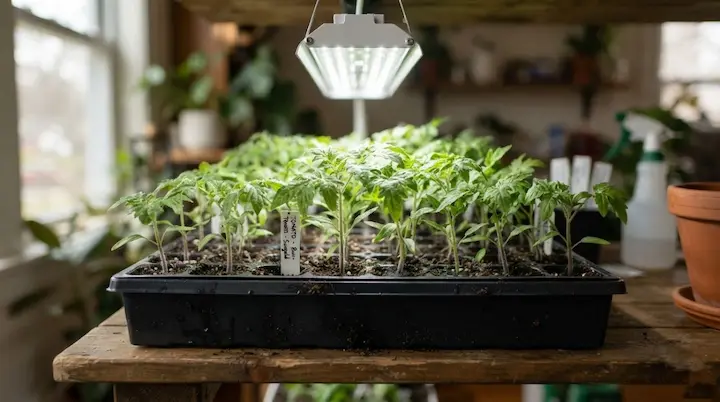
- Seeds: start seeds indoors in a light seed-starting mix under grow lights 14 to 16 hours a day at about 75°F.
- Good transplants are stocky and dark green, with no flowers, no yellow leaves, and no circling roots.
- Garden center plants and homegrown ones both need hardening off over 7 to 10 days, adding a few more hours outdoors each day.
Choosing the Right Spot
Six hours of sun is the floor, and eight hours gets you more fruit. Pick a south-facing backyard spot with room for supports. In hot zones, a little afternoon shade helps. Don’t plant where tomatoes, potatoes, or peppers grew last year.
Soil Preparation and pH
Grab a handful and squeeze: good soil holds its shape, then crumbles when poked. Aim for pH 6.0 to 6.8. I think a cheap test kit is worth it. Add lime to raise pH or sulfur to lower it.
Work in 2 to 4 inches of compost and loosen the soil 12 to 18 inches deep. If you make your own, check your compost ratio, and read these vermicompost tips if you run a worm bin. Use aged manure only, never fresh, though rabbit manure is fine straight from the hutch.
Clay needs compost and coarse sand to open up, while sandy soil needs compost to hold water. Raised beds warm faster in spring.
When to Transplant: Soil and Air Temperature
Wait until frost is over, nights stay above 50°F to 55°F, and soil hits 60°F. Cold snap coming?
Cover plants with row covers. Wall-of-water protectors let you plant a couple of weeks earlier. Transplant on a cloudy day or in the evening to cut stress.
How to Grow Indeterminate Tomatoes: Planting Deep, Step by Step
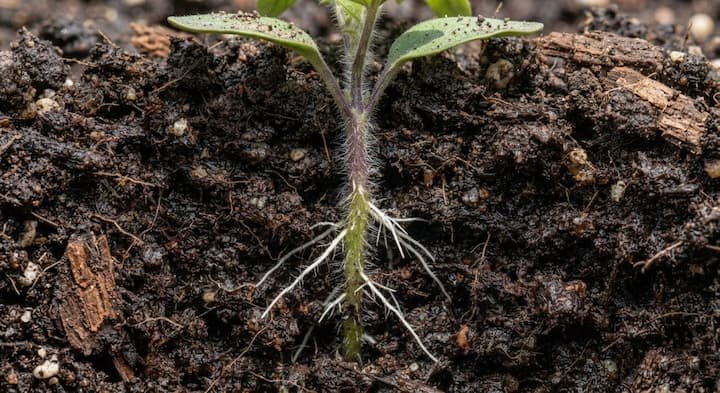
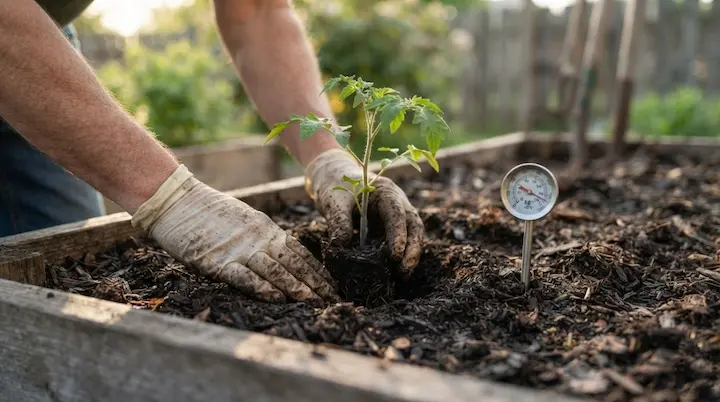
- Dig a hole deep enough to bury two-thirds of the stem, or up to the first true leaves.
- Or dig a trench and lay the plant sideways so roots form along the stem.
- Strip the lower leaves that will be buried.
- Mix in a little starter fertilizer, backfill, and water well.
- Shade the plant for a few days to prevent transplant shock.
Leggy seedlings are perfect for this. Lay them in a trench and let the long stem grow roots.
Spacing
Advice ranges from 18 to 24 inches up to 2 to 3 feet, and each fits a different setup. Staked single-stem plants can sit 18 to 24 inches apart. Plants on cages or cattle panels need 24 inches or more, and sprawling ones need 3 feet.
Keep rows 3 to 4 feet apart. Crowding traps moisture, invites disease, and tangles the vines.
Best Support Systems for Vining Tomatoes
| Method | Best for | Notes |
|---|---|---|
| Stakes, 6 to 8 feet | Small gardens | Cheap, needs hard pruning |
| Cattle panel | Long rows | Very sturdy, needs T-posts |
| Florida weave | Many plants | Twine every 12 inches as plants grow |
| String trellis | Tall or greenhouse plants | Lower and lean as they climb |
| Concrete remesh cage | Wide sprawl | Holds heavy fruit clusters |
| Towers and arbors | Decorative beds | Shade for crops underneath |
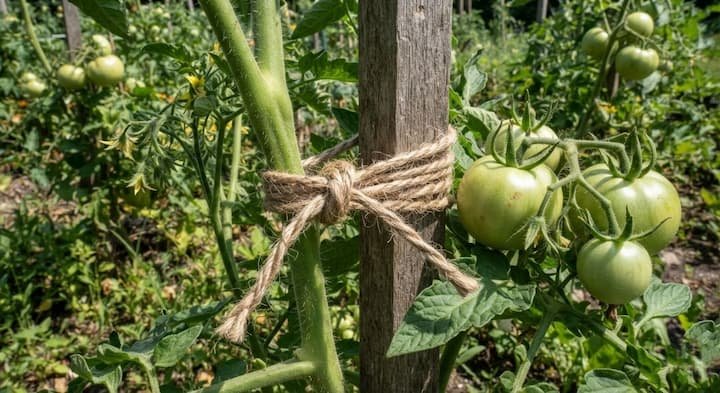
- Install supports at planting, not later.
- Tie with jute or soft ties every 12 to 18 inches.
- Check ties after strong wind.
In my experience, store-bought round cages are too short and narrow for 8-foot vines and tip over by July. Here is how to build a trellis yourself.
Watering
Give 1 to 2 inches of water a week, soaked deep rather than sprinkled daily. Indeterminate tomato plants drink more in July heat, so see how often to water for a schedule.
Water in the morning or overnight, at the base, with drip or a soaker hose. In hot weather, water 2 to 3 times a week, and poke a finger 2 inches down to check first. Mulch 2 to 3 inches deep with straw. Too much water means yellow leaves and soggy soil, while too little means curled leaves that wilt at midday. In dry climates, overhead watering overnight is fine.
Feeding Schedule
The three numbers on a fertilizer bag are N-P-K: nitrogen for leaves, phosphorus for roots and flowers, and potassium for overall fruit quality.
At planting, mix in a balanced or phosphorus-rich starter. After the first fruit sets, switch to more phosphorus and potassium. Organic options are compost tea, fish emulsion, or granular tomato fertilizer every 2 to 4 weeks.
Too much nitrogen gives big leaves and few tomatoes. Epsom salt covers magnesium, and steady watering helps calcium. Rich compost soil may need no extra feeding.
Pruning Suckers and Leaves
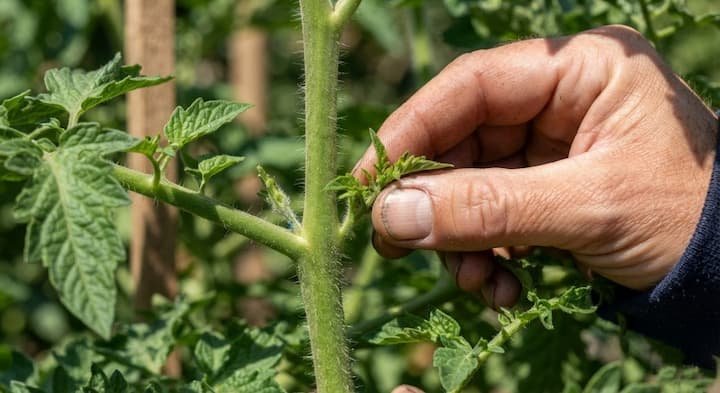
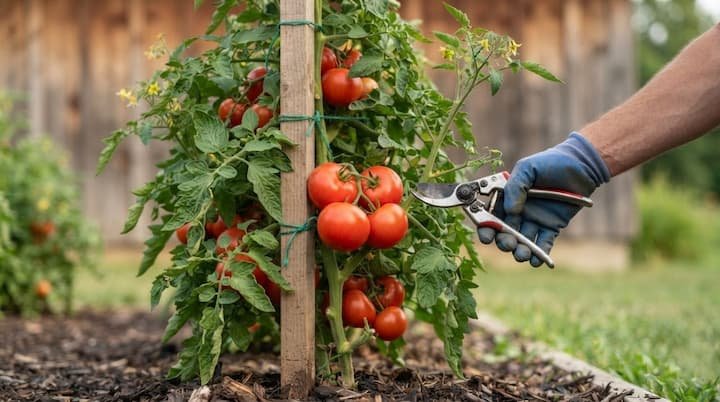
Suckers are the small shoots that grow in the angle between the main stem and a branch. I pinch suckers every weekend while they’re 2 to 4 inches long. Clean pruners handle the bigger ones.
Single stem gives the biggest fruit, two stems give more yield, and minimal pruning (just lower leaves) is easiest. Remove leaves touching the soil or below the first fruit cluster, but leave plenty above, since a stripped plant sunscalds and slows down.
Wipe pruners with rubbing alcohol between plants. Humid climates need heavier pruning for airflow, and dry ones need less. Stick a sucker in water to root a free plant.
Late-Season Care and Topping
About 4 weeks before your first frost, cut the growing tip so the plant puts its energy into ripening. Pinch off new flowers, since they won’t mature in time. When the forecast hits 32°F, cover plants or pick fruit showing color.
Green tomatoes with a blush finish indoors in a paper bag with a banana.
Pollination, Blossom Drop, and Poor Fruit Set
Tomato flowers pollinate themselves, helped by wind and bees. Fruit won’t set when nights fall below 55°F or stay above 75°F, or when days climb past 90°F, according to North Carolina Cooperative Extension.
- Too much nitrogen builds leaves instead of fruit.
- Tap flower clusters or shake the stakes gently at midday.
- Use shade cloth during heat waves.
Common Pests and Fixes
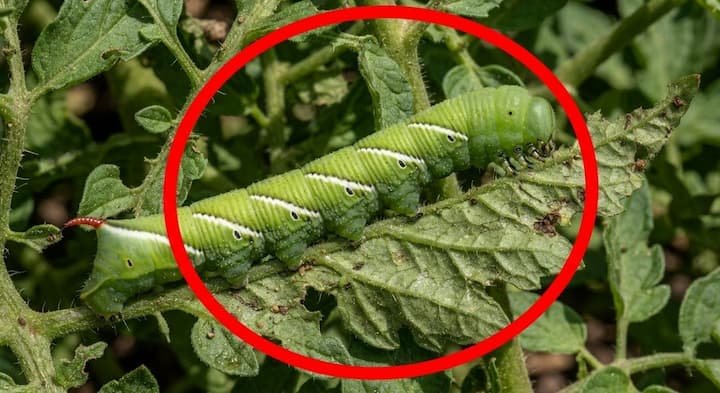
- Hornworms: I pick them off at dusk and drop them in soapy water.
- Aphids: blast them off with a hose.
- Whiteflies: yellow sticky traps or insecticidal soap.
- Spider mites: fine webbing in hot, dry weather, so spray soap and raise humidity.
- Stink bugs, armyworms, and cutworms: hand-pick them, and put collars around seedlings.
- Ladybugs, marigolds, and neem oil keep most pests down.
- Birds and animals: use netting, and pick fruit at first blush.
- Check indeterminate tomato plants every few days, because early catches are easy.
Common Diseases and Fixes
- Early blight: dark rings on lower leaves, so remove them.
- Late blight: water-soaked spots and white mold in damp weather, so pull the plant.
- Septoria leaf spot: small round spots with dark edges, so remove leaves and water at the base.
- Powdery mildew: white dust, so prune for airflow.
- Fusarium and verticillium wilt: yellowing and wilting with no cure, so choose resistant varieties and rotate.
- Resistant varieties: look for V and F on the tag before you buy.
- Copper fungicide at the first sign, following the label.
- Put diseased leaves in the garbage, not the compost.
Fruit and Leaf Problems: Causes and Fixes
- Blossom end rot: a dark sunken spot on the bottom, caused by uneven watering that blocks calcium. Water evenly and mulch.
- Cracking: heavy rain after a dry spell. Water evenly and pick at first blush.
- Sunscald: pale patches after leaves were removed. Leave foliage or add shade cloth.
- Catfacing: scarred fruit after cold nights during flowering. Plant a bit later.
- Yellow leaves: bottom ones are normal aging or too much water, while all-over yellowing means low nitrogen.
- Leaf curl: heat, wind, or overwatering, and usually harmless.
- Leggy plants: low light or too much nitrogen, so give more sun and less feed.
- Flowers but no fruit: check the temperatures in the pollination section.
Growing Indeterminate Tomatoes in Containers
- Pot size: 10 gallons minimum, 15 to 20 gallons ideal
- Use potting mix, not backyard soil
- Add support from day one
- Water daily in heat and feed every 2 weeks
- Pick compact patio types
For more, read growing tomatoes in pots.
Companion Plants and Crop Rotation
Marigolds and basil make good neighbors. Keep fennel and cabbage-family plants away, and skip planting near potatoes since they share blight. Rotate tomatoes to a new bed every 3 years.
Harvesting
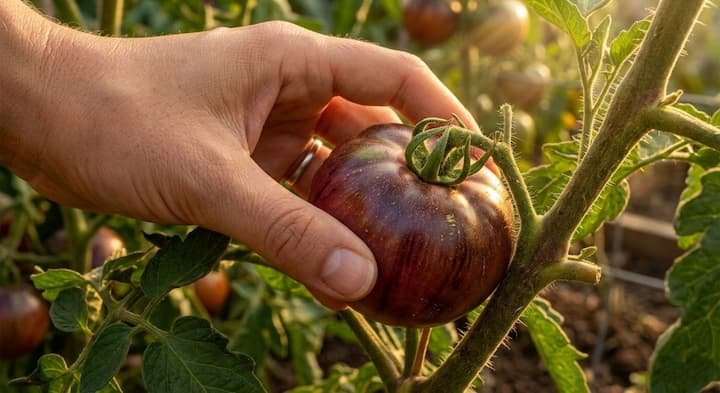
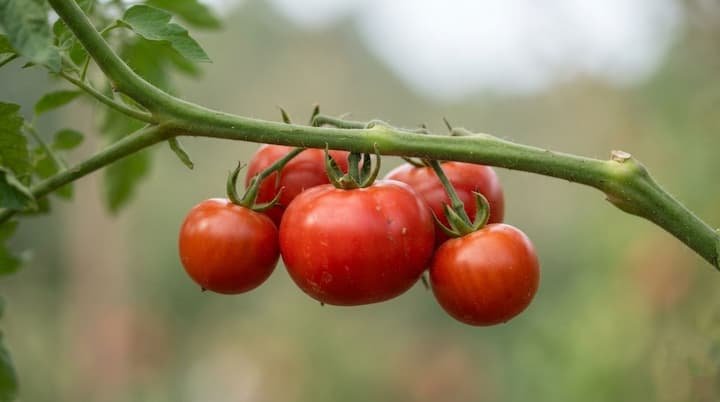
Pick when the color is full, the fruit gives slightly like a tennis ball, and it twists off easily. Twist or snip, leaving the green cap on. Pick every 1 to 2 days.
My rule is to pick at the breaker stage, when color first blushes, if birds or cracking are a problem. A healthy slicer plant gives roughly 10 to 15 pounds, and cherries give more.
Storing and Preserving
Keep tomatoes on the counter, stem side up, and never in the fridge, since cold dulls flavor. Freeze them whole, and the skins slip right off. For canning, add bottled lemon juice or citric acid, and keep the juice from frozen tomatoes.
You can also dehydrate and store airtight, or cook extras down into sauce.
End-of-Season Cleanup and Next Year
Pull plants and clear debris, with diseased plants going in the garbage. Save seeds only from heirlooms, because hybrids don’t come true. Add compost or a cover crop, and plan next year’s rotation.
Final Thoughts:
Now you know how to grow indeterminate tomatoes from seed to the last Fall pick. Give them deep planting, early support, steady water, and regular pruning, and they pay you back for months. Start with one or two varieties this season, learn how they behave in your yard, and add more next year.
Pingback: How to Get Rid of Tomato Hornworms: 7 Fast, Proven Ways