
How does a caterpillar as thick as your thumb strip a whole tomato branch overnight while you stare right at it?
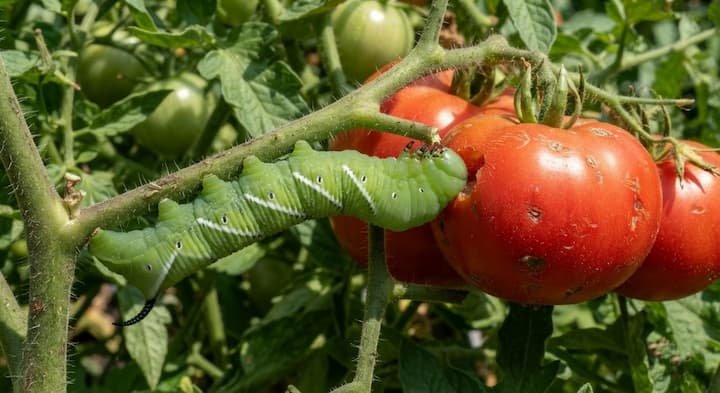
Because it’s the exact color of the leaves. Most gardeners spot the damage first and the culprit last. This guide shows how to get rid of tomato hornworms, from fast backyard fixes to the habits that keep them from coming back.
What Tomato Hornworms Are and How to Spot Them
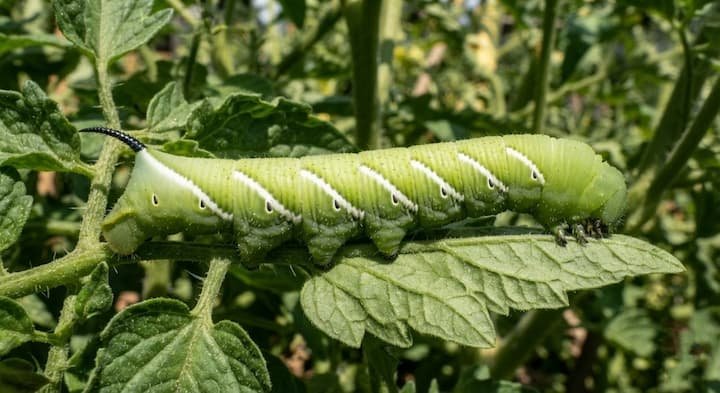
Tomato hornworms are the caterpillars of the five-spotted hawk moth (Manduca quinquemaculata). They grow 3 to 5 inches long and chow down on tomatoes, peppers, eggplant, and potatoes. They don’t bite or sting, and that scary horn on the tail is just for show, so gloves are optional.
Here’s what to look for:
- Bright green body that matches the leaves.
- Eight white V-shaped marks down each side.
- A black horn at the rear.
- A body as thick as a marker once it’s full grown.
I still miss them in daylight about half the time, and I’ve been growing tomatoes for six years. Newly hatched ones look different: tiny, pale yellow-green, with a horn that seems way too long for their body.
Their close cousin, the tobacco hornworm, shows up on tomatoes just as often. It has a red horn and diagonal white stripes instead of V shapes. Both get the same treatment, so don’t sweat telling them apart.
Smaller green caterpillars with no horn are a different pest, usually fruitworms that go straight for the fruit. Hornworm eggs are tiny, round, and pale green, stuck under the leaves. The adult moth is gray-brown with a 4 to 5 inch wingspan, and you’ll see it hovering at dusk like a hummingbird.
The Hornworm Life Cycle
A female moth lays eggs on the underside of leaves, and they hatch in 3 to 5 days. Utah State University Extension reports that the larvae go through 5 to 6 growth stages and reach full size within 3 to 4 weeks, then overwinter as pupae in the ground.
- Egg: 3 to 5 days.
- Caterpillar: about 3 to 4 weeks of nonstop eating.
- Pupa: 4 to 6 inches underground, all winter.
- Moth: comes out in late spring and feeds on nectar at night.
Warm areas can get two rounds in one season, so a quiet July doesn’t mean you’re in the clear.
Tomato Hornworm Damage and Whether Your Plants Recover
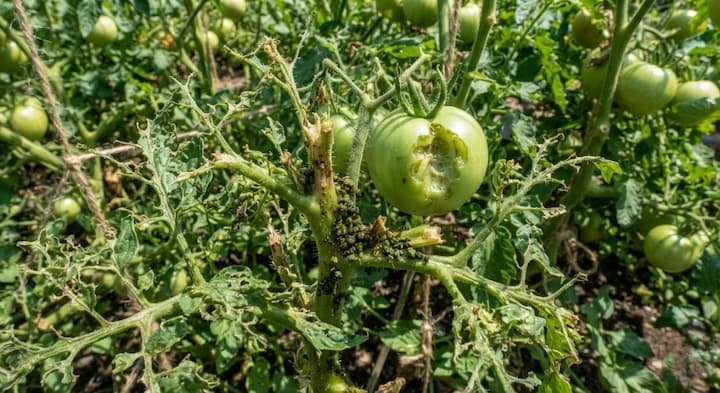
Feeding starts at the top of the plant, so look there first. Hornworms on tomato plants leave ragged holes, bare stems, and gouged green fruit.
- Leaves vanish from the top down.
- Dark green or black droppings (frass) pile up on lower leaves.
- Green tomatoes get chewed spots.
- Stems end up bare.
A plant with leaves left will usually push out new growth once the caterpillars are gone. Tall indeterminate tomatoes bounce back easier because they keep growing all season, while compact plants have less to spare (here’s the determinate vs indeterminate breakdown).
A tomato with a shallow chew mark is fine to eat after you cut the spot out. If the bottom of a fruit looks sunken and leathery, that’s blossom end rot, not hornworms.
How to Find Hornworms Before They Find Your Harvest
Droppings are your map. Find the pellets, look right above them, and you’ll usually spot the caterpillar. They feed hardest at dusk, dawn, and overnight.
My go-to is a cheap UV flashlight: after dark, hornworms glow bright green like they’re neon.
- Check every 2 or 3 days, and once or twice a day when you already have an infestation.
- Flip leaves weekly for pale green eggs, and wipe or squish them before they hatch.
- Scan the top of the plant, the undersides of leaves, and the stems.
- Keep plants open with a sturdy tomato trellis so you can see inside.
Catching tomato hornworm damage early saves most of your harvest.
How to Get Rid of Tomato Hornworms Naturally
Start with the gentlest option and move up only when you need to.
Handpicking and the Cocoon Rule
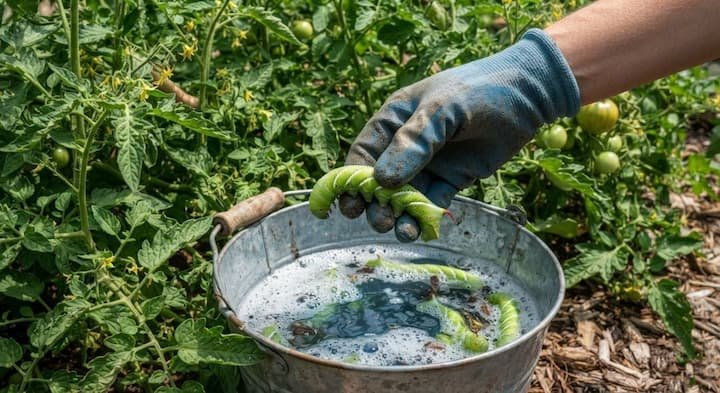
Grab the caterpillar right behind the head and pull. Their feet grip hard, so use steady pressure. Drop each one into a 2-gallon bucket with a few inches of soapy water. Backyard chickens love them as a snack too, though it’s smart to check with your local extension office before feeding them ones that ate nightshade leaves.
If a hornworm has white bumps like grains of rice on its back, leave it alone. Those are braconid wasp cocoons, and the caterpillar has already stopped eating. Let the wasps finish and they’ll go after the next hornworm. If that caterpillar is sitting on a plant you’re protecting, move it to a sacrificial plant at the edge of your yard.
BTK: Bacillus Thuringiensis Kurstaki
Btk is a soil bacterium that only affects caterpillars, so earthworms, birds, and ladybugs are fine. They have to eat it, then they stop feeding within hours and die over the next few days.
It works best on small ones, under 2 inches. Liquid concentrates cover better than dust. Spray the tops and undersides of leaves, and reapply on the label’s schedule and after rain, usually every 5 to 10 days.
I like to spray around 6 p.m. so it’s still fresh when they start feeding at night. Look for Thuricide, Monterey Bt, or Bonide at your local garden center. It’s the gentlest way to kill tomato hornworms around bees, pets, and kids when used as directed.
Spinosad for Bad Infestations
When the caterpillars are big or there are a lot of them, spinosad is the fast fix. Pick an OMRI-listed organic product, mix it per the label (it’s measured per gallon of water), and coat the leaves where they’re feeding.
It works on contact and when eaten, so feeding stops within hours and most die in a day or two. Spinosad is toxic to bees while wet, so spray after sunset and let it dry overnight.
Sunlight breaks it down within a few days, so repeat in 7 to 10 days if moths are still laying. Monterey Garden Insect Spray and Captain Jack’s Deadbug Brew are two spinosad products you’ll find on shelves.
Helpful Bugs and Birds
Good bugs do a lot of the work for free:
- Braconid wasps: attract them with sweet alyssum, yarrow, catmint, chamomile, and dill left to flower.
- Trichogramma wasps: tiny wasps that parasitize hornworm eggs, sold online.
- Lacewings and ladybugs: eat eggs and small larvae.
- Paper wasps: pick off young caterpillars.
- Birds: a bird bath near the garden keeps them hanging around.
Leave the adult moths alone. They sip nectar at night, pollinate flowers, and don’t hurt your plants. Aim at the caterpillars only.
Home Remedies: What Works and What Doesn’t
Plenty of kitchen-cabinet fixes float around. Here’s the honest rundown:
- Soapy water: great for drowning picked caterpillars, weak as a spray.
- Cayenne spray: might push them off the leaves, needs redoing after every rain, and I think it’s more hassle than it’s worth.
- Diatomaceous earth: can hurt tiny larvae, stops working when wet, and harms good bugs too, so wear a mask and use it sparingly.
- Neem oil: slow, and it can hit helpful insects, so treat it as a last resort.
- Epsom salt: feeds magnesium to plants, but it won’t stop a single caterpillar.
- Buried citrus peels: popular claim, no good proof, and the peels belong in the worm bin.
- Bottom line: kitchen sprays rarely kill tomato hornworms on their own.
Which Method Works Best and Why Sprays Fail
| Method | Speed | Best size | Bee risk |
|---|---|---|---|
| Handpicking | Instant | Any size | None |
| Btk | Feeding stops in hours | Under 2 inches | Low |
| Spinosad | Hours | Medium to large | High until dry |
| Wasps and predators | Slow | Eggs and small larvae | None |
If a spray isn’t working, it’s usually one of these:
- The caterpillars are too big, and late growth stages are tough to kill.
- You grabbed a general bug spray that isn’t made for caterpillars.
- You missed the undersides, where small ones hide.
- It went on in hot sun, and Btk breaks down fast.
- Rain washed it off.
- You stopped after one round, new moths kept laying, and hornworms on tomato plants came right back.
Tomato Hornworm Control Starts Before the Eggs Hatch
Stopping the moths is easier than chasing caterpillars.
- Row covers: drape floating row cover over young plants so moths can’t lay eggs. Take it off when flowers open so pollinators can get in, and check underneath first for eggs.
- Companion plants: basil, borage, marigolds, dill, parsley, yarrow, and mustard all get recommended. Basil also bugs thrips and aphids, borage draws bees and helpful wasps, and marigold scent can throw off egg-laying moths. In my experience, basil helps a little, but it’s no force field.
- Trap crop: flowering tobacco at the edge of your yard, 10 feet or more from your tomatoes, pulls moths away.
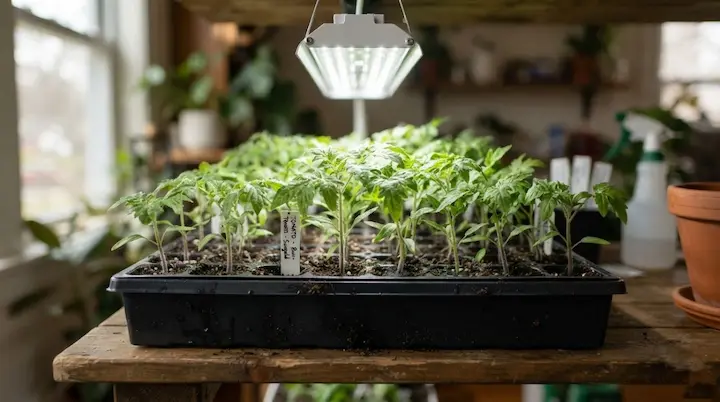
- Transplants: seedlings you start seeds indoors stay egg-free until they move outside, but store-bought plants and swaps can carry eggs, so flip the leaves.
- Crop rotation: move tomatoes to a new spot each year and grow beans, peas, cabbage, or broccoli in the old bed. It cuts down pupae there, but moths fly in from neighbors, so don’t lean on it alone.
Fall Cleanup: Dig Up the Pupae
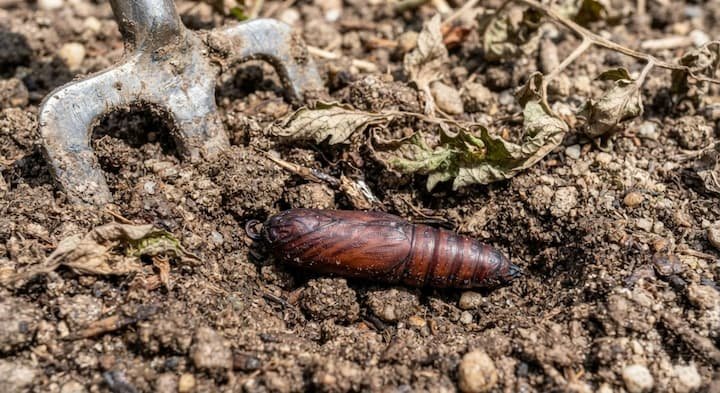
Once frost ends the season, cut the vines with pruners and pull them out. Anything with caterpillars still on it goes in the trash, not the compost pile. Then till or turn the soil 6 to 8 inches deep, since the pupae sit 4 to 6 inches down. Exposed pupae get eaten by birds or die when overnight lows hit 32°F or lower. Do it again in spring before planting.
Tilling gets debated these days, and plenty of no-dig gardeners skip it. I skip tilling in my raised beds and loosen the top 6 inches with a garden fork instead. Backyard chickens scratching the bed in fall help too, since birds go after exposed pupae.
If you’d rather not dig at all, black plastic or a thick layer of cardboard over bare soil in spring blocks moths from emerging. Once the beds are clear, add finished compost, and if you build your own pile, a good compost ratio of greens to browns keeps it from turning slimy.
When to Watch: Hornworm Calendar by USDA Zone
Across USDA Zones 4, 5, 6, 7 and 8, the timing shifts with your climate. Good tomato hornworm control is mostly about showing up the right week. Treat these as rough guides, and check when to plant for your area.
| USDA Zones | Start scouting | Peak risk | Fall cleanup |
|---|---|---|---|
| 4 and 5 | Early July | Mid July to August | Late September |
| 6 and 7 | Mid June | July to August | October |
| 8 | Late May | June to September | Late October to November |
Local weather can move these dates by a couple weeks.
Containers, Raised Beds and Other Crops
Pots and raised beds don’t stop moths. Whether it’s heirloom tomatoes or a hybrid, a moth lays eggs anywhere there’s a leaf, even on a screened porch, since they slip through small gaps.
Peppers, eggplant, and potatoes get hit too, so scout them the same way. None of the tomato varieties you grow is hornworm-proof. If you’re a community gardener, give your neighbors a heads-up when you spot one, because moths travel and one untreated plot feeds the next.
Safety Around Bees, Pets, Kids and Harvest
- Read the label every time, since it sets the waiting time before harvest (Btk usually has none, spinosad does).
- Spray in the evening and let it dry fully before pollinators show up.
- Keep kids and pets out of the area until the spray dries.
- Wash your tomatoes before eating.
- Store products up high, and put empty bottles in the garbage.
Final Thoughts:
Now you know how to get rid of tomato hornworms without losing the whole crop. Walk the rows every couple of days, pick what you can, use Btk on the small ones, and save spinosad for the bad weeks. Then dig up the pupae in fall so next summer starts quieter. Keep that routine going and your plants will make it to harvest.




Pingback: How to Ripen Green Tomatoes: Easy Proven Ways That Work