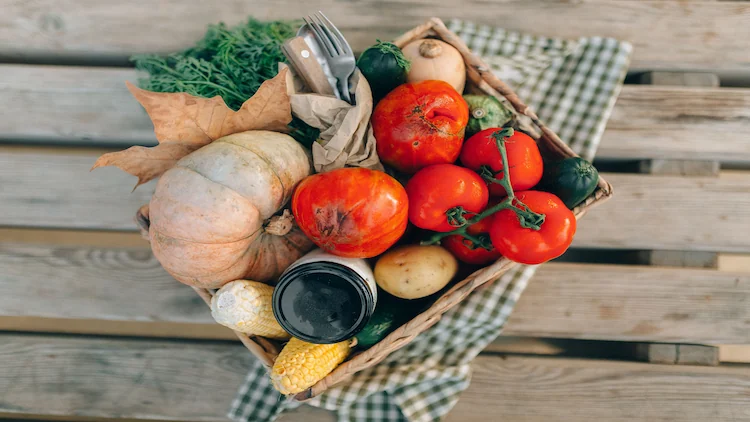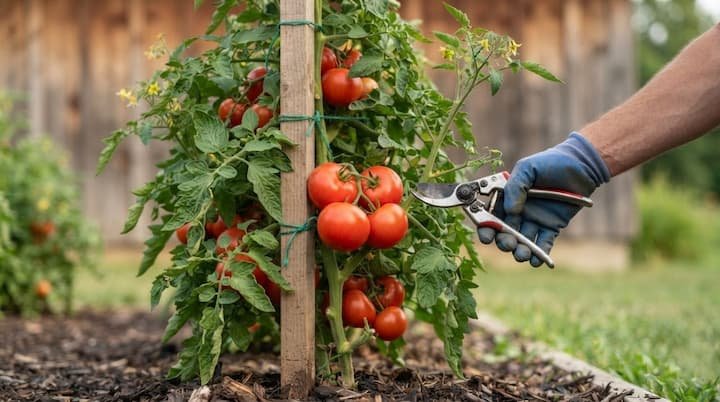
Ever wondered if that perfect tomato on your cutting board could become a whole plant?
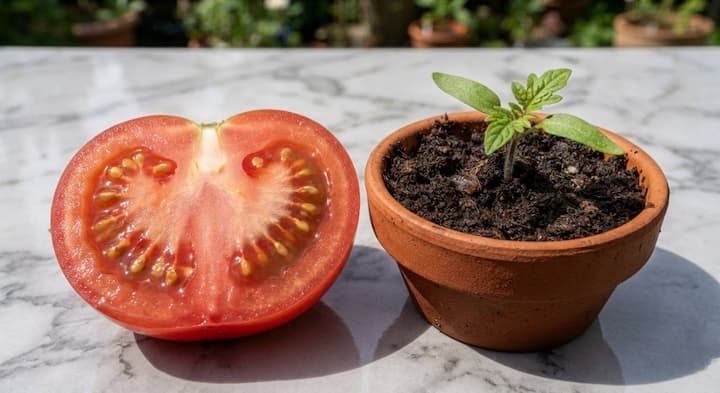
Yes, you can grow tomatoes from store bought tomatoes, but the result depends on which fruit you pick and how you handle the seeds. Some sprout in a week, some never wake up, and the fruit rarely matches what you ate. Here is how to get the best shot.
Why Growing Tomatoes From Supermarket Tomatoes Works at All
Seeds inside a ripe tomato are fully formed and alive. The gel around them just keeps them from sprouting inside the fruit, so once you rinse it off, they wake up.
The catch is how stores handle fruit. Most tomatoes are picked green and ripened with ethylene gas, which can leave the seeds a little young.
Cold is the bigger problem. NC State Extension reports that tomatoes pick up chilling injury after about 2 weeks below 50°F, or after 6 to 8 days at 41°F, and one symptom is browned seed.
A tomato that rode in a cold truck and then sat in your fridge may have weak seeds. Save tomato seeds from store bought tomatoes that never saw a fridge and your odds go up fast.
Hybrid or Heirloom: What You Will Really Get
Most supermarket tomatoes are F1 hybrids, a cross between two parent lines picked for tough skin and even ripening. The seeds grow fine, but the next generation mixes those parent genes. Fruit can come out smaller, lumpier, earlier, later, or less disease resistant.
Hybrid seeds are not sterile, so skip that myth. Heirloom and open-pollinated types come much closer to the parent, which makes heirloom tomatoes the safer pick if you want a repeat of dinner.
Here is what that variation looks like:
- First generation from a store hybrid: high variation, since each plant can differ in size, flavor, and vigor.
- Second generation from your saved seeds: moderate variation, with some plants like the hybrid and others drifting back toward the parents.
- Open-pollinated heirloom: low variation, and the offspring closely match the parent.
Here is how to tell what you bought:
- Look for a variety name on the label or sticker, like Cherokee Purple or Sungold.
- “Heirloom” on the pack is a good sign. “Vine ripe” or “beefsteak” alone usually means hybrid.
- Ask the farmers market seller, since most know their variety.
- Found a flavor you love? Compare it with the best tasting varieties to name it.
Best Store Bought Tomatoes for Seeds
The riper the fruit, the more mature the seed.
| Tomato source | Seed quality | What to expect |
|---|---|---|
| Farmers market, vine ripe | Excellent | Best odds, often open-pollinated |
| Organic heirloom | Very good | Offspring usually match the parent |
| Cherry and grape | Very good | Small fruit ripens more before shipping |
| Roma and plum | Good | Fewer seeds, but solid ones |
| Campari | Fair | Hybrid, so expect a surprise |
| Beefsteak | Fair to poor | Often picked early, ripens unevenly |
| Pre-cut or salad bar | Poor | Old, dried out, chilled |
Organic fruit often spends more time on the vine, which helps, though the label is no promise.
Skip these:
- Rock hard fruit with green shoulders.
- Cracks, bruises, insect damage, or pale sunburned patches.
- Anything chilled for weeks.
- Mushy, overripe fruit that smells fermented or has mold.
- Pre-cut slices.
Got a green one? Leave it on the counter at room temperature until the color is fully red or orange, then use it.
Test Seed Viability Before You Plant
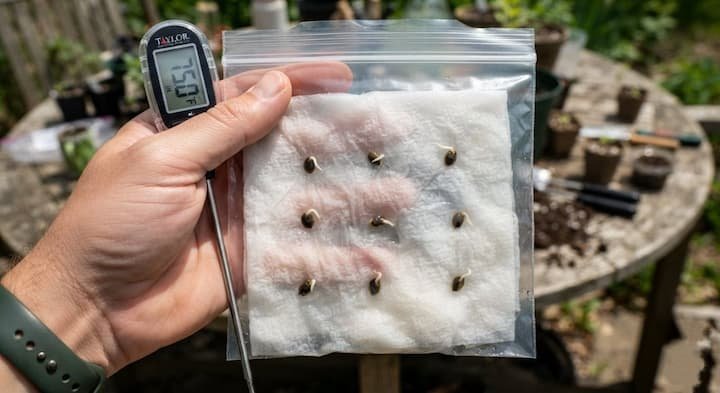
Put 10 seeds on a damp paper towel, slide it into a zip bag, and keep it somewhere around 75°F. Check after 5 to 10 days. Seven or more sprouts out of ten means a healthy batch. Under four, find a riper tomato.
I think the paper towel test is worth the five minutes, since it saves you a whole tray of dead soil. Seeds that float in a glass of water are usually duds too.
Three Planting Methods Side by Side
- Straight from the fruit: scoop seeds with the gel into damp mix. It is fast, but growing tomatoes from supermarket tomatoes this way means wet pulp, mold, and slow sprouting.
- Slice method: lay slices on mix. It works, but you get crowded seedlings and some rot.
- Extract, ferment, dry: more work, cleaner sprouts, and the most control.
- Burying a whole tomato: fruit dropped in compost often sprouts on its own, but you get a crowded clump and rotting pulp.
For anything beyond a quick experiment, extraction wins.
How to Grow Tomatoes From Store Bought Tomatoes, Step by Step
- Pick the ripest fruit you can find.
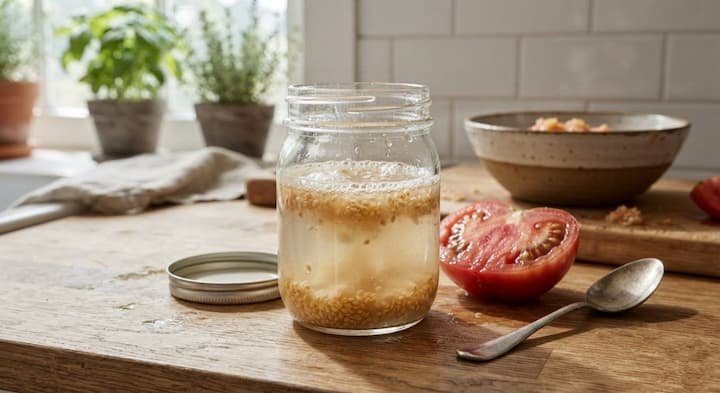
- Cut it open and scoop the seeds and gel into a jar with a splash of water.
- Cover loosely and keep it at 70°F to 75°F for 2 to 3 days, stirring daily. Bubbles and a sour smell mean the gel is gone.
- Rinse under cool water and toss any seeds that float.
- Dry them on a coffee filter, out of direct sun, for a day or two.
I like fermenting because it also cleans the seed coat, but a good rinse works if you are in a hurry. Past 3 days the seeds sour. Skip hot water and bleach, which damage the seed coat.
No bubbles after 48 hours in a cool room? Move the jar somewhere warmer. Fuzzy mold or a rotten smell means dump the batch and start fresh. Rinsed seeds can go straight into mix, while dried seeds keep for later.
Then sow:
- Use sterile seed starting mix, never backyard soil, and plant ¼ inch deep.
- Tomato seeds from store bought tomatoes sprout best at 70°F to 80°F, and a heat mat helps in a cool room.
- Keep the mix damp, not soggy, under a humidity dome until sprouts show in 5 to 14 days.
Plant Seeds From Store Bought Tomatoes With the Slice Method
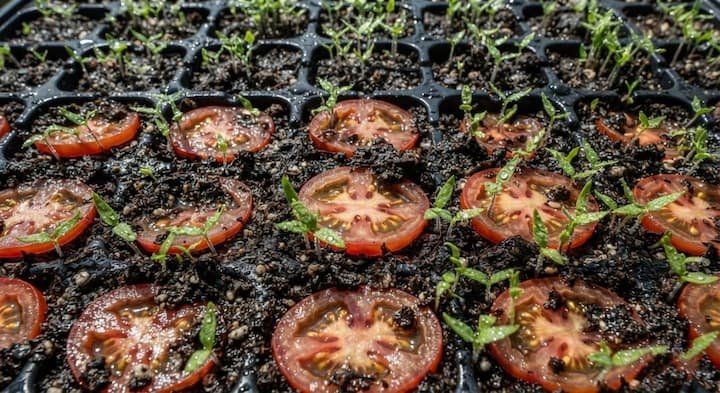
Cut a ripe tomato into ¼ inch slices, or halve cherry types. Lay them flat on moist seed starting mix, cover with ½ inch more mix, mist, and wrap the tray in plastic.
Keep it near 75°F. Pull the wrap when sprouts show, usually in 1 to 2 weeks, then thin hard and move the strongest to cups once they hit 2 inches. The downside is rotting pulp, which invites fungus gnats and damping-off, so go easy on the water.
Drying and Storing Your Seeds
Seeds should feel hard and brittle before storage, because damp seeds mold. A paper envelope in a cardboard box is fine for one season. In humid areas, use a glass jar with a silica gel packet. The fridge keeps seeds viable for several years.
If you smell must or see fuzz, put them in the trash and start over. I always write the date and tomato type on the envelope. Before you plant seeds from store bought tomatoes next spring, make sure they still rattle dry.
Seedling Care, Week by Week
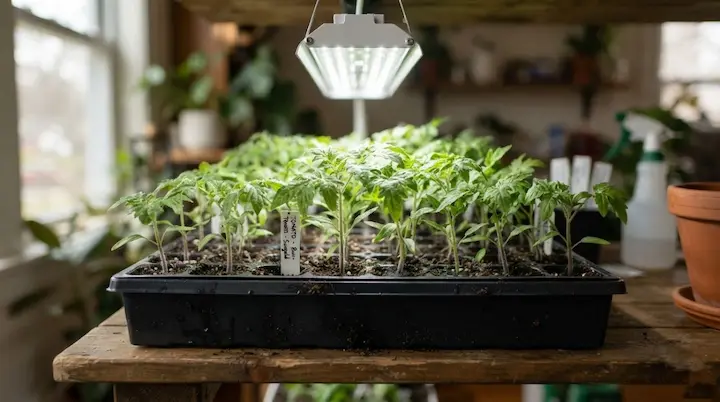
- Light: 12 to 14 hours a day, with a grow light 2 to 4 inches above the leaves. Pale, stretched stems mean more light.
- Temperature: 65°F to 70°F after sprouting.
- Water: from the bottom or with a mist, damp but never soggy.
- Airflow: a small fan on low helps prevent damping-off.
- Thinning: one strong seedling per cell.
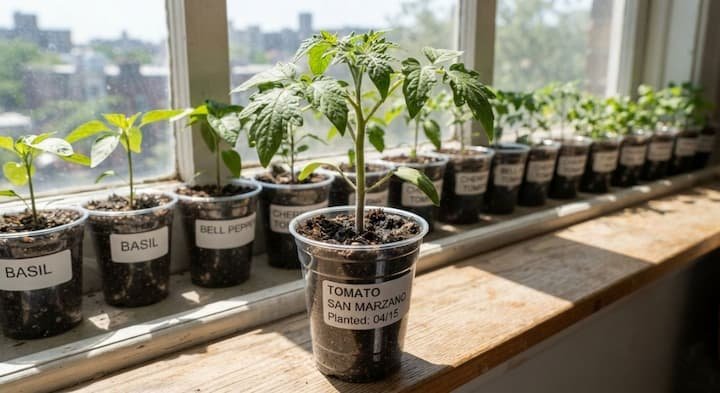
- Potting up: at 2 to 3 true leaves, move to 3 to 4 inch cups.
- Feeding: a half-strength feed once true leaves show, and our tomato fertilizer guide covers what to pick.
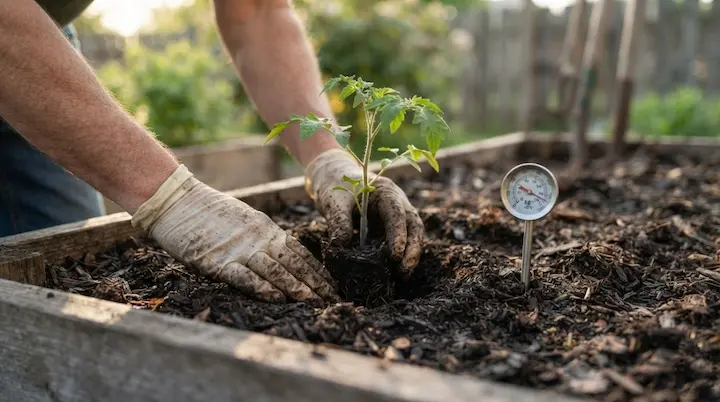
- Hardening off: 7 to 10 days outside, adding a few hours daily. At transplant, bury the stem up to the first leaves.
For a deeper indoor routine, read how to start seeds indoors.
When to Plant by Climate
Start seeds 6 to 8 weeks before your last frost, and move plants out once soil reaches 60°F and nights stay above 50°F. In USDA Zones 4, 5 and 6, that usually means seeds in March or early April and transplants in late May.
USDA Zones 7 and 8 start in early March and plant out by late April. In USDA Zones 9 and 10, tomatoes favor spring and Fall planting, since daytime heat above 90°F stops fruit set.
Running late? A nursery plant beats a seedling started in midsummer, and Fall is usually too late outdoors in cold zones. In warm, humid regions, plant in the cooler season and give leaves airflow, since humidity raises disease risk.
Where soil warms early, you can sow straight into the garden and skip hardening off. Check when to plant for your frost date.
Pots, Spacing and Sun
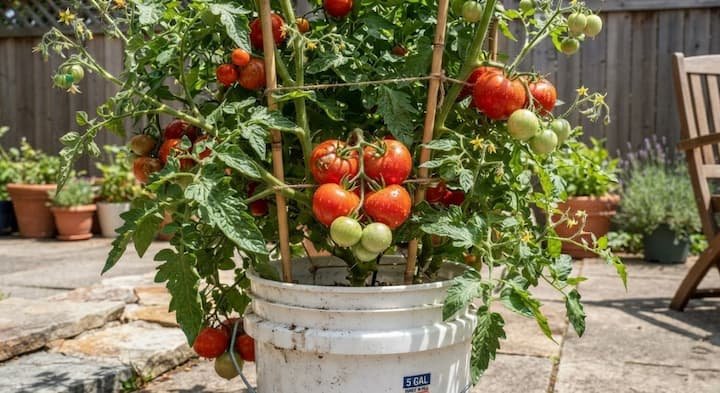
- Pots: one 5 gallon bucket per full-size plant, or a 12 inch pot for cherry and dwarf types. Add drainage holes and use potting mix.
- Backyard beds: space plants 24 inches apart.
- Sun and water: 6 to 8 hours of sun, and water in the morning when the top 1 inch is dry.
- Mulch: add 2 inches once the soil is warm, and see the best mulch options.
- Indoors: a south window plus a grow light, with dwarf varieties. Self-watering pots cut upkeep, and saucers protect floors.
- Balcony: rail planters suit cherry types, but check the railing weight limit first.
In my experience, one plant per 5 gallon pot beats squeezing two in.
Staking When Growth Habit Is a Mystery
You will not know if a plant is determinate or indeterminate until it grows. Bush types stop around 3 to 4 feet and set fruit in one flush, while vines keep climbing past 4 feet.
Put in a cage or tomato trellis early so you never wrench roots later. Hybrid offspring can grow faster or slower than the parent, and some turn leggy and need support sooner. I think a sturdy cage is the easy call when you cannot tell yet.
Trim suckers with clean pruners only on climbers. Renting a plot as a community gardener? Check stake height limits first.
Pollination and Flower Drop
Balconies, indoor setups, and walled yards often lack wind and bees. Tap flower clusters at midday or use a soft brush, and the steps are in hand pollinate tomatoes. Flowers drop when:
- Nights run above 75°F or below 55°F.
- Days climb above 90°F.
- Plants get too much water or too little light.
Realistic Timeline
Going from seed to your first ripe tomato takes most of a season, so plan ahead. The numbers below are averages. Cherry types ripen a bit faster, big beefsteaks take longer, and nights below 55°F slow down every stage.
Match this with your last frost date before you start:
| Stage | Typical time |
|---|---|
| Germination | 5 to 14 days |
| Seedling to transplant size | 5 to 7 weeks |
| Transplant to first flowers | 2 to 4 weeks |
| Flowers to ripe fruit | 45 to 80 days |
| Seed to first harvest | About 4 to 6 months |
How Many Plants and How Much Fruit
One tomato holds dozens of seeds, and a big beefsteak can hold 100 or more, but not all sprout. Keep the 2 or 3 strongest plants and hand extras to neighbors or a community garden.
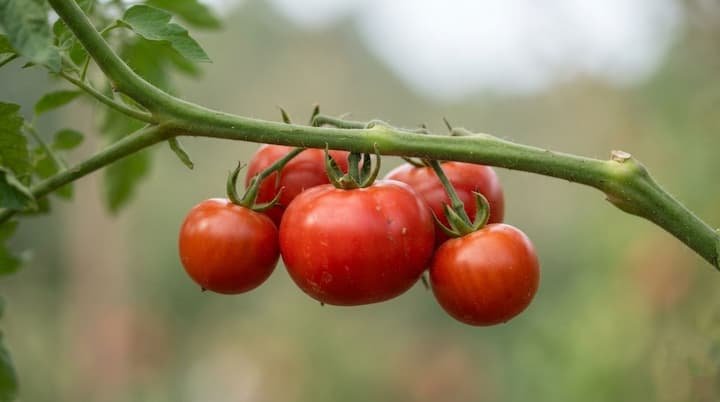
A healthy full-size plant often gives 10 to 20 pounds, while cherry plants give more fruit that weighs less. Expect a few duds, and pull any seedling that stays weak after weeks of good light and warmth.
Common Problems and Fixes
- No sprouts after 14 days: weak, chilled, or cold seed. Resow at 75°F with a riper tomato.
- Seeds rotted instead of sprouting: too much water. Keep the mix damp, never soaked.
- Pale, stretched seedlings: more light.
- Collapse at the soil line: damping-off. Water less, add airflow, use sterile mix.
- Tiny flying bugs: fungus gnats. Let the top dry and use sticky traps.
- Mold on soil: scrape it off, dry the surface, add a fan.
- Dark, leathery fruit bottoms: blossom end rot. Steady watering matters more than any additive.
- Chewed leaves and a fat green caterpillar: tomato hornworms. Hand pick them.
- Spots on lower leaves: cut them off with clean pruners and water at the base.
- Yellow leaves: Epsom salt only helps if a soil test shows low magnesium.
Myths and Safety
- Almost all supermarket tomatoes are hybrids from regular breeding, not GMO.
- Fermenting helps but is not required.
- The slice trick does not always work.
- No solid source shows grocery tomatoes get sprout inhibitors. Poor sprouting usually comes from chilled, early-picked fruit.
- Pesticide residue sits mostly on the peel, so rinse the tomato before cutting it open.
- Fruit from these plants is safe to eat when grown in clean potting mix.
After the First Harvest
Tag every plant. I keep a simple note on size, flavor, color, firmness of the center, and disease. Save seeds from the fully ripe fruit of your best plant with the same ferment steps.
The second generation still varies, so saving from the best plants each year slowly narrows the results. Switch to an open-pollinated heirloom or a seed packet when you need steady results every season.
Grow Tomatoes From Grocery Store Tomatoes or Buy Packets?
Store fruit costs nothing extra and gives you a surprise, but it loses on certainty and disease risk. A $3 to $5 packet gets you a named variety, known disease resistance, better germination, and fruit that matches the picture.
A nursery seedling saves 6 to 8 weeks. The best mix is a few seeds for fun and your main crop from packets or seedlings. If you want to grow tomatoes from grocery store tomatoes, start with cherry types.
Final Thoughts:
If you want to grow tomatoes from store bought tomatoes, start with the ripest cherry tomato you can find, ferment the seeds for 2 to 3 days, and sow 6 to 8 weeks before your last frost. Expect a surprise in the fruit, give each plant room, and keep notes. Even a weak batch costs almost nothing, and a good one might become your favorite variety.