Ever bring a big handful of basil in from the yard, set it in the fridge, and find black, slimy leaves two days later? You’re not alone, and the fridge is usually the culprit. Basil is a tropical herb, and it reacts to cold more like a houseplant than a lettuce. So what actually works?

Here’s the short answer to how to store fresh harvested basil: treat the stems like cut flowers on your counter for up to 2 weeks, then freeze or dry whatever you can’t use in time. Below, I’ll walk through every method, step by step.
Harvest Basil the Right Way Before You Store It
Storage starts in the backyard, not the kitchen. Cut basil in the morning after the dew dries but before the day heats up, since cooler, dry hours favor better flavor and firmer leaves.
Basil from the yard is also fresher than anything from the store, which is already a few days old, so use the store-bought bunch first.
Water the plant the day before so the stems are full. If you’re not sure how much, this guide on watering outdoor basil covers it. For the full cutting routine, read up on harvesting basil first.
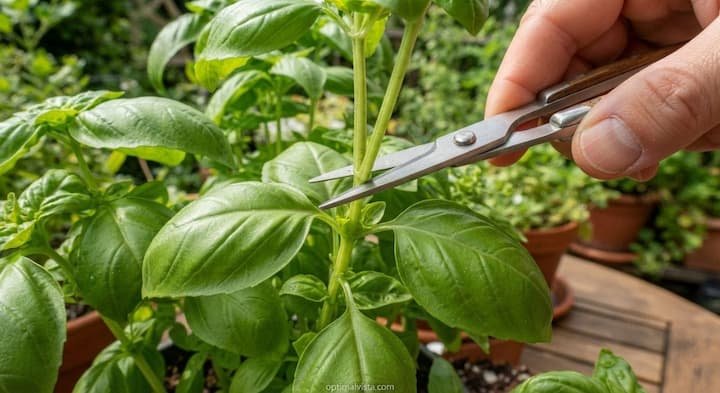
- Use clean pruners or scissors so the cuts stay neat.
- Cut just above a pair of leaves so the plant keeps branching (here’s how to prune basil).
- Pinch off flower buds as you go, because the flavor fades once basil flowers.
- Cut only what you can store that day, so you can keep basil fresh without rushing.
- Take whole stems for water storage and single leaves if you’re freezing right away.

Prep Your Basil: Sort, Shake and Skip the Washing
Lay the bunch on the counter and sort it. Anything black, withered, or chewed by bugs goes in the garbage. Toss yellowing basil leaves and curling basil leaves too, since stressed leaves rot first. Shake the stems gently to knock off dirt and bugs.
I never wash basil until the minute I use it, because wet leaves turn slimy fast. Skipping the wash is the simplest way to keep basil fresh. If you do wash (for freezing or drying), pat or spin the leaves completely dry first.
Why Basil Turns Black in the Fridge
Basil is a warm-weather herb, and cold damages its cells. Chilling injury starts at roughly 50°F, and most fridges run at 40°F or lower. That’s why leaves go dark and mushy even inside a bag.
Plenty of people store basil in the fridge out of habit, and that’s where the black spots come from.
- Cold damage shows up as dark brown or black patches.
- Wet leaves make it worse.
- The back wall of the fridge is the coldest spot.

Best Way to Keep Basil Fresh on the Counter: Flower Bouquet Method
I like this method best because it takes about two minutes. You treat basil exactly like a bunch of flowers. Unlike cilantro or parsley, which like the cold, basil wants the counter.
- Trim 1/2 inch off the stems at a 45° angle.
- Fill a jar or glass halfway with water.
- Stand the bunch in it with no leaves under the water, since submerged leaves turn dark and slimy.
- Set it on the counter out of direct sunlight.
- Change the water every couple of days and trim the stems again.

Should You Cover It with a Plastic Bag?
A loose bag over the leaves slows wilting, especially in a dry house, and can stretch the jar to the full 2 weeks. Skip the bag and plan on about a week. Never seal it tight, because trapped moisture rots the leaves.
How to Store Basil in the Fridge If You Have To
Counter space gone, or the kitchen too hot? The fridge works if you do it carefully. According to NDSU Extension, basil keeps about 3 to 5 days in an airtight bag in the fridge. In my experience, paper towel basil looks decent for about 3 days, then starts to darken.
- Wrap dry leaves loosely in a paper towel.
- Put them in an airtight container or zip bag with a little air left in.
- Store basil in the fridge on a warmer upper shelf, not the door or back wall.

Storing Basil in a Jar of Water in the Fridge
This is a middle ground. Stand the stems in about 1 inch of water and loosely cover the top with a plastic bag. It lasts about a week. The leaves still feel the cold, so the edges may darken sooner than on the counter. Use it only when your kitchen is too warm for the counter method.
Roots Growing in the Jar? Don’t Toss It
After a week or so, white roots can show up on stems sitting in water. That’s a free cutting. Once the roots reach 1 to 2 inches, plant it in a pot of moist potting mix. The steps for propagating basil cuttings are simple.
What to Do Before the First Fall Frost
Basil hates cold nights. Below roughly 50°F it starts to suffer, and frost at 32°F kills it. I pick my backyard plants clean the week before nights dip that low. A huge end-of-season haul is also the moment to freeze fresh basil the same day you cut it.
Here are typical timings for USDA Zones 4, 5, 6, 7 and 8:
| USDA Zone | Typical first fall frost | Harvest the whole plant by |
|---|---|---|
| Zone 4 | Late September | Mid-September |
| Zone 5 | Early October | Late September |
| Zone 6 | Mid to late October | Early October |
| Zone 7 | Late October to early November | Mid-October |
| Zone 8 | Mid-November | Early November |
Dates shift every year, so watch your local forecast.
- Cut the whole plant down to a few inches above the soil, then stand a few of the best stems in a jar of water on a bright indoor windowsill.
- Leave one healthy plant to flower if you plan on saving basil seeds.
- Basil in a raised bed basil bed can take a frost cloth for a few extra nights, but that only buys a little time.
- Next spring, check your basil planting time so the first harvest comes earlier.
How to Keep Potted Store-Bought Basil Alive
The little grocery store pots hold dozens of crowded seedlings, which is why they collapse so quickly. Give them room and they last much longer.
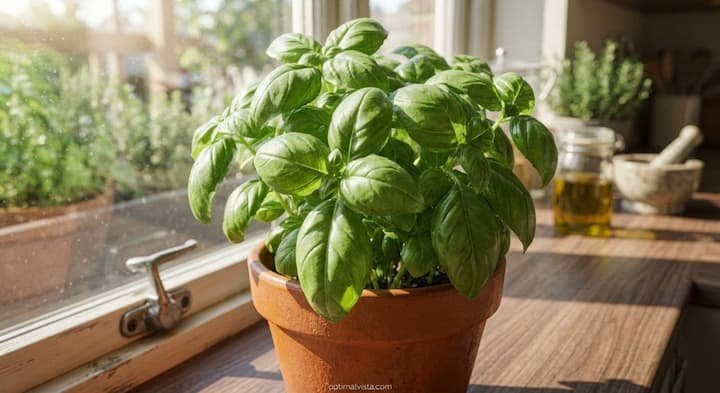
It’s a living plant, so treat it like one and don’t stand it in a jar of water like cut stems. Many basil in pots setups start exactly this way.
- Divide the clump into 2 or 3 pots with drainage holes (a garden center has cheap ones).
- Give it a bright window with 6 or more hours of light.
- Water when the top inch of soil feels dry.
- Feed lightly with organic basil fertilizer after a couple of weeks.
- Never put the pot in the fridge.
How to Freeze Fresh Basil Leaves With or Without Blanching
Blanching keeps the color bright green. Skipping it is faster, but the leaves darken a bit. Both taste fine in cooked dishes.
- Drop leaves in boiling water (212°F) for 10 seconds.
- Move them to ice water right away (or cool them under running water), then pull off the stems.
- Dry them completely with a salad spinner, or wrap them in a paper towel and squeeze out the water.
- Spread them on a tray, freeze about 12 hours, then move them to a freezer bag, working fast so the leaves don’t thaw.
For the wax paper version, lay leaves in a single layer on a sheet, cover with another sheet, roll it up, and slide the roll into a bag.
Freezing Basil in Ice Cube Trays
Cubes are the easiest way to portion basil for soups and sauces.
- Oil version: pack minced basil into the tray and top with olive oil.
- Water version: press 1 tablespoon of chopped leaves into each section, half fill with water, freeze overnight, then top off and freeze again (you can skip drying the leaves for this version).
- Perfect if you want to freeze fresh basil in cooking-sized portions.
Once frozen, pop the cubes into a bag so the smell doesn’t spread to the rest of your freezer.

Freezing Basil in Oil: Ratio and Safety
Penn State suggests mixing 2 cups of chopped basil with 1/3 to 1/2 cup of oil. Blend it smooth if you like. Olive oil adds flavor, and canola stays neutral. Freeze the mix in ice cube trays or small jars, then move the cubes to a bag.
Keep this one frozen, not in the fridge for weeks (more on that in the food safety section).
Freezing Pesto the Smart Way
A basic pesto is basil, garlic, nuts, olive oil, and lemon juice. Leave the cheese out and stir it in after thawing. Drop spoonfuls onto a wax paper-lined tray, freeze them solid, then bag them. Pesto lasts about a week in the fridge and 6 months or more in the freezer. A thin layer of oil on top of a jar helps protect the color.
How Long Does Frozen Basil Last?
Sources don’t agree. Most put the best quality at 3 to 6 months, and some say it stays safe for up to a year at 0°F. Cubes and pesto hold flavor best.
Frozen herbs also hold onto more nutrients than dried ones, according to Ohio State, which is another reason to favor the freezer. Frozen leaves go limp, so they work in cooked food, not as a garnish.
How to Dry Basil Leaves: Dehydrator, Oven, Microwave, Air
Drying is handy when the freezer is full. Remove the leaves from the stems and make sure they’re fully dry before you start.
- Dehydrator: 95-110°F, or up to 125°F in humid areas, for 1 to 4 hours.
- Microwave: small amounts only, in short bursts between paper towels, following your microwave’s directions.
- Oven: lowest setting or just the oven light, leaves not touching, overnight (some experts skip this method).
- Air: bundle the stems and hang them in a dry, airy spot out of direct sun, checking often.
Crumble the finished leaves into an airtight jar. I think dried basil has the weakest flavor of all these methods, so save it for sauces.

Fresh vs Dried Basil: Swap Ratios and When to Add
- Dry basil leaves should feel brittle and crumble easily.
- Swap 1 teaspoon of dried for 1 tablespoon of fresh.
- Add dried basil early, about 30 minutes before a sauce is done.
- Drop frozen cubes straight into the pot without thawing.
Other Ways to Preserve Basil: Salt, Butter, Vinegar
Salt, butter, and vinegar are good backups when you’d rather not freeze or dry basil leaves.
- Basil salt: layer leaves with coarse salt in a jar, which lasts for months when sealed airtight.
- Compound butter: mix chopped basil into softened butter, roll it in wax paper, and freeze it (about a week in the fridge, a few months in the freezer).
- Basil vinegar: steep leaves in a jar of vinegar for a couple of weeks, then strain (it usually lasts a few months).
Food Safety: Basil in Oil and Garlic
Oil mixes with basil, and especially with garlic, are low-acid and low-oxygen, which is the setup bacteria that cause botulism like. Don’t leave them at room temperature.
- Keep any basil oil in the fridge no more than 4 days.
- Freeze it for anything longer.
- Skip garlic in the oil if you plan to freeze for months, and add it when you cook.
How to Store Fresh Harvested Basil: Method Comparison
Most community gardeners end up using two or three of these. Pick based on how much you have and how soon you’ll use it.
| Method | How long it lasts | Flavor | Best for |
|---|---|---|---|
| Counter jar | Up to 2 weeks | Best | Small bunches used daily |
| Wrapped, in the fridge | 3 to 5 days | Good, darker edges | Short-term backup |
| Jar in the fridge | About 1 week | Good | Hot kitchens |
| Frozen leaves | 3 to 6 months | Good, limp texture | Cooked dishes |
| Oil or water cubes | 3 to 6 months | Strong | Soups and sauces |
| Frozen pesto | 6 months or more | Strong | Pasta and sandwiches |
| Dried | Up to a year | Weakest | Long-simmered sauces |
Do Sweet, Thai and Lemon Basil Store Differently?
A little. Sweet basil is tender and blackens fast in the cold. Thai basil has sturdier stems and usually lasts a bit longer in a jar. Lemon basil bruises easily, so handle it gently. All of them hate the fridge. For more on how they differ, see this Thai versus sweet breakdown.
How to Tell When Basil Has Gone Bad
- Black, slimy leaves.
- Fuzzy mold anywhere on the bunch.
- A sour or musty smell.
- Mushy stems at the bottom.
A few darker edges on a firm leaf that still smells like basil are fine. Slimy or musty means garbage.
Common Basil Storage Mistakes to Skip
I’ve lost more than one bunch to the first mistake on this list.
- Washing leaves before storing them.
- Letting leaves sit under the water line.
- Parking basil on the fridge door or back wall.
- Leaving the jar in direct sunlight.
- Sealing the bag airtight.
- Thawing frozen basil before cooking.
- Leaving garlic and basil oil out on the counter.
How to Use Up Stored Basil Before It Goes Bad
Use the counter jar first and snip leaves as you need them. Frozen cubes go straight into soups and sauces. Thawed leaves are limp, so skip them as a garnish. If a bunch is fading, turn it into pesto the same day.
A thawed cube also makes a quick dip for crusty bread: add salt, pepper, and a little parmesan.
- Caprese salad, panzanella, or tomato basil soup.
- Pasta sauce or grilled pizza.
- Scrambled eggs, sauteed vegetables, or boiled potatoes (drop in a frozen cube).
- Pesto.
Final Thoughts on Basil Storage:
Now you know how to store fresh harvested basil without losing it to the fridge. Keep stems in a jar on the counter for up to 2 weeks, freeze cubes or pesto for months, and dry only what’s left. Cut it clean, skip the wash, and use the oldest basil first. Your next harvest will taste like it came straight off the plant.