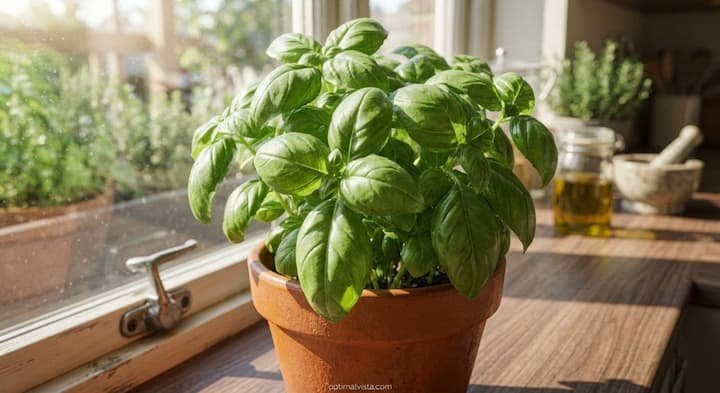
Why does basil sulk in regular yard dirt but go wild in a bed that sits just 12 inches off the ground? Growing basil in raised beds fixes the three things this herb hates most: cold roots, soggy soil and crowded stems.
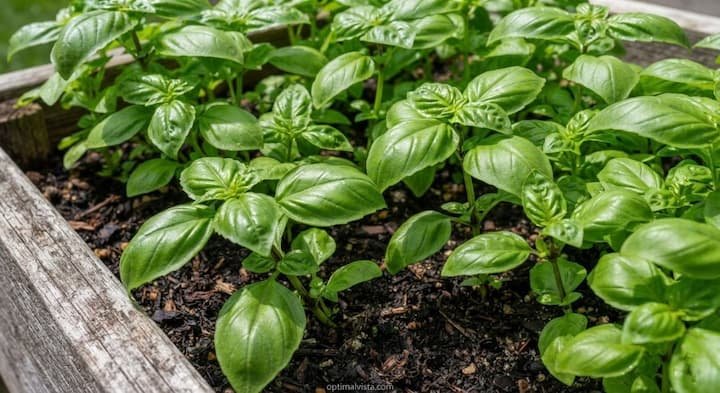
The short answer: fill the bed with loose, compost-rich soil, plant after frost once nights stay above 50°F, leave about 12 inches between plants, and pinch the tops often. Every step is covered below, from soil and spacing to pinching and storage, so your backyard bed keeps your kitchen stocked all summer.
How to Grow Basil in a Raised Bed: Why It Works So Well
Basil is a tropical herb, so it likes what a raised bed gives it: warmth, airflow and fast drainage. The bed sits above the yard, so the soil heats up sooner in spring and sheds extra water after a storm.
Here is what you get:
- Drainage: extra water runs out, so roots stay out of standing water and rot less.
- Warmer soil: seeds sprout faster, you can plant a bit earlier than in the ground, and the harvest runs later into fall.
- Soil control: you build the best soil mix for basil yourself instead of fighting clay or rocks.
- Easier work: less bending for any age or back, fewer weeds and pests, and bugs that are simple to spot.
- One downside: beds dry out fast and get hot in July, so watering and shade matter more.
How Long Does Basil Take to Grow?
Baby leaves are ready to snip about 3 to 4 weeks after seeds sprout, and the plant fills out in 6 to 8 weeks. If you are figuring out how to grow basil in a raised bed, plan on a small first harvest in early summer and steady picking until the first fall frost.
Best Raised Bed Size and Depth for Basil
Basil has shallow roots, so 8 to 12 inches of good soil is plenty, and even 6 to 8 inches works in a pinch. Keep the bed 3 to 4 feet wide so you can reach the center without stepping on the soil.
I like a 4×4-foot bed for a family that cooks a lot, and every basil raised bed layout starts with picking the size first.
- 2×2 feet: about 4 plants, enough for salads and sandwiches.
- 4×4 feet: up to 16 plants at 12-inch spacing, good for pesto batches.
- 4×8 feet: room for basil plus tomatoes, peppers and other herbs.
Best Location for Your Raised Bed
Basil needs 6 to 8 hours of direct sun a day, so pick the sunniest corner of the yard. Airflow matters just as much, so stay away from tight fences and dense shrubs that trap stale, humid air and invite mildew.
Set the bed close to the back door too, since the closer it is, the more you will snip and the sooner you will spot pests or disease.
Raised Bed Material: Wood, Metal and Other Options
In my experience, cedar is the easy pick because it resists rot and keeps soil temperatures steady. Galvanized metal warms up fast in spring, which basil loves, but it can bake roots in summer heat in USDA Zones 8, 9 and 10, so add mulch.
Recycled plastic or composite won’t rot and costs less, but it looks plain. Stone or block holds heat and lasts for years, but it is hard to move. In cold USDA Zones 3, 4 and 5, pick metal for the extra spring warmth; where summers run hot, pick cedar or composite. Whatever frame you choose, the best soil mix for basil matters more than the material.
Best Soil Mix for Basil in Raised Beds
Basil wants loose, rich soil that drains quickly, with a pH between 6.0 and 7.0. Skip dense clay and acidic soil, and let the bed drain after heavy rain.
Here is an easy recipe:
- 50% topsoil or garden soil.
- 30% finished compost or well-rotted manure.
- 20% perlite or coarse sand for drainage.
- Loosen the top 8 inches and work in 2 to 3 inches of compost.
- Fill the bed in layers and water each layer so it settles.
- Add a handful of slow-release organic fertilizer or worm castings.

When to Plant Basil Outdoors
Basil comes from the tropics and hates cold. A Rutgers-led review of basil research reports leaf injury below 54°F and severe damage under 50°F. So wait until the last frost is gone, the soil reads at least 60°F on a thermometer, and nights stay above 50°F.
A raised bed often warms up about a week sooner than the yard. For exact dates, check this guide on the best planting time.
Basil grows best once the soil sits between 70°F and 85°F. Planting too early is the most common mistake, because cold soil stalls the plants and turns the leaves purple or black.
Rough timing by zone:
- USDA Zones 3, 4 and 5: late May to early June.
- Zones 6 and 7: early to mid May.
- Zones 8 and 9: mid April.
- Zone 10 and up: March or early spring.
Seeds vs Transplants
Both work. Seeds cost less, and transplants give you a head start. Whichever you pick, thin seedlings to the right basil spacing in raised beds once they have two sets of true leaves.
- Indoor seeds: sow 4 to 6 weeks before your last frost, using this guide to start seeds indoors.
- Direct sowing: plant seeds 1/4 inch deep once the soil hits 60°F.
- Transplants: harden them off for about a week, a few hours outside each day.
- After planting: water well and keep the soil evenly moist for two weeks.

Basil Spacing in Raised Beds
Advice online ranges from 6 to 18 inches, because spacing depends on the variety. I think 12 inches is the safe middle for most backyard beds. Tight plants trap humidity, and that is how mildew starts.
| Basil type | Space between plants | Notes |
|---|---|---|
| Dwarf or bush (Spicy Globe, Greek) | 6 to 8 inches | Compact, great for edges |
| Standard sweet basil | 10 to 12 inches | Safe pick for most beds |
| Large leaf (Genovese, lettuce leaf) | 14 to 18 inches | Needs room to bush out |
Keep rows at least 12 inches apart, then pick a pattern:
- Single row: neat and easy to reach, but uses more space.
- Staggered: offset rows fit more plants and keep air moving.
- Cluster: 3 to 5 seedlings in one spot for cut-and-come-again picking.
Yellow leaves or stalled growth usually mean the bed is crowded, so thin the weakest plants. You can also tuck short basil between taller tomatoes or peppers, and regular pruning keeps plants compact instead of sprawling.

Basil Raised Bed Layout Ideas
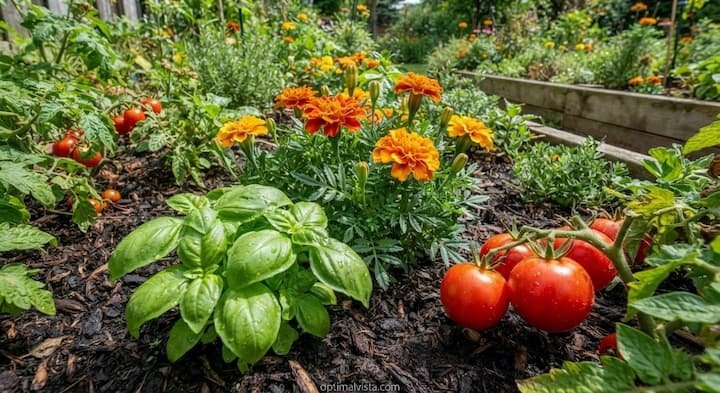
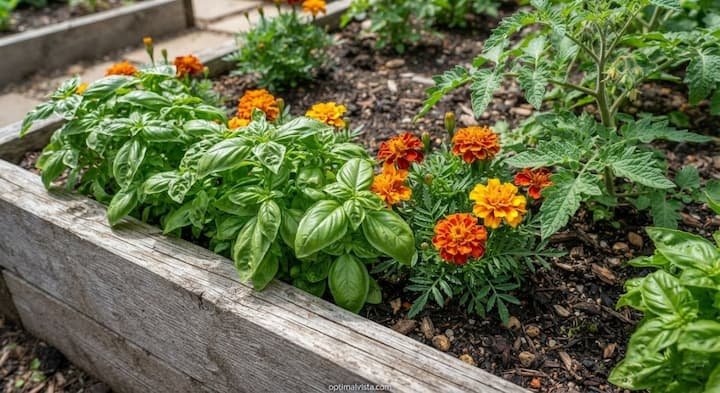
Plan the bed around what you cook. Edging the bed with alternating basil and marigolds looks good and doubles as pest control, and a few basil clusters near lettuce make a quick salad corner.
- 4×4 border: basil around the edges, taller plants in the center.
- 4×8 herb rows: alternate basil rows with oregano, thyme and parsley.
- Pesto corner: three basil types in one corner, with tomatoes and garlic close by.
- Checkerboard: tuck basil between tomatoes and peppers in a zigzag.
- Curved or spiral: fun shapes that look good in a backyard.
Best Basil Varieties for Raised Beds
Pick based on how you cook and where you live. Genovese is the classic pesto basil with big leaves. Spicy Globe and Pistou stay compact and tidy, which suits small beds. In hot, humid yards, Prospera and the Rutgers downy mildew resistant types are smart picks
Thai and lemon basil add flavor beyond Italian, and this sweet vs Thai comparison helps you choose. Purple basil adds color to the bed and to bouquets, and mixing a few varieties in one bed gives you different flavors all summer.
Best Companion Plants for Basil and What to Skip
Basil gets along with plenty of crops. Many gardeners say it keeps aphids and whiteflies off tomatoes. Want more ideas? See these top companion plants.
- Good neighbors: tomatoes (may help with aphids and hornworms), peppers (same heat and sun), lettuce (shallow roots, no competition) and marigolds (extra pest control).
- Skip: cucumbers, sage and rue, which gardeners say stunt basil.
- Shade: put tall tomatoes on the north side of your basil raised bed layout so basil still gets 6 hours of sun, and stake them so their shade stays light.
Watering Basil in a Raised Bed
Basil needs about 1 inch of water a week, which is roughly 0.6 gallons per square foot. I water mine early in the morning, deep and slow at the base, so leaves dry before evening. For more detail, read about outdoor basil watering.
- Check first: if the top inch of soil is dry, water.
- Deep beats often: soak the bed instead of sprinkling daily, and never skip several waterings in a row, since basil handles a little dryness but not a long dry spell.
- Hot spells: a raised bed may need water every other day.
- Afternoon droop: if it perks up by evening, that is heat stress, not thirst.
- Drip line or soaker hose: keeps leaves dry.
Mulching and Feeding Basil
Mulch holds moisture, keeps roots cool in hot weather, steadies soil temperature and stops soil from splashing onto leaves. Spread about 2 inches of straw or shredded fall leaves and keep it an inch back from the stems.
Compost handles the early feeding. After that, an organic basil fertilizer keeps leaves coming. Advice online runs from every 2 to 6 weeks, so use it at half strength every 3 to 4 weeks, or every 6 weeks in rich soil
A thin layer of compost or worm castings worked into the top inch helps too. Go easy on nitrogen, since too much makes big leaves with weaker flavor.
Pinching, Pruning and Stopping Flowers
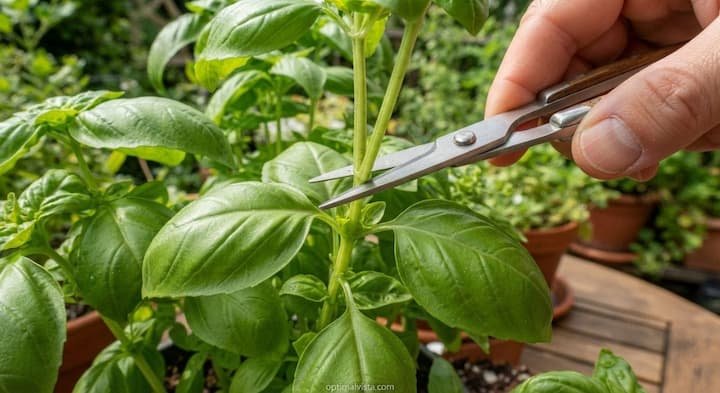
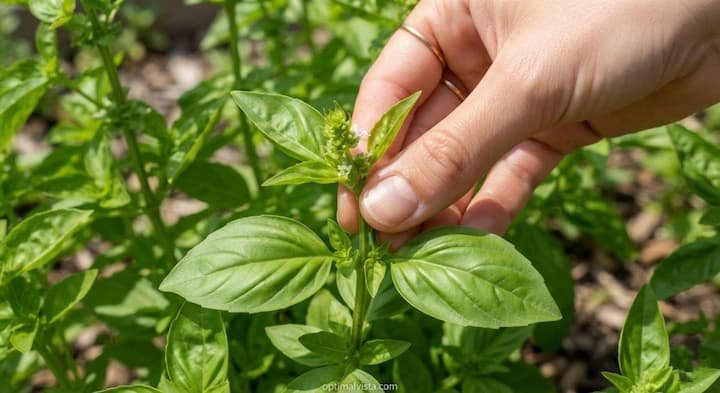
Regular pinching turns a skinny plant into a bush, because each cut sends out two new stems instead of one. I pinch mine every few days in summer and nip off every flower bud before it opens. For a deeper look, see pruning basil properly.
- Start: when the plant has 6 to 8 leaves.
- Cut: just above a pair of leaves with clean pruners.
- Buds: remove them right away, since flowering shifts energy into seeds.
- Already bolted: cut the flower spike back to the next pair of leaves.
- Exception: let one purple plant bloom for bees and bouquets.
Succession Planting for a Season-Long Harvest
One planting rarely lasts until fall, since basil slows down after it flowers. Plant a fresh batch every few weeks and you always have young, tender leaves. A well-pinched plant can give you a couple of handfuls every week at the peak of summer.
- Simple rule for how to grow basil in a raised bed all season: add a new batch every 3 to 4 weeks.
- Stop: about 8 weeks before your first fall frost.
- Stagger: keep some plants young while others are full size.
- Backup plan: root free basil cuttings in a glass of water.
Protecting Basil from Heat, Cold and Wind
Basil is picky about weather, so a little cover goes a long way. Drape frost cloth over the bed when nights are forecast under 50°F, because frost at 32°F can kill basil outright. In USDA Zones 8, 9 and 10, add light shade cloth during afternoon heat waves above 95°F.
Wind dries and bruises leaves too, so set a trellis or taller plants on the windy side.
Common Pests and Diseases
Most basil trouble comes from bugs and from damp, crowded leaves. Check the undersides of leaves every week, and trim off any yellow or fuzzy white leaves right away. Bag any sick plant and put it in the garbage, not the compost pile.
- Aphids: blast them off with water, then use neem oil or insecticidal soap if they return.
- Japanese beetles: hand-pick them in the early morning.
- Slugs and snails: lift the mulch and check at dusk.
- Downy mildew: yellow patches on top of leaves with gray-purple fuzz underneath.
- Fusarium wilt: sudden wilting even when the soil is moist, with no cure.
- Prevention: keep proper basil spacing in raised beds and water at the base in the morning.
Common Problems with Growing Basil in Raised Beds
Use this quick table to match what you see with the fix.
| What you see | Likely cause | Fix |
|---|---|---|
| Yellow leaves | Too much water or low nitrogen | Let the top inch dry, then feed lightly. See why yellow basil leaves happen |
| Purple or black leaves | Cold soil or nights under 50°F | Cover plants and wait to plant |
| Curling leaves | Heat, thirst or aphids | Water deeply and check leaf undersides. Learn more about curling basil leaves |
| Leggy, floppy stems | Too little sun or no pinching | Pinch often and trim back shade |
| Mushy stems | Overwatering | Cut back watering |
| Small, slow plants | Cold soil or crowding | Thin plants and wait for warmth |
Harvesting, Storing and Using Basil
Basil tastes best right before it flowers, and fresh leaves go straight into pesto, salads and pasta. I harvest in the morning after the dew dries, taking leaves from the top so the plant branches out, never stripping a stem bare.
Here is how to harvest basil safely, and a few tips for storing fresh basil:
- Counter: stems in a glass of water, out of direct sun, last about a week.
- Fridge: skip it, since cold turns the leaves black.
- Freezer: freeze chopped leaves in olive oil in ice cube trays.
- Pesto: freeze it in small batches.
- Drying: use a dehydrator or hang small bunches.

End of Season: Crop Rotation, Seeds and Overwintering
Basil is an annual, so the first fall frost ends the party. Plant it in a new spot next year to keep disease from building up in the soil. Let one plant flower and collect the seed heads once they turn brown and dry.
To overwinter, root cuttings in water before frost, then pot them near a sunny window. For fall cleanup, pull old plants, add compost and cover the bed with mulch.
Final Thoughts:
Growing basil in raised beds comes down to warm soil, a loose compost-rich mix, 12 inches of space and regular pinching. Plant after frost, water at the base in the morning, and add a new batch every few weeks. Do that, and your backyard bed will keep the kitchen stocked from late spring to the first fall frost.