
A tomato that looks perfectly red on the vine can already be past its best, while a pale pink one sitting beside it may taste sweeter after three days on the counter. Strange, right?
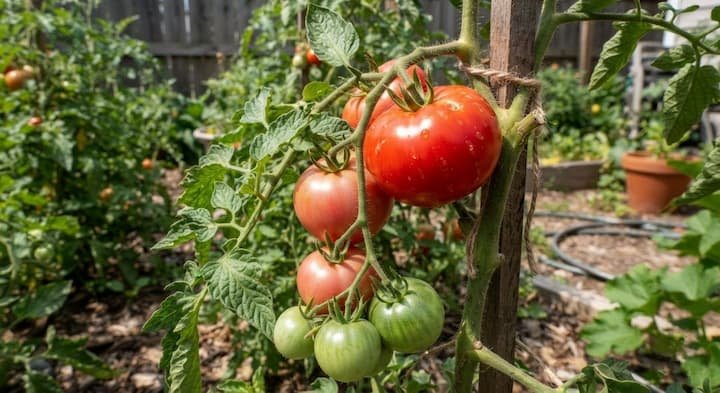
Knowing when to pick tomatoes has less to do with deep red color and more to do with what the fruit is doing inside. Here is the full breakdown.
Tomato Ripening Stages: When to Pick Tomatoes by Color
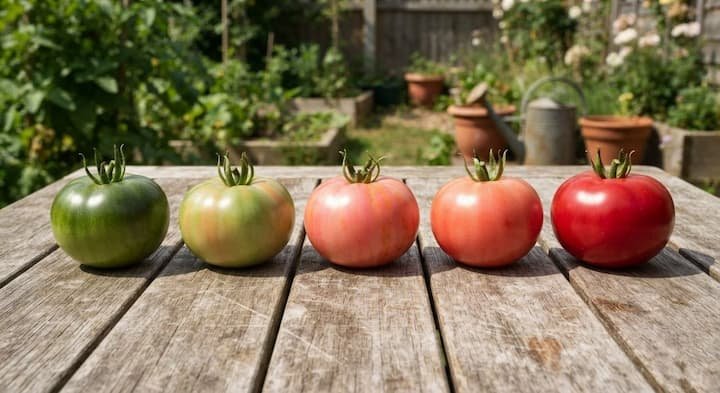
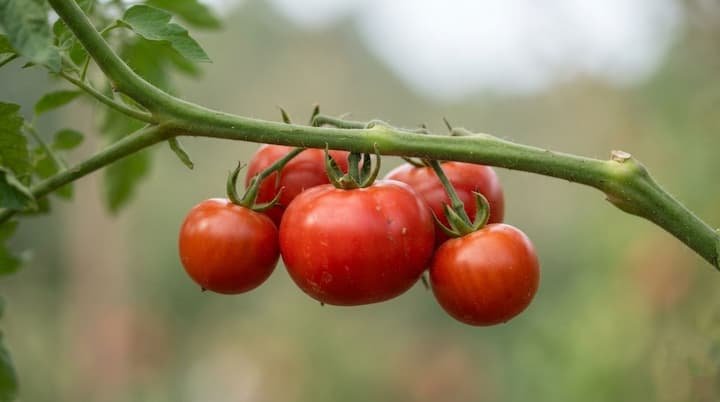
Every tomato goes through the same color steps, and the USDA color classification puts a number on each one by measuring how much skin has turned from green to pink or red.
Plenty of gardeners call any half-colored fruit a “breaker,” but on the official chart a breaker covers under 10% of the skin. Screenshot the table below and keep it on the phone while walking the rows.
| Stage | Skin color | Best move |
|---|---|---|
| Green | All green, small to medium | Leave on the plant |
| Mature green | Full size, glossy, no blush | Pick only before frost |
| Breaker | Under 10% color | Finishes fine indoors |
| Turning | 10% to 30% color | Pick if rain or pests are coming |
| Pink | 30% to 60% color | Sweet spot for most backyards |
| Light red | 60% to 90% color | Eat within a few days |
| Red | 90% or more | Pick right away |
For a typical backyard, the pink stage wins. Splitting and bug damage drop off, and the fruit still finishes close to full flavor on the counter.
How Many Days Tomatoes Take to Ripen
Days to maturity on the seed packet or plant tag gives a rough calendar, usually counted from transplant day.
- Early (cherry types): about 40 to 60 days.
- Midseason: around 60 days.
- Late (Cherokee Purple, beefsteaks): 80 days or more.
Hot or cool spells can add or cut a week, so treat the number as a window, not a deadline. Planting date shifts everything, so settle when to plant for the zone and start seeds indoors on time. August is prime harvest time across most of the country, though zone and variety shift it.
Signs of Ripeness: How to Know When Tomatoes Are Ripe
Color alone can mislead. Yellow, orange, pink and purple varieties never turn classic red, and some heirlooms keep green shoulders even when fully ripe. Pair color with touch.
- Skin turns glossy instead of dull.
- Color looks even and deeper, since tomatoes ripen from the bottom up.
- Fruit feels firm with a slight give, never rock hard.
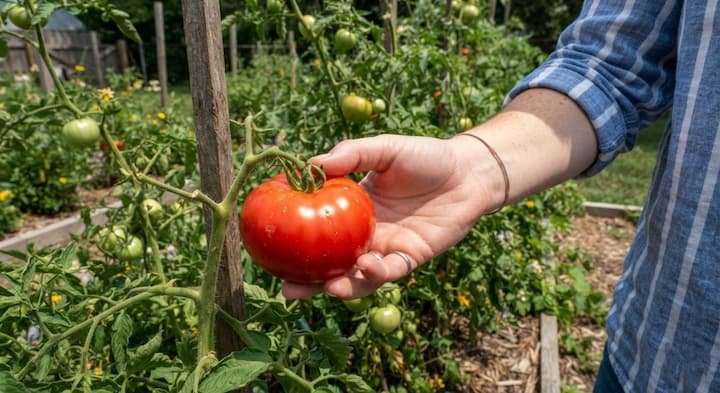
- A gentle lift and twist releases it from the stem.
- Green shoulders on heirlooms are normal, so don’t toss the fruit.
I think the bottom squeeze is the most reliable check. Press lightly at the blossom end, and a ready tomato gives just a little. A cut fruit with a hard, pale center was picked too soon.
Still unsure? Taste one, since unripe tomatoes are not poisonous, only less sweet.
Vine or Counter: When to Harvest Tomatoes for Flavor
Gardeners argue about this every summer. Some insist fruit left on the vine until fully colored tastes best, while other experts say fruit picked at pink ripens to almost the same flavor with fewer losses.
In my experience the gap is small unless the weather stays perfect all week.
- Pick now: rain or heat due within 2 days, tiny cracks showing, or birds and squirrels sampling the fruit.
- Pick now: frost in the forecast, or a community gardener with a shared plot and no daily visits.
- Wait: weather is mild and dry, fruit is under 30% color, and daily checks are easy.
Early picking also spreads the harvest, so thirty tomatoes do not go soft in one weekend, and indeterminate plants tend to push out new fruit once a heavy one is gone.
Past the breaker stage, the plant hands over very little extra to the fruit, so extra vine time adds less than most gardeners expect. Peak flavor and peak quality rarely line up, and the pink stage is a fair compromise.
Timing by Tomato Type and Plant Habit
- Cherry: fully colored but still firm; they split fast after rain, and the whole fruit colors at once instead of breaking at the base.
- Slicers and beefsteaks: pick at pink, even if the shoulders stay green.
- Heirloom: thin skins crack easily, so pick when color deepens and the bottom just starts to soften.
- Roma and paste: fully colored but still firm.
- Yellow, orange, purple and Green Zebra: judge by that variety’s own color and a slight give, not red.
I like to pick slicers a day early and let the counter finish them, since the shoulders stay cleaner. Determinate plants set most fruit at once, so harvest comes in waves, while indeterminate vines flower until frost and need steady checks.
That difference changes when to harvest tomatoes more than any other trait. For flavor-first picks, browse the best tasting varieties, and see growing heirloom tomatoes for the thin-skinned types.
Best Time to Pick Tomatoes: Time of Day and Weather
Morning is the easiest window. Fruit is cool and firm, and the day has not softened anything yet. I usually walk the rows before the yard passes 80°F.
- Before heavy rain: pick fruit at turning or pink, since a sudden soak makes skins burst.
- After a storm: wait for dry skin, which is the best time to pick tomatoes without spreading rot.
- Above about 85°F: color development slows, and soft fruit in direct sun can scald (Zones 7 and 8 feel this most); pick at first blush and finish indoors.
- Below about 55°F: flavor and texture suffer, a Fall problem in Zones 4 and 5, so bring in fruit that already shows color.
- Steady water: about 1 inch a week plus 2 inches of the best mulch keeps swings small.
How to Pick Tomatoes Without Hurting the Plant
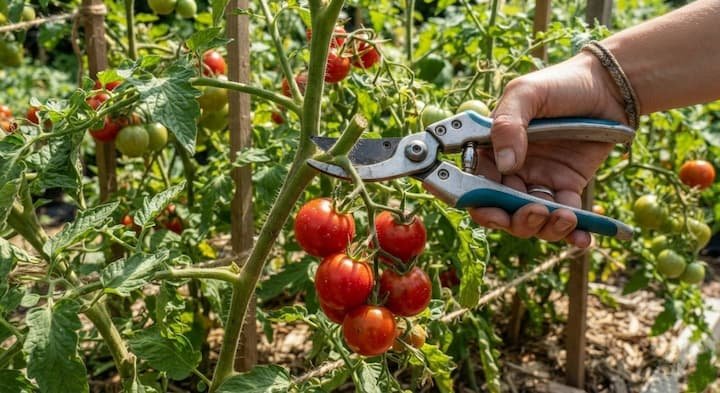
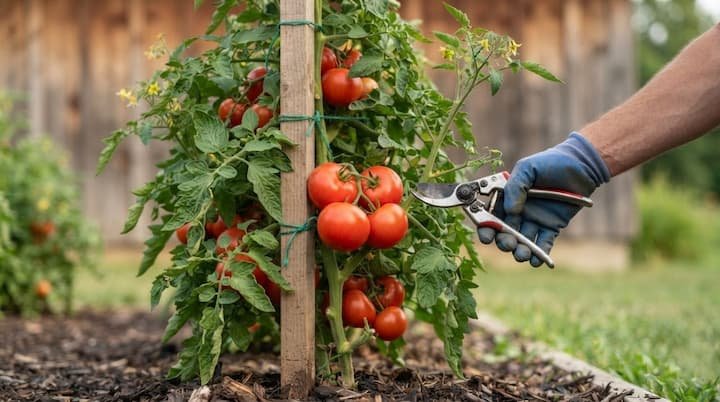
- Hold the fruit, then twist and lift; use clean pruners if the stem fights back.
- Cut stems about 1/4 inch from the fruit so they can’t poke neighbors.
- Clip whole cherry clusters when most of the fruit has color.
- Use a shallow tray; in a 5-gallon bucket, stop at two or three layers.
- Never toss or stack fruit, since bruises split open later.
- Check every 1 to 2 days at peak, and every few days early in the season.
After picking, pull yellow lower leaves and keep watering steady. Indeterminate vines keep setting fruit, so hand pollinate tomatoes on calm mornings if bees are scarce.
Picking Too Early vs Too Late
Both mistakes cost flavor, just differently. Too early gives mealy texture, a flat taste, and fruit that never colors if it was immature green. Too late brings splitting, worst on cherries and heirlooms after heavy rain or on overwatered tomato plants, plus sunscald that shows as pale leathery patches, tomato hornworms and earworms chewing ripe fruit, and mushy, soft-spotted flesh that rots fast.
Store tomatoes taste bland for a reason. Commercial growers pick anywhere from mature green to breaker so the fruit survives shipping, then chilling in transit and artificial ethylene pile on. Picking a fruit while it is still small and forming is the same mistake in a backyard.
Common mistakes:
- Rough handling.
- Skipping checks at peak season.
- Waiting for deep red on every variety.
How to Ripen Tomatoes Indoors
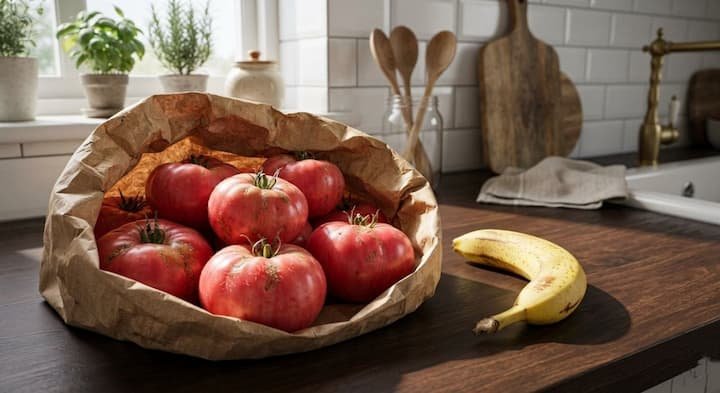
Ripening runs on warmth and ethylene, a gas tomatoes release naturally. Extension guidance puts the sweet spot at 68°F to 77°F, a range that favors steady color.
Fold a paper bag loosely and add a ripe banana or apple for extra ethylene. Otherwise set fruit in a single layer on the counter in indirect light, stem side down to avoid soft spots. A whole vine can also hang upside down in a garage or basement, at least 3 feet off the floor.
Skip the fridge for unripe fruit, since cold kills flavor. My counter holds a bag of pink fruit most of September, checked daily, and anything with mold goes straight in the trash.
Frost Alert: When to Pick Green Tomatoes
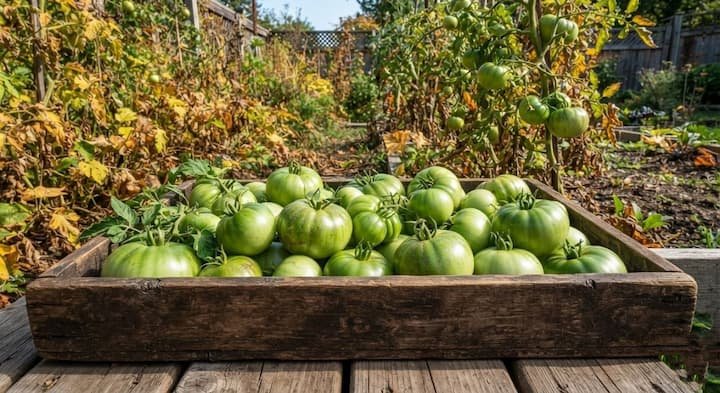
Fall frost ends the season for tomato plants, and trouble starts near 32°F. USDA Zones 4, 5, 6, 7 and 8 land on very different dates, so the table below gives rough first-frost windows. Mature green fruit can still ripen indoors, so a rescue is worth the effort.
Start checking the forecast every evening once nights dip near 40°F.
| USDA Zone | Rough first frost | What it means |
|---|---|---|
| Zone 4 | Mid to late September | Short season, green harvest is common |
| Zone 5 | Late September to early October | Late varieties may run out of time |
| Zone 6 | Early to mid October | Watch nights from late September |
| Zone 7 | Mid to late October | Fruit often colors well into Fall |
| Zone 8 | Late October to mid November | Summer heat is the bigger problem |
These are rough averages, and local dates can shift by weeks.
Not sure a green one is mature? Small, dull, hard fruit is immature and will never ripen indoors, so look for:
- Full size for the variety, with glossy skin.
- A pale or whitish tint at the blossom end.
- Seeds sitting in jelly that a knife does not cut through.
When frost is close, run this routine:
- Harvest when frost is due within 24 to 48 hours.
- Take every full-size green fruit plus anything showing color.
- Wipe off dirt, skip washing, and toss cracked or soft ones in the garbage.
- Sort by stage and set up the indoor spot described above.
For a one-night dip, drape a bedsheet or frost cloth over the plants before sunset and pull it off in the morning. That can buy another week or two.
Why Some Tomatoes Refuse to Ripen
Fruit that sits at full size for weeks but stays green is annoying, though usually fixable.
- Heat: above about 85°F, red pigment slows, and fruit often colors once nights cool.
- Cold: below about 55°F, ripening stalls.
- Too much nitrogen: big leaves, little fruit; switch to the best fertilizer with less nitrogen.
- Shade and crowding: a tomato trellis opens up light and airflow.
- Season length: 80-day varieties can run out of time in Zones 4 and 5.
Epsom salt will not rush ripening either, so skip that shortcut.
Better moves: remove a few leaves shading the fruit, pinch the vine tips about 4 weeks before the average first frost, and finish indoors. Some varieties, like Green Zebra, never turn red, so judge those by a slight give.
How to Store Picked Tomatoes
Ripe tomatoes keep best on the counter, away from direct sun, for about 3 to 5 days. I never wash fruit before storing it, since moisture speeds up mold.
Wrinkled skin, a sour smell, leaking or dark soft spots mean the fruit is done, and moldy ones go in the garbage, not the compost pile. A fully ripe tomato or cut half that will not get eaten in time can go in the fridge, wrapped, for 2 to 3 days, then warm up before eating.
For the long haul, core whole tomatoes and freeze them, since skins slip off after thawing, or dehydrate or can them for sauce, pizza sauce and ketchup.
What to Do With Extra and Green Tomatoes
Green fruit is not wasted. Even with solid knowledge of when to pick green tomatoes, some always stay hard, and they cook well.
- Fried green tomatoes.
- Green tomato salsa.
- Chutney or relish.
- Roasted sauce, canned or frozen in portions.
- Extra ripe fruit frozen whole now, cooked into sauce later.
- Dehydrated halves for winter soups and pasta.
- Extra fruit shared with neighbors or a community garden donation bin.
Final Pick Checklist
- Run this list before each pick, since it covers how to know when tomatoes are ripe on any variety.
- Color has started, ideally 30% to 60% on slicers.
- Skin looks smooth and glossy.
- Bottom gives slightly, never rock hard.
- Stem lets go with a gentle twist.
- Rain, heat above 85°F, or frost near 32°F is coming.
- Pests or birds are already eyeing the fruit.
- Pruners are clean and the tray is ready.
Final Thoughts:
Good timing comes down to a few habits: check often, trust the stage chart, and watch the forecast. Knowing when to pick tomatoes saves fruit from cracks, bugs and early frost, and the counter finishes the job. Start with the pink stage, adjust for heat and rain, and keep notes on what tasted best. Every backyard behaves a little differently, so the next season will be easier.
Pingback: How to Ripen Green Tomatoes: Easy Proven Ways That Work