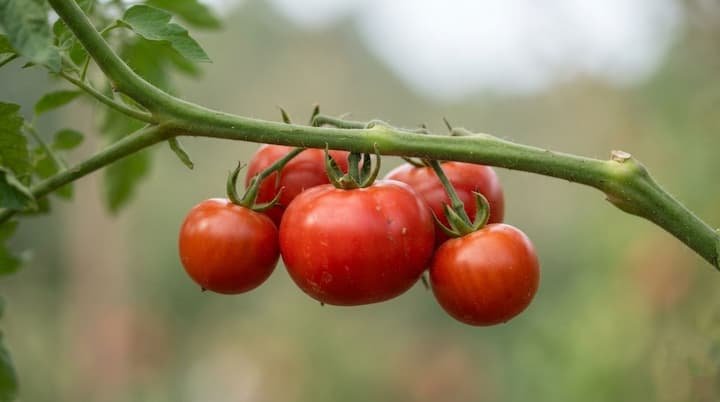
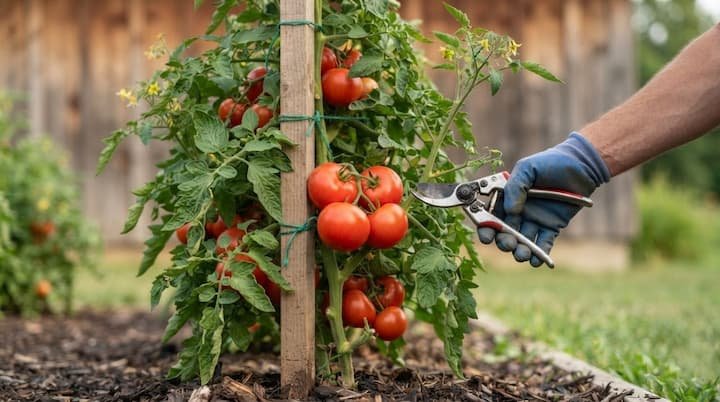
Ever notice that a tomato picked green can turn red on your counter, but one left on a cold vine just sits there?
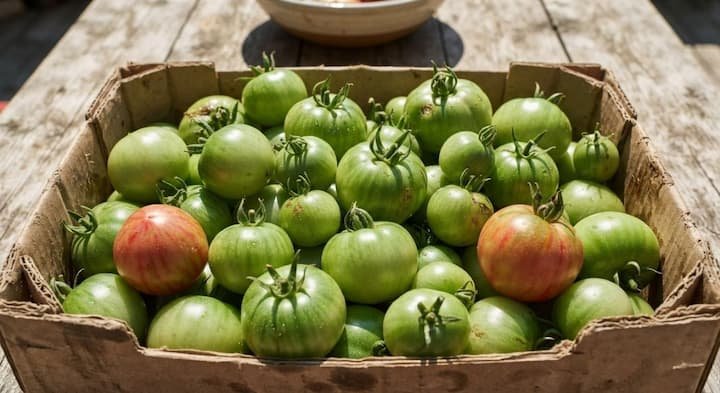
Same fruit, same plant, very different result. Once you understand what’s going on inside, how to ripen green tomatoes stops feeling like guesswork. Frost is the clock, warmth is the switch, and a few simple tricks do the rest. Here’s the whole system, step by step.
How to Ripen Green Tomatoes: What Actually Triggers Ripening
A tomato ripens because the fruit makes its own ethylene, a gas that tells it to soften, drop the green and build red color. Pick a mature one and it keeps running that program on your counter, which is the only reason you can ripen tomatoes off the vine in the first place.
Warmth speeds the whole thing up. Light hardly matters, so a dark cabinet works about as well as a bright window.
The UC Davis Postharvest Center lists 68°F as the best ripening temperature for mature-green tomatoes, and it warns that holding them below 55°F causes chilling injury.
Which Green Tomatoes Will Actually Ripen
A mature green one has reached full size, the skin looks glossy or a little whitish instead of dark forest green, and the bottom may show a faint blush.
Small, hard, dark green fruit never built what it needs to ripen, so it rots or shrivels. In my experience, the cut test saves more tomatoes than any ripening trick.
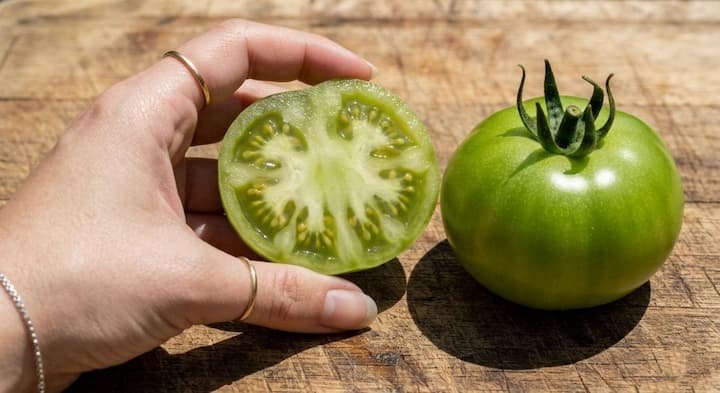
Slice one open: if the center has gel around the seeds and the knife doesn’t cut through them, the fruit is mature enough.
- Ripens well: full size, glossy skin, white or yellow blush, pink streaks.
- Might ripen: light green, nearly full size, firm and clean.
- Won’t ripen: small, dark green and rock hard, or hit by frost (those turn dull and stall).
When to Pick Green Tomatoes Before Frost
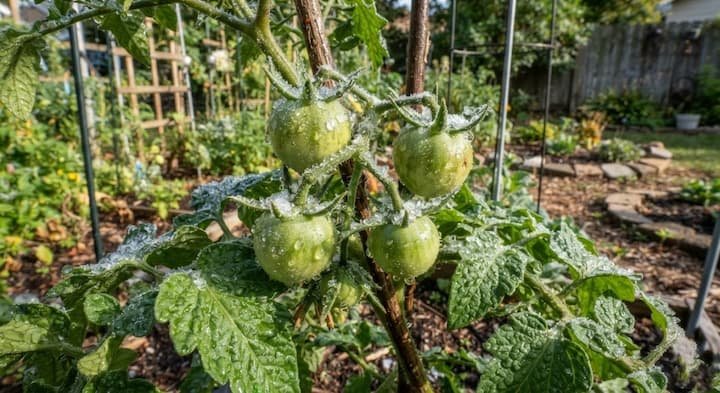
The rule is simple: when frost is two or three nights out, pick every mature green tomato. Frost starts at 32°F, and a hard freeze below 28°F kills the vines and turns fruit mushy. Even before that, nights under 55°F slow ripening on the plant.
Watch the forecast more than the calendar.
| Region (USDA Zones) | Typical first hard frost | Start picking |
|---|---|---|
| Upper Midwest, northern New England, Mountain West (Zones 3-4) | Mid to late September | Early September |
| Great Lakes, northern Plains, interior Northeast (Zone 5) | Late September to early October | Mid September |
| Ohio Valley, interior Mid-Atlantic (Zone 6) | Through October | Early October |
| Coastal Northeast, Piedmont (Zone 7) | Early to mid November | Late October |
| Deep South, Gulf Coast (Zones 8-9) | November into December | Mid November |
| Southern Florida, coastal California (Zone 10 and up) | Rarely | Usually not needed |
For USDA Zones 4, 5, 6, 7 and 8, the window runs from early September in the north to mid-November in the south, and frost can show up two weeks early. If you want the color and firmness details, here’s a full guide on how to pick tomatoes at their best.
Pick, Cover, or Pull the Whole Plant?
Before you strip the vines, ask whether the plants can buy another week. If the forecast shows only one or two nights near freezing with warm days after, a blanket, an old sheet, a row cover or an upside-down 5-gallon bucket over small plants can save the crop.
Cover in the late afternoon and remove it in the morning, but even a night that merely nears freezing can still hurt plants.
The catch is that cold weather makes tomatoes bland and mealy even without frost, so fruit ripened indoors often tastes better than fruit left out on chilly Fall nights. Grabbing green tomatoes before frost is also easier when the plant isn’t pouring energy into new flowers.
- Cover: one or two cold nights, warm days coming back.
- Pick everything mature: frost within two or three nights, or lows near 32°F.
- Pull the plant: a long cold spell, lots of green fruit and a spare corner to hang it (more on that below).
A few jobs in the weeks before frost make the whole thing easier:
- Pinch off new blossoms 4 to 6 weeks before first frost. Flowers that late never make fruit in time, so stop trying to hand pollinate the stragglers.
- Top the plants with pruners so energy goes into the fruit you already have.
- Skip heavy feeding. Extra best fertilizer or a splash of Epsom salt pushes leaves, not ripening.
- Keep soil evenly moist, and a layer of the best mulch helps hold it steady.
If you’re a community gardener, ask before covering or pulling plants in a shared plot. Next season, start tomato seeds a bit earlier and check when to plant for your zone, so fewer fruits are still green when Fall arrives.
Prep Tomatoes Before You Bring Them In
Ten minutes here saves the whole box.
- Sort hard: cracked, split, bruised, soft or bug-chewed fruit goes in the trash. One bad tomato can spoil the batch. Hornworm bites rot fast, so read up on tomato hornworms if you had them.
- Never ripen: blight-spotted fruit with dark, greasy patches, open cracks, sunken soft spots, or frost-hit tomatoes that look dull and water-soaked.
- Washing: leave clean fruit dry, since moisture invites mold. Rinse only dirty or disease-spotted fruit, then dry it completely.
- Stems: keep a short stub on most varieties. Some tear when pulled, so snip any sharp stem with pruners.
The Easiest Way to Ripen Green Tomatoes Indoors: Single-Layer Box
Grab a shallow cardboard box and set it up like this:
- Line it with a sheet or two of newspaper.
- Place tomatoes in a single layer, 1 to 2 inches apart.
- Keep the box at room temperature, away from vents.
- Stack no more than two layers, because the bottom fruit rots first and makes a mess.
- Check daily, pull ripe tomatoes and remove any spoilers.
It suits a big crop best. Spacing matters, and so does pulling each tomato the day it colors up, since a ripe one softens its neighbors.
Paper Bag Method for Faster Results
When you need red tomatoes sooner, use a brown paper bag. I like it when a hard frost is two nights out and the sauce pot is already waiting. The bag traps ethylene but still breathes.
- 3 or 4 tomatoes per standard grocery bag.
- Fold the top loosely, don’t crimp it shut.
- Store at room temperature, out of direct sun.
- Start checking on day five, then every day.
- Skip plastic and ziplock bags, since they hold moisture and grow mold.
No paper bag handy? A bowl covered with a kitchen towel does the same job.
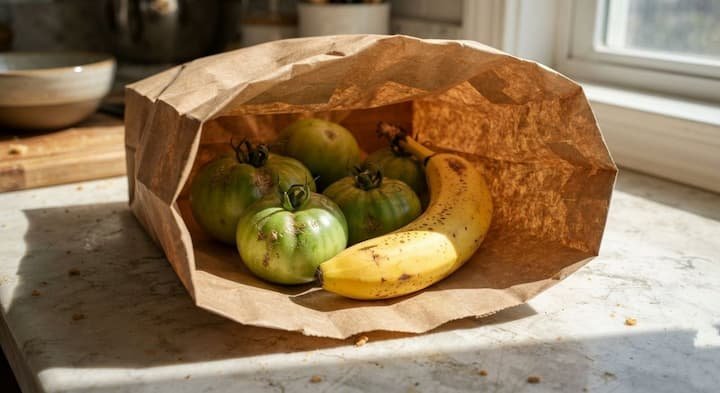
The Banana or Apple Trick
A ripe banana gives off far more ethylene than tomatoes do, so tucking one into the bag can trim 2 to 3 days off the wait. Apples work too, just a little weaker. Lab work backs the idea: tomatoes treated with ethylene ended up with more lycopene, the red pigment, than untreated ones.
- One ripe banana per 3 or 4 tomatoes.
- Pick yellow skin with a few brown freckles, not green and not black.
- Check every day or two, because ripening speeds up.
- Pull the banana once it turns mushy so its smell doesn’t rub off.
Windowsill Method Only for Tomatoes with Color
A sunny sill is for tomatoes already showing color, and it works best with a handful, not a whole harvest. Tomatoes don’t need sun to ripen, and long direct sun toughens the skin and dries the fruit before it can turn red.
- Set tomatoes stem side up, since the blossom end is firmer.
- Lay long paste types on their sides.
- Turn them every day or two.
- Pull any that start to wrinkle.
Hanging the Whole Plant Upside Down
Some gardeners pull the entire plant, roots and all, and hang it upside down in a garage or shed. The idea is that the vine keeps feeding the fruit as it slowly dries.
- Cut the plant at ground level so the dirt stays in your yard.
- Shake off loose soil and lay cardboard underneath.
- Check the fruit every day.
I tried it twice in my backyard and gave up. A six-foot plant tangles with its neighbors, especially one climbing a tomato trellis, and a dying vine drags mold and bacteria into your garage. It’s only worth it for one small, healthy plant loaded with green fruit and a spare corner.
Ripening Green Tomatoes: Stages and Timeline
Color moves in clear steps. The days below are rough, for fruit sitting around 70°F. A banana in the bag trims 2 to 3 days, and fruit with some color usually finishes in 7 to 14 days.
| Stage | What you see | Days to red |
|---|---|---|
| Mature green | Glossy, light green, no color | 10-14 |
| Breaker | First blush at the blossom end | 7-10 |
| Turning | Up to half pink or red | 4-6 |
| Light red | Mostly red, still firm | 2-3 |
| Red ripe | Deep color, slight give | Eat now |
Only move a tomato to the fridge once it’s fully ripe and you can’t eat it soon. A fridge ruins the flavor of unripe or half-ripe fruit.
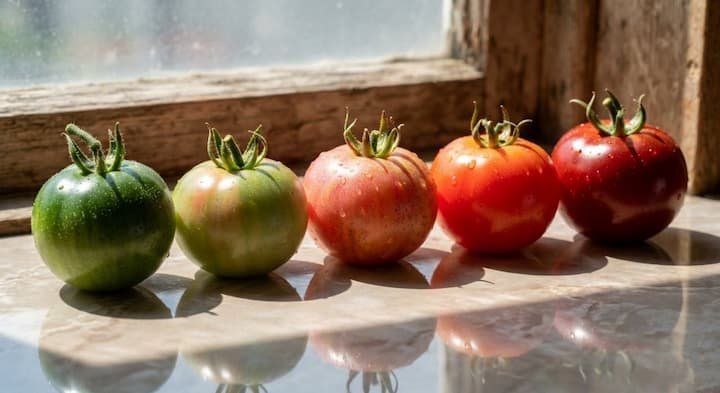
Best Temperature for Ripening Tomatoes Indoors
Aim for about 70°F, and a steady warm spot will favor even color across the whole box. Keep boxes away from heating vents, sunny glass and drafty garages.
- Best range: 68-70°F.
- Too cold: under 55°F, color and flavor stall and the skin can turn pitted or mealy.
- Too hot: over 85°F, red color fades and fruit ripens unevenly.
- Good spots: a pantry shelf, an interior closet or a spare room where you can ripen green tomatoes indoors without a draft.
How to Slow Down or Stagger Ripening
Splitting the harvest keeps fresh tomatoes coming into Thanksgiving. A garage, basement or cool room around 55-60°F can hold mature green tomatoes for about two weeks before you start them.
For longer storage, wrap each tomato in a sheet of newspaper, pack them no more than three layers deep, keep the box cool and dark, and check weekly. Ripe ones come out right away. Pro storage rooms run 90-95% humidity, but a newspaper-lined box in a closed, cool room does the job at home.
I keep one box in the garage for exactly this and bring a few to the kitchen each week. If the garage drops under 50°F, move the box inside. Staggering makes the most sense when you’re ripening green tomatoes by the bushel.
- Speed up: paper bag plus a banana, near 70°F.
- Normal pace: open single-layer box on the counter.
- Slow down: newspaper-wrapped, cool spot near 55°F, weekly check.
Why Indoor Tomatoes Taste Bland and How to Fix It
Indoor-ripened tomatoes rarely match one ripened in July sun, and cold is part of the reason. Once a tomato spends time under 55°F, it stops making an enzyme tied to flavor, and that loss stays. Late-season tomatoes grown through cold Fall nights are already bland before you pick them.
Slow cooking helps, because heat brings back some of the flavor. I think roasting is the best fix.
- Roast: halve, add olive oil and salt, bake at 400°F for about 35 minutes.
- Sauce or ketchup: long, slow simmering.
- Soup: blend roasted tomatoes with stock and basil.
Common Problems and Fixes
- Mold: too much moisture. Dry the fruit, switch to a fresh paper bag and toss the moldy one.
- Rot on the bottom layer: stacked too deep. Go single layer.
- Wrinkled, leathery skin: too much sun or dry air. Move the fruit off the window.
- Mealy texture: chilled below 55°F. Cook those.
- Fruit flies: spoiled tomatoes draw them. Pull rotten ones daily and set a small cider vinegar trap nearby.
- Everything ripens at once: bananas and warmth did their job too well. Move half to a cooler spot.
- Won’t turn red: too cold or too immature. Warm them up, and if they’re still green after three weeks, cook them.
- Split or cracked fruit: heavy rain after a dry spell swells fruit faster than the skin stretches. Pick anything with color before a big storm and finish it indoors.
Variety Differences
Tomatoes don’t all move at the same speed.
- Cherry and grape: fastest, often red in under a week.
- Paste types like Roma: medium pace and they store well.
- Beefsteaks: slowest, so give them the warmest spot.
- Big heirloom tomatoes: thin skins crack and rot sooner, so check them first.
Some varieties stay green or turn amber when ripe, so check the seed packet before you give up on them. The best tasting varieties are worth leaving on the vine as long as the weather allows.
What to Do with Green Tomatoes That Won’t Ripen
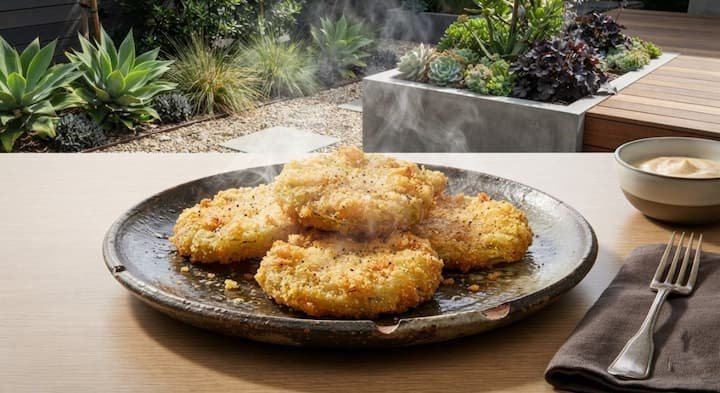
Some always stay hard, so cook them. For fried green tomatoes, cut ¼-inch slices, dredge them twice in seasoned flour and fry in about 1 inch of oil until golden. I always save a few for this, since it’s the best part of a frost warning.
- Relish: chopped with peppers and onion.
- Chutney: cooked down with apple and spices.
- Pickles: sliced or quartered in a vinegar brine.
- Salsa verde: swap them in for tomatillos.
- Pie: baked with sugar and spice, a lot like apple pie.
Green tomatoes are fine to eat in normal food amounts, cooked or fried. If nightshades upset your stomach, go easy or ask your doctor.
Mistakes to Avoid
- Putting unripe tomatoes in the fridge.
- Using plastic or ziplock bags that trap moisture.
- Washing fruit and not drying it.
- Trying to ripen tomatoes off the vine that are tiny and dark green.
- Stacking tomatoes deep and never checking the bottom layer.
- Leaving boxes in a cold garage when nights fall under 50°F.
- Saving cracked, soft or blight-spotted fruit.
- Waiting until after frost to pick.
Final Thoughts:
Now you know how to ripen green tomatoes without wasting a single good fruit. Pick before the frost, sort hard, keep them near 70°F, and check the box every day. Some will taste a little flat, so cook those. The rest will still beat anything from the store in Fall. Grab your pruners, clear the vines, and get the boxes ready this weekend.