Ever wondered why the ZZ plant survives in windowless offices while every other houseplant on the shelf turns yellow and gives up within a month? There’s a real reason behind that, and it has nothing to do with luck.
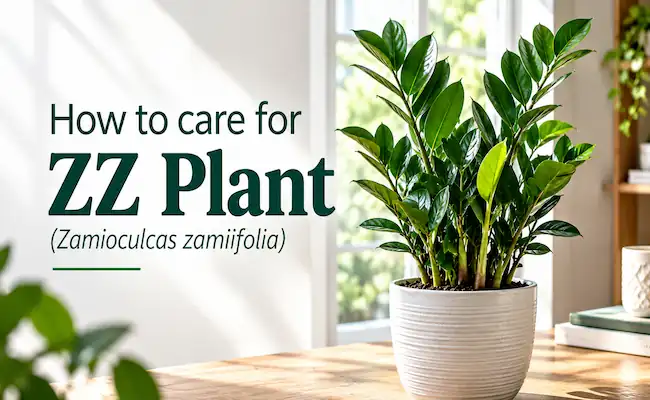
If you’re searching for how to care of ZZ plant the right way, you’re about to learn exactly what makes this plant nearly impossible to kill from the light it actually wants to the one watering habit that kills more ZZ plants than anything else. I’ve grown a few of these myself, and the rules are simpler than most articles make them sound.
What Makes This Plant a Community Gardener Favorite
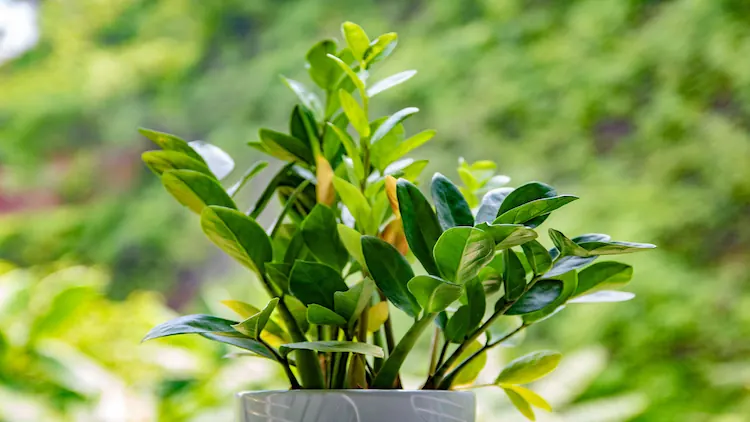
The ZZ plant, botanically known as Zamioculcas zamiifolia, comes from the dry grasslands of East Africa. That background explains almost everything about how tough it is. Its thick underground rhizomes store water the same way a camel stores fat, which is why this plant can go weeks without a drink and still look perfectly fine.
This is the kind of Zamioculcas zamiifolia care detail that separates a thriving plant from a struggling one understanding where it comes from tells you how to treat it at home.
A 2007 study published in the American Journal of Botany found that ZZ plants use a weak form of Crassulacean Acid Metabolism (CAM), a photosynthesis strategy that lets the plant hold onto carbon dioxide at night and cut water loss during drought stress (source). In plain English: it’s biologically built to survive neglect.
- Common names: ZZ plant, Zanzibar Gem, Eternity Plant, Aroid Palm.
- Family: Araceae (related to pothos and peace lily).
- Native region: Eastern Africa, dry forests and grasslands.
- Growth habit: slow-growing, glossy arching stems.
How to Pick a Healthy ZZ Plant at the Nursery
Not every plant on the shelf at a garden center is worth taking home. Before you check out, look the plant over the way a community gardener would before adding anything new to a collection.
- Leaves should be firm, glossy, and deep green with no yellow patches.
- Stems should feel sturdy, not soft or mushy at the base.
- Check the drainage holes for roots poking through a sign it’s already outgrown its pot.
- Skip any plant sitting in a saucer full of standing water; that’s an early red flag for rot.
How to Care of ZZ Plant: Light Requirements
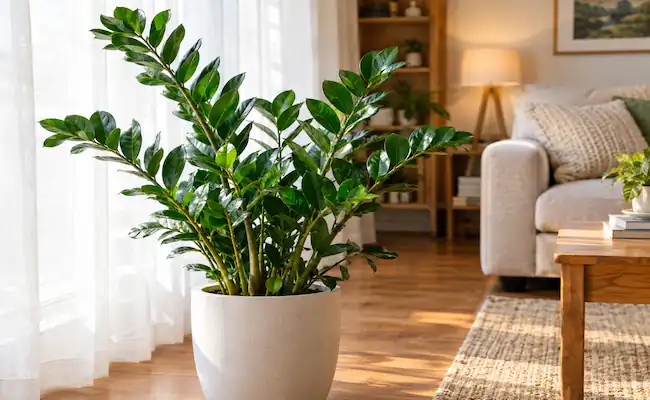
This is where most beginners overthink things. A ZZ plant will survive in low light, but it won’t look its best there. I always tell people the same thing: low light keeps it alive, bright indirect light makes it thrive. Direct sun through a south-facing window will scorch the leaves, so keep it a few feet back or behind a sheer curtain.
- Bright, indirect light: fastest growth, deepest leaf color.
- Medium light: steady but slower growth.
- Low light: (a windowless bathroom or office corner) survives, but growth nearly stops.
- Direct sun: avoid it completely, leaves will burn.
If your plant’s leaves start losing their rich green color and look pale or washed out, that’s usually a sign it needs a brighter spot.
ZZ Plant Watering Tips Nobody Tells You
Overwatering is the single biggest killer of this plant, hands down. In my experience, people treat it like a regular houseplant instead of the succulent-adjacent survivor it actually is. Let the soil dry out completely, all the way through the pot, before you water again.
| Season | Light Level | Watering Frequency |
|---|---|---|
| Spring/Summer | Bright indirect | Every 2 to 3 weeks |
| Spring/Summer | Low light | Every 4 weeks |
| Fall/Winter | Any light level | Every 5 to 6 weeks |
If you want a more detailed week-by-week breakdown, I put together a full ZZ plant watering schedule that covers pot size and light adjustments in more depth.
For a plant in a 10-inch pot, water it thoroughly until liquid runs out the drainage holes, then let the pot drain fully before setting it back on its saucer. A quart of water is usually plenty for a medium-sized plant; a large floor specimen in a wide pot may need closer to a gallon.
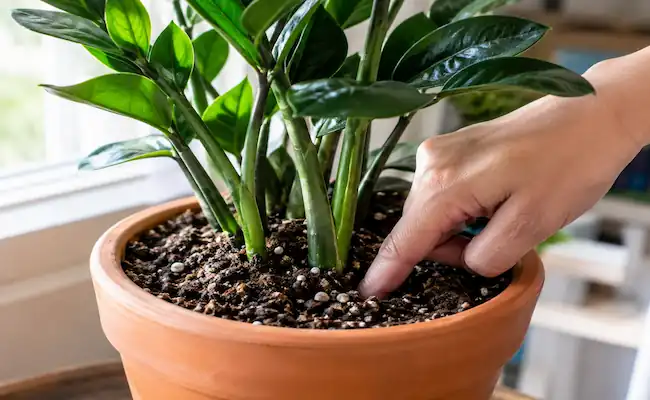
If you’re not sure, stick a finger 2 inches into the soil if it’s still damp, wait.
One thing I always mention when people ask me for ZZ plant watering tips: never let the pot sit in a puddle collected in the saucer. Standing water around the base is just as damaging as watering too often, since the rhizomes near the surface end up sitting in moisture they were never built to handle. Empty the saucer within an hour of watering, every single time.
Best Soil, Pot Size and Drainage for Growing ZZ Plant Indoors
Good drainage matters more than any other single factor when it comes to growing ZZ plant indoors successfully. A regular potting mix that holds too much moisture is a fast track to root rot:
- Use a well-draining mix: cactus/succulent soil, or regular potting mix cut with perlite.
- Always choose a pot with drainage holes.
- Go up only 1 to 2 inches in pot diameter when repotting.
- Repot every 2 to 3 years, or when you see rhizomes pushing against the pot walls.
Terracotta pots are worth the extra cost here. Unlike plastic, terracotta is porous and pulls excess moisture out through its walls, giving roots one more layer of protection against rot.
Temperature, Humidity and USDA Zones
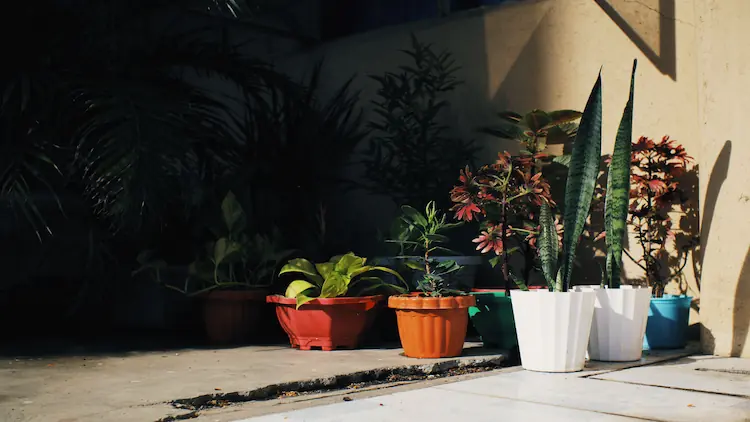
ZZ plants like normal indoor temperatures between 65°F and 75°F. Anything below 45°F can stress the plant and cause damage, so if yours spends summer out on the porch or backyard patio, bring it in well before the first Fall chill.
Outdoors, it’s only reliably hardy in USDA Zones 9 to 11 everywhere else, it’s strictly an indoor plant or a seasonal patio piece. Average household humidity is fine; you don’t need a humidifier or misting routine for this one.
If your home gets genuinely cold once winter sets in, my ZZ plant winter care guide covers exactly how to adjust watering and placement during those colder months.
Feeding Your ZZ Plant the Right Way
Because this is a slow grower, it doesn’t need heavy feeding. A balanced, diluted liquid fertilizer once a month during spring and summer is enough. Skip fertilizing entirely once Fall arrives the plant’s growth naturally slows down and extra nutrients just sit unused in the soil.
If you’d rather go the organic route, a light dose of worm castings works well too, and I’ve written a full worm castings guide that walks through exact amounts for indoor plants.
Pruning, Repotting and Propagation
Pruning a ZZ plant is low-effort. Snip yellowing or damaged stems at the base with clean pruners, and toss the trimmings in the trash or your backyard compost pile. Don’t over-prune this plant is slow to regrow.
Propagation is genuinely one of the most satisfying parts of owning this plant, and it’s easier than people expect once you know the steps. I put together a full walkthrough on how to propagate a ZZ plant from a single leaf cutting, which is worth reading before you try it the first time.
Common ZZ Plant Problems and Fast Fixes
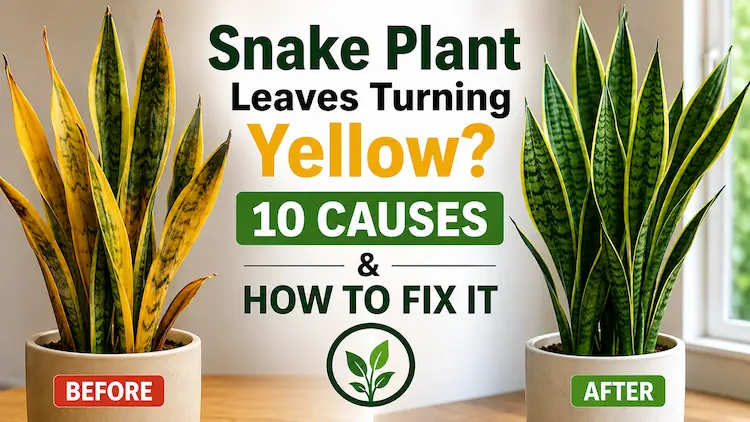
- Yellow leaves: almost always overwatering; let the soil dry out fully before the next watering. If this keeps happening, my post on why ZZ plant leaves turn yellow walks through every possible cause in detail.
- Brown, crispy tips: underwatering, low humidity, or mineral buildup from tap water.
- Drooping or mushy stems: root rot has likely set in; check the rhizomes and trim any soft, black sections.
- No new growth for months: usually a light problem; move it to a brighter, indirect spot.
- Curling leaves: stress from temperature swings or a cold draft near a window.
- Stems splitting or cracking at the base: usually a pot that’s become too tight for the rhizomes; move up a size.
Most of these fix themselves within a few weeks once the cause is corrected avoid changing conditions again before giving the plant time to recover.
How to Rescue a ZZ Plant From Root Rot
If you catch mushy stems early, there’s a good chance of saving the plant:
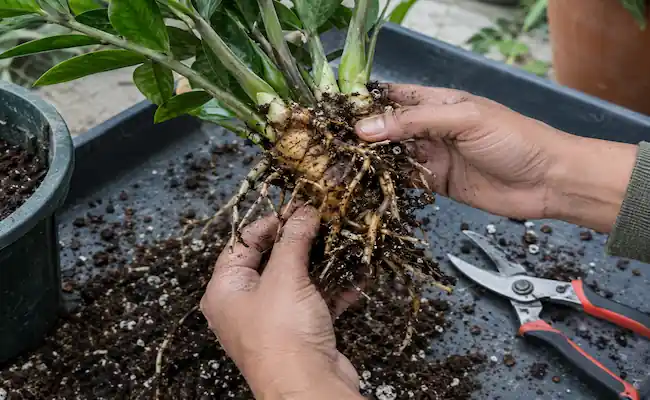
- Remove the plant from its pot and rinse the soil off the rhizomes.
- Cut away any black, soft, or foul-smelling sections with clean pruners.
- Let the remaining healthy rhizomes air-dry for a few hours before repotting.
- Repot into fresh, dry soil in a clean pot with drainage holes.
- Hold off watering for at least a week to let the cut ends heal over.
ZZ Plant Pests to Watch For
Pests aren’t common on this plant, but spider mites and mealybugs do show up occasionally, especially on a stressed or overcrowded plant.
- Spider mites: fine webbing and tiny yellow speckles on leaves; wipe leaves down and slightly increase humidity.
- Mealybugs: white, cottony clusters near stem joints; dab them off with a cotton swab dipped in rubbing alcohol.
- Isolate an infested plant from other houseplants until it’s fully clear.
Is the ZZ Plant Toxic? What Every Plant Parent Should Know
Yes, and this is worth taking seriously if you have kids or pets. The plant contains calcium oxalate crystals, which the ASPCA lists among common toxic plant compounds that cause oral irritation, drooling, and vomiting if chewed or swallowed (source). It’s not usually life-threatening, but it’s genuinely unpleasant for whoever bites into it.
I think this detail gets glossed over too often in plant care guides, so if pets or toddlers are in the house, place it somewhere out of reach. I’ve covered this in more depth separately if you want specifics including is it toxic to dogs, toxic to cats, and toxic to babies.
Raven ZZ vs Standard ZZ Plant
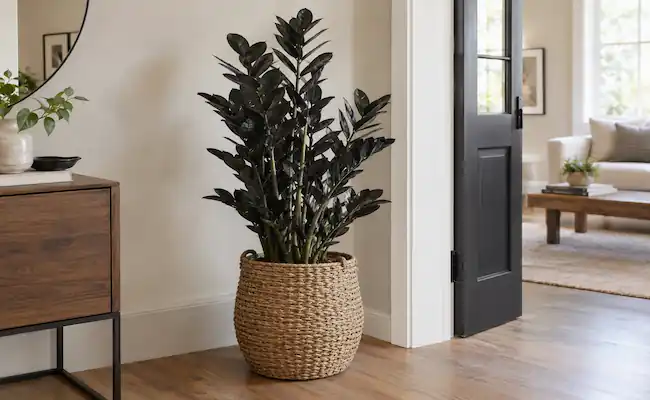
The Raven ZZ is a darker, almost black-leafed cultivar that’s become a real center favor among plant collectors over the last few years. Care is nearly identical to the standard green variety same light, same watering rules but new growth on a Raven ZZ actually emerges bright green before darkening over several weeks.
If you’re curious about growing this variety specifically, I broke it all down in my Raven ZZ plant guide.
Does a ZZ Plant Flower?
Yes, occasionally, though it’s rare indoors. A mature, well-established plant sometimes sends up a small, pale spathe near the base that looks similar to a peace lily bloom, just smaller and far less showy.
It’s actually a good sign your plant is healthy, not something to worry about. Plenty of ZZ plants live for years indoors and never flower at all, so don’t treat it as a milestone you need to chase.
Styling Your ZZ Plant at Home
Its upright, architectural shape makes it an easy centerpiece for a room, not just a plain corner filler:
- Pair it with a simple ceramic or woven basket planter for a natural look.
- Group it with lighter-colored foliage plants so its deep green color stands out.
- A tall Raven ZZ works well as a floor accent near a doorway or an empty backyard-facing window.
Final Thoughts:
At the end of the day, learning how to care of ZZ plant comes down to three things: don’t overwater it, give it decent indirect light, and leave it alone the rest of the time. This isn’t a plant that rewards fussing it rewards restraint. Whether you’re a first-time plant owner or a longtime community gardener adding another pot to the collection, the ZZ plant is about as forgiving as houseplants get, and once you get the watering rhythm right, it genuinely takes care of itself for years.