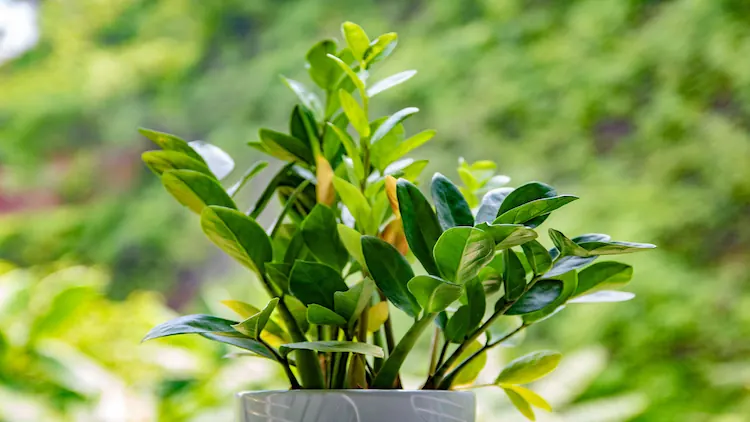
If your ZZ plant’s leaves are turning yellow or the stem feels soft near the base, the problem usually isn’t how often you’re watering it’s what you potted it in.
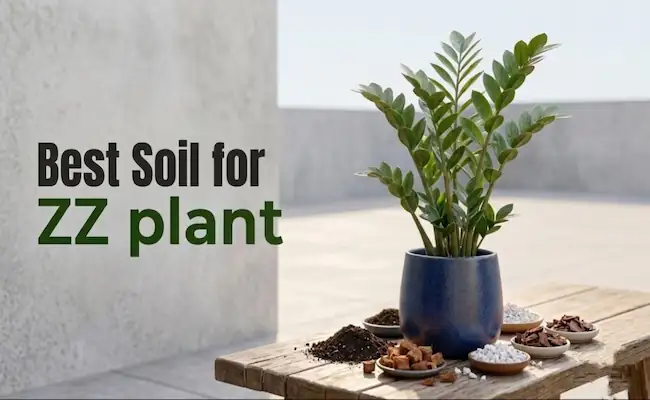
I learned this after losing a plant that looked perfectly healthy one week and mushy the next. The best soil for zz plant care isn’t complicated, but it has to do three specific jobs at once, and most bagged potting soil sitting on the shelf at your local garden center only handles one of them. Here’s what actually works, and why.
Why ZZ Plants Need Different Soil Than Your Other Houseplants
Zamioculcas zamiifolia comes from rocky, seasonally dry regions of East Africa, where rain shows up hard for a few months and then disappears for the rest of the year. To survive that, the plant grows thick, potato-like rhizomes just under the soil surface that store water and starch.
That’s not a random fact I’m throwing in it’s documented in botanical references on the species’ native range and adaptation (source).
It’s also the whole reason soil for zamioculcas zamiifolia has to behave differently than the moisture-holding mix you’d use for a fern or a peace lily. Those rhizomes need a real dry stretch between waterings, and dense soil never gives them one.
Ideal Soil pH for ZZ Plants
ZZ plants do best in slightly acidic to neutral soil:
- Ideal range: 6.0 to 7.0 pH
- Good news: most bagged cactus mixes and standard potting soils already sit inside that range.
- Testing it: a cheap probe meter or strip test kit from any garden center gives you a reading in seconds.
- Priority order: check drainage and light first treat pH testing as a last step, not your first guess.
What the Best Soil for ZZ Plant Actually Needs to Do
Before you buy or mix anything, understand what you’re solving for. Good soil for this plant does three things at once:
- Drains fast so water doesn’t pool around the rhizome.
- Stays loose and airy so roots can actually breathe.
- Holds just enough structure to anchor the plant without trapping moisture.
If a mix checks all three boxes, the exact brand or recipe matters a lot less than people assume.
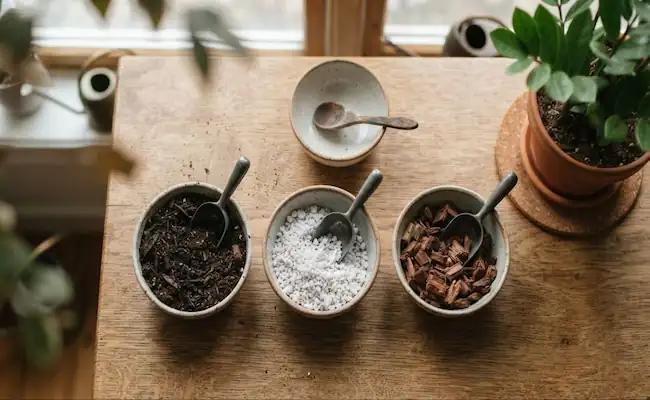
The DIY ZZ Plant Soil Mix Recipe
If you’d rather build your own, this ratio has worked well for me and for most community gardener friends I’ve swapped plant notes with:
| Ingredient | Amount | What It Does |
|---|---|---|
| Potting soil or cactus mix | 50% | Base structure and nutrients |
| Perlite or pumice | 30% | Aeration and drainage |
| Orchid bark or coarse sand | 20% | Prevents compaction, keeps air pockets |
In a hot, dry home, push it closer to 60/30/10 so it dries faster. In a humid space, or if you tend to forget waterings, stick with 50/30/20 for a little extra moisture buffer. Neither version is wrong they’re just built for different homes.
Step-by-Step: How to Mix and Pot the Soil
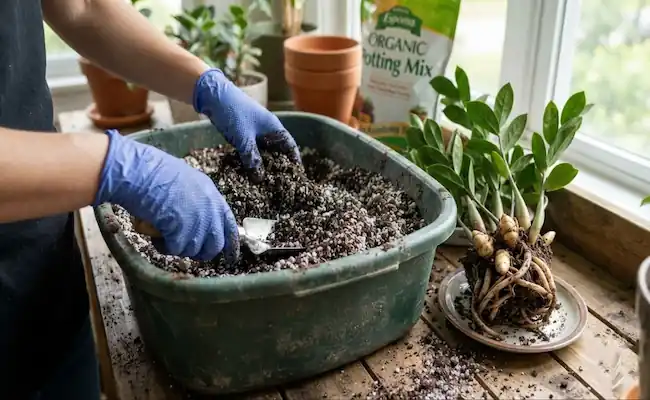
Once you’ve got your ingredients ready:
- Wear gloves ZZ plant sap can irritate skin.
- Combine dry ingredients in a bucket first.
- Add a little water until the mix feels evenly moist, not soggy.
- Add a couple of inches of mix to the bottom of the new pot.
- Position the rhizome at or just below the surface.
- Backfill around the roots without packing it down tight this plant needs loose, breathable soil.
- Water lightly, then let the top few inches dry out before watering again.
Best Store-Bought Potting Soil Options
If mixing your own isn’t your thing, look for the best potting soil for zz plants labeled as a cactus or succulent blend:
- Look for: visible chunks of bark, perlite, or pumice not a smooth, uniform texture.
- Skip: anything marketed as “moisture control,” which is engineered to do the opposite of what this plant needs.
- For drier homes: a tropical or aroid-blend soil with visible bark holds a touch more moisture without becoming dense.
Can You Use Cactus or Succulent Soil As-Is?
Yes, with a couple of caveats:
- Straight from the bag: works fine for most homes and is the simplest option.
- Especially dry homes: blend it 60/40 with regular potting soil for a bit more moisture retention.
- On the label: cactus and succulent soil are essentially interchangeable both are built for the same fast-draining, chunky texture.
How Much Soil Do You Actually Need?
Pot size determines how much mix to prep. Here’s a rough guide by container size:
| Pot Diameter | Soil Needed |
|---|---|
| 6 inches | About 0.5 gallon |
| 8 inches | About 1 gallon |
| 10 inches | About 1.5 to 2 gallons |
| 12 inches | About 3 gallons |
Mix slightly more than you think you’ll need soil settles once it’s watered in.
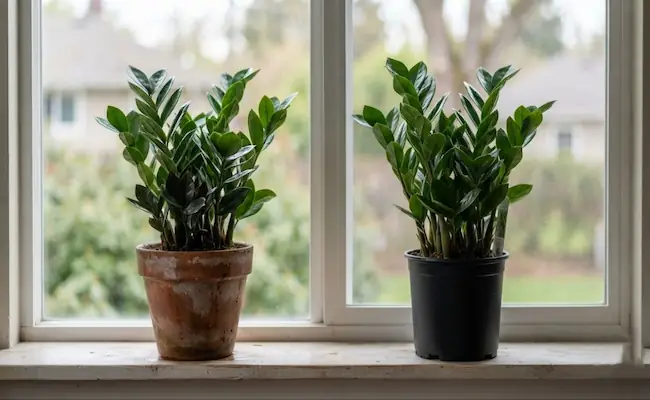
Pot Material: Terracotta vs Plastic
The same soil mix behaves differently depending on the container:
- Terracotta or unglazed clay: porous walls let moisture escape faster forgiving if you tend to water generously.
- Plastic or glazed ceramic: holds moisture longer since nothing evaporates through the sides.
- Decorative pots with no drainage hole: keep the plant in a nursery pot with holes inside it, then empty any water that collects in the outer pot after watering.
Repotting: When to Refresh the Soil
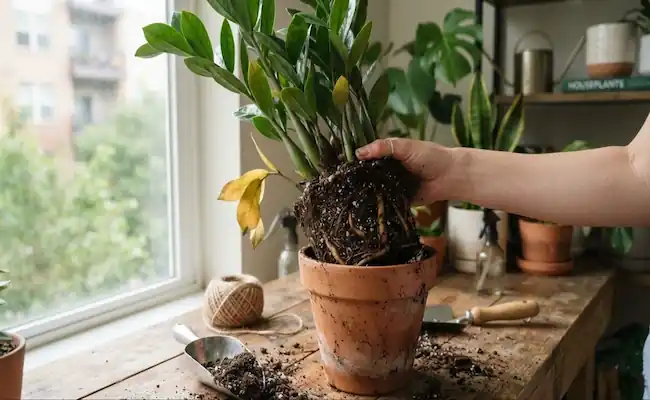
Soil compacts over time even if you never repot. Perlite settles, organic matter breaks down, and a mix that drained beautifully a year ago can start holding water like a sponge.
I usually check the rhizome and refresh the soil every 2 to 3 years, and if you’re not sure your plant is due, our guide on when to repot a ZZ plant walks through the exact signs to look for. When you do repot, go only 1 to 2 inches wider than the current pot an oversized container just holds extra moisture the roots can’t use.
Seasonal Soil Adjustments
You don’t need a different mix for winter, but the same soil dries at a different pace depending on the season:
- Summer: soil might dry out in about ten days.
- Winter: the same mix can take up to three weeks, thanks to cooler temperatures and shorter daylight hours.
- Rule of thumb: check moisture with your finger before watering on autopilot.
- Outdoors in warmer months: expect the same soil to dry faster in the heat and airflow of your yard.
Light and Soil Work Together
Soil dries at completely different speeds depending on where you place the pot. A ZZ plant sitting in bright, indirect light dries out faster than the same plant tucked in a dim corner, regardless of the ratio you used.
If you’re not sure your plant is getting the right exposure, check our breakdown of ZZ plant light requirements it changes how often you’ll need to water, even with identical soil.
Alternative Growing Methods Worth Knowing
Soil isn’t the only option. Some growers root cuttings in plain water first before ever touching potting mix, and it’s a great way to watch root development without guessing. If that interests you, our guide on propagating a ZZ plant in water covers the full process step by step, including when to finally transition the cutting into soil.
Common Soil Mistakes That Cause Problems
Most ZZ plant problems trace back to soil, not neglect. University of Maryland Extension notes that excess water in soil reduces oxygen around the roots, which is what actually damages them, not the water itself (source). Once oxygen drops, roots stop functioning even though the soil looks wet which is exactly why overwatered plants sometimes look like they’re drying out.
Watch for these mistakes:
- Using dense, moisture-heavy potting soil straight from the bag.
- Planting in a pot without drainage holes.
- Burying the rhizome too deep below the surface.
- Choosing a pot that’s far too large for the current root mass.
- Letting old, compacted soil sit for years without a refresh.
If your plant’s leaves have already gone yellow, don’t assume it’s automatically the soil our guide on why ZZ plant leaves turn yellow breaks down the full list of causes so you’re not guessing. If you do find soft, mushy rhizome tissue while repotting, trim it away with sterilized pruners, let the cut dry for about an hour, and toss the damaged piece straight in the trash rather than composting it you don’t want that rot spreading to your other plants.
Signs Your Soil Has Gone Wrong
| Sign | Likely Cause |
|---|---|
| Soil stays wet more than two weeks | Mix too dense or pot too large |
| Sour or musty smell | Early root rot |
| Water runs straight through | Soil compacted or too sandy |
| Small black flies near the surface | Fungus gnats from a damp, organic-heavy mix |
| Yellow leaves with mushy stems | Overwatering combined with poor drainage |
If you notice more than one of these at once, it’s usually faster to repot into fresh mix than to try fixing the existing soil in place.
Boosting Soil Health Naturally
ZZ plants aren’t heavy feeders, but a little organic matter goes a long way in a well-draining soil for zz plant setup:
- My pick: a small amount of worm castings rather than synthetic fertilizer it feeds slowly and won’t burn the roots
- Backyard compost: kitchen scraps from things like zucchini or eggplant work fine blended sparingly into the mix too
- For exact ratios: check our post on using worm castings as fertilizer indoors
DIY vs Store-Bought: Which Is Worth It?
- DIY mixing: costs less per batch and lets you adjust the ratio for your home, but means buying several bags of ingredients you may not reuse soon.
- Store-bought blend: costs more per bag but saves time and works well straight out of the packaging.
- One or two plants: buying pre-mixed soil is usually the more practical call.
- Plant collectors with several pots: mixing your own stretches your budget further.
Soil for Outdoor and Backyard Growing
Most of the country can’t leave a ZZ plant outdoors year-round:
- Winter hardiness: not hardy in USDA Zones 4, 5, 6, 7, or 8; it starts sulking below 50°F.
- Community gardeners: if you move plants to the yard for summer, use the same fast-draining mix in a container rather than planting directly in garden soil.
- Timing: bring it back indoors well before the first Fall frost.
- The only real difference outdoors: the same soil rules applyit just dries faster in the heat, so check moisture more often.
Final Thoughts:
At the end of the day, the best soil for zz plant care comes down to drainage, airflow, and not overthinking it. A cactus blend, a simple DIY ratio, or a store-bought mix with visible bark and perlite will all work as long as water moves through quickly and the rhizome never sits wet for days. Get that one thing right, and this plant genuinely becomes one of the lowest-maintenance additions to any home or office collection you’ll ever own.