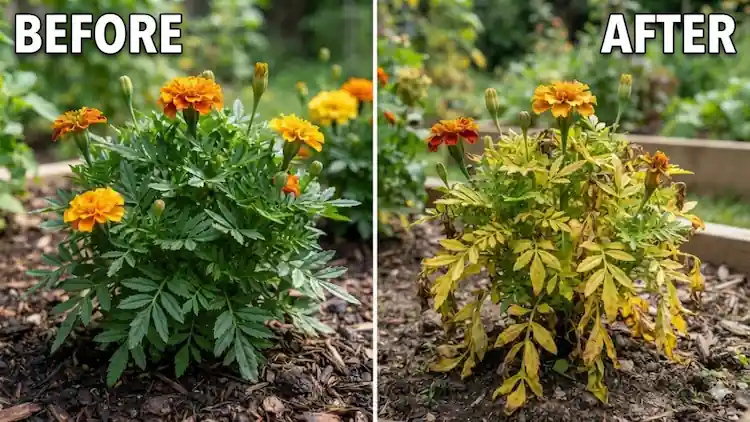
Here’s the weird part about tulips: thirst almost never kills them, but a heavy hand with the hose does it all the time. That’s why how often to water tulips has a different answer in October, January, and May.
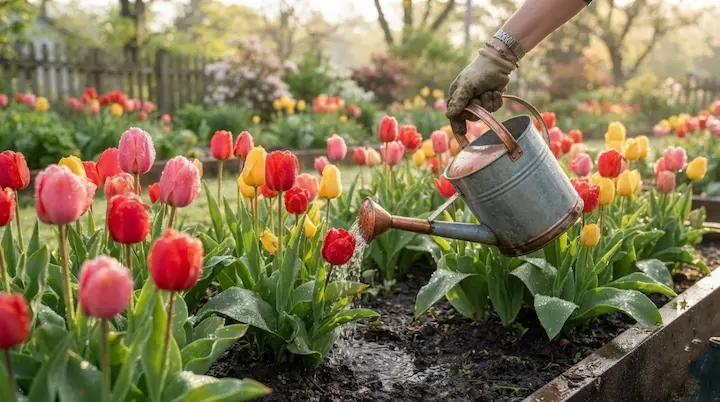
Get the timing right and your backyard bed rewards you with big color every spring. Get it wrong and the bulbs turn to mush before you ever see a sprout.
Why Tulips Need Less Water Than Most Flowers
A tulip bulb is basically a storage tank. It holds next year’s food, so it doesn’t need constant water or fertilizer. Tulips also come from places with cold, fairly dry winters, so they never got used to wet dirt.
Most garden flowers want about 1 inch of water a week while growing, and daffodils and petunias fall right in line. Tulips get by on less. Some growers quote about two-thirds of an inch. Sunflowers are a lot thirstier, and this sunflower watering guide shows the contrast.
The real enemy is low oxygen. Soggy soil pushes the air out, the bulb tissue breaks down, and rot moves in. That’s the top reason tulips never come up in spring, and tulips favor well-drained soil for exactly that reason.
Here’s the data point I lean on. An older Michigan State University Extension bulletin says to water bulbs thoroughly right after planting, and that this first soak usually covers winter, with the bulb base about 6 inches deep (8 to 12 inches in sandy soil). Utah State Extension adds that soil should stay moist, not wet.
How Often to Water Tulips in Each Growing Stage
- Right after planting: Soak the whole bed slowly. It settles the soil, closes air pockets, and wakes the roots before the ground freezes.
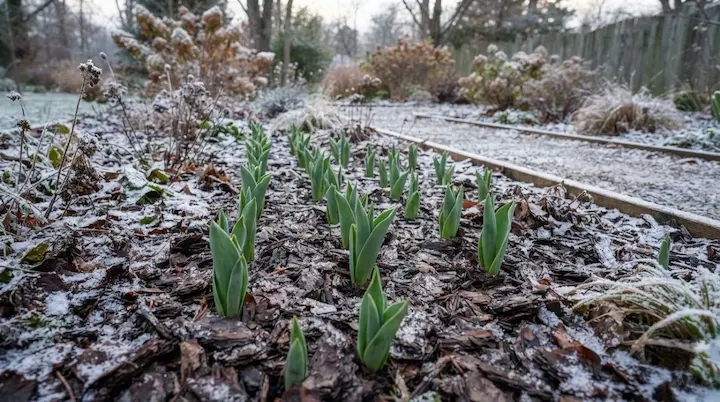
- Late Fall and winter: Roots keep building underground, and rain or snow usually covers the need. Once soil freezes at 32°F, stop watering, since water can’t soak in and just turns to ice. For more on cold-season care, read this tulips winter care guide.
- Sprouting: When green tips show, start checking the soil once a week.
- Leaf growth and budding: Keep soil evenly moist, never soggy.
- Blooming: Moderate water at the base only.
- After the petals drop: Keep a little water going while leaves are green, then taper off as they yellow. Leave the foliage about 6 weeks so it feeds the bulb.
- Summer rest: Keep bulbs dry. A lawn sprinkler hitting the bed in July will rot them.
| Stage | In-ground bed | Pot |
|---|---|---|
| Planting week | One deep, slow soak | Water until it drains out the bottom |
| Winter dormancy | Rain and snow only | Check every 3 to 4 weeks, water if dry 2 inches down |
| Sprouting | Check weekly | Check weekly |
| Growth and bloom | About 1 inch a week, rain included | Water when the top 1 inch is dry, about weekly |
| After bloom | Water only in dry spells | Taper off as leaves yellow |
| Summer | None | None, keep dry |
Tulips in the Yard: Soil, Sun, Mulch and Exceptions
Full or afternoon sun works, but drainage matters more. If water sits on the bed over an hour or two after a big rain, that’s a drainage problem. Heavy clay is the usual cause. Mix in compost, or build a raised bed 8 to 12 inches tall.
Sandy soil is the opposite problem: it drains fast, so compost helps it hold moisture.
- Dry winters (Mountain West, Southwest): No rain or snow for 4 to 6 weeks and no frozen soil? Give it a light drink.
- No snow cover: Wind can dry the soil. If it feels like dry sand 1 to 2 inches down, water on a day above 32°F.
- Late planting: Bulbs going in during December or January? Water them in just like an October planting.
Mulch 2 to 3 inches deep with shredded bark, straw or leaves. It holds moisture and smooths out freeze-thaw swings, so mulched beds often need zero winter watering. A cheap rain gauge from a garden center shows when rain covered the inch. For scale, 1 inch over 10 square feet is about 6 gallons.
How to Water Tulips in Pots Without Drowning Them
Pot soil freezes, thaws, and dries out faster than bed soil, so containers need more attention. I like terracotta because it breathes, though plastic holds water longer and needs a lighter hand.
- Several small drainage holes beat one big one.
- Pick a pot deep enough for about 8 inches of soil.
- Use a light, well-draining mix with compost or peat moss.
- Empty the saucer after watering so roots never sit in water.
- For winter, park pots in a cool, frost-free, dry spot like an unheated garage or shed. Damp air invites fungus.
- Pots left outside can get soaked by rain and snowmelt, so tilt them or cover them.
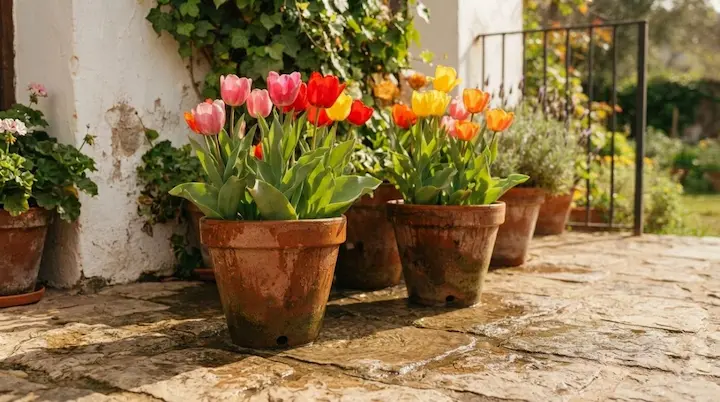
When you water tulips in pots during winter, check every 3 to 4 weeks. Push a finger down to the second knuckle. If the soil is dry and crumbly, add a small drink, just enough to feel like a wrung-out sponge.
If it’s frozen solid, skip it. For a repeat show next year, give bulbs 12 to 14 weeks in a cool, dark spot, then move them into sun and water regularly once shoots appear.
How Much Water Tulips Need Per Session and How to Check
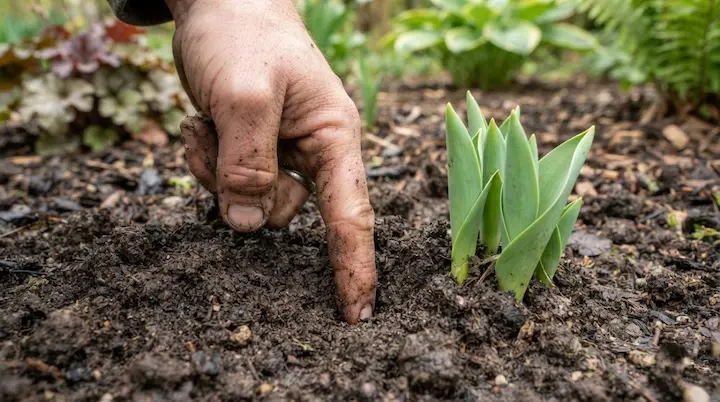
In a bed, water slow and deep so moisture reaches the 6 to 8 inches where the roots sit. A quick sprinkle only wets the top. In a pot, keep pouring until water runs out the bottom, then stop.
Water in the morning so leaves dry before night, and aim at the base of the plant, not the petals, to cut down on fungus. Tap water is fine, and rain barrel water is a bonus.
- Finger test: 1 inch down during growth, 2 inches down during dormancy.
- Chopstick or meter: Push a chopstick 6 inches down. Damp, dark soil on it means you’re good. A cheap moisture meter works too, but back it up with your finger.
Overwatering vs Underwatering: What Tulips Show You
Watering tulips too much is far more common than watering too little. I’ve lost a row of Darwin Hybrids to soggy clay.
If you dig up a bulb and it’s mushy or smells sour, that’s rot. Pull it out, put it in the garbage instead of the compost pile, and never replant in the same wet spot.
Prevention is simple: right plant, right place, meaning a well-drained spot. This root rot guide covers the warning signs.
| Sign | Likely cause | Fix |
|---|---|---|
| Yellow, floppy leaves before bloom | Soggy soil | Stop watering, improve drainage, and read about tulips turning yellow |
| Gray fuzzy mold | Too wet, poor airflow | Water at the base, thin crowded pots |
| Bulb never sprouts | Rot or too little chill | Dig one up and check |
| Stunted, drooping plant, curling tips, buds stay shut | Too dry | Deep soak and add mulch |
Adjusting Your Tulip Watering Schedule for Your Zone
Don’t copy a tulip watering schedule from a neighbor two states over. Rain, snow, and soil type change everything.
- USDA Zones 4, 5, 6, 7 and 8: Rely on rain and snow after the first soak. Melting snow works like a slow-release blanket.
- USDA Zones 8, 9 and 10: Tulips need about 12 to 16 weeks below 45°F. Where the ground never gets that cold, pre-chill bulbs in the fridge, away from apples and ripening fruit, then plant with a deep first soak.
Rain and thaw cycles matter too. Puddles over the bed after snowmelt mean a drainage problem, so fix the grade instead of adding water. In a heat wave, pots dry out fast, so check them more often.
Feeding Tulips Without Overdoing the Water
Feeding and watering go hand in hand. Feed once when the first shoots show, using a balanced bulb fertilizer, and stop after the petals drop.
I think a light hand works better than a heavy one. Worm castings are a gentle option, and this guide on worm castings as fertilizer covers indoor use.
Cut Tulips and Forced Bulbs Indoors
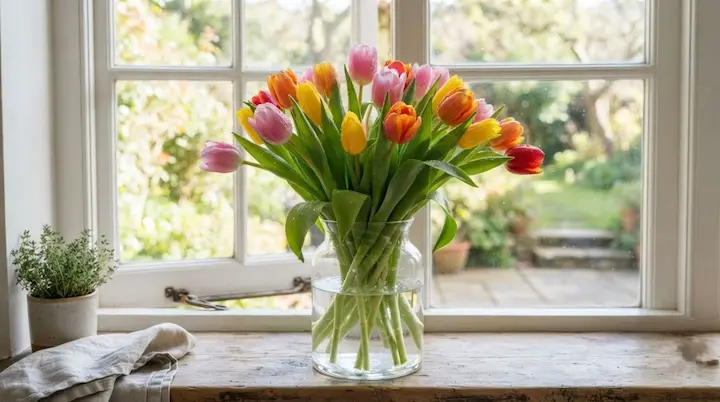
Cut tulips drink a lot and keep growing after you bring them inside.
- Trim about 1 inch off the stems at an angle.
- Use a few inches of fresh, cold water.
- Change the water every 2 to 3 days.
- Skip homemade additives, since some clog the stems.
Cuttings you root in water are a different job, and this propagate plants in water guide covers it.
Forced bulbs need to be pre-chilled first, then they sit on pebbles or glass beads in a vase. Keep the water just below the base of the bulb so only the roots get wet. A bulb sitting in water rots fast. Other windowsill plants slow down in winter too, so check the guides for pothos in winter, orchids in winter, peace lily winter and spider plant winter care.
Signs Your Tulip Bulbs Are Fine Underground
Nothing showing in January isn’t a bad sign. These signs tell you the bulbs are fine:
- Soil feels firm, cool, and slightly damp 1 to 2 inches down.
- No puddles linger after rain or snowmelt.
- Pot soil feels like a wrung-out sponge, not mud.
- Green tips show up in early spring.
- Leaves come up firm and green, not yellow or floppy.
Common Watering Mistakes Every Community Gardener Makes
In my experience, nearly every failed tulip bed traces back to one of these.
- Watering tulips every day: Bulbs want damp, not wet.
- Watering frozen ground: It can’t soak in and just forms ice.
- Skipping drainage holes or leaving a full saucer.
- Running sprinklers over a summer bed.
- Cutting leaves too early: Wait until they’re fully yellow, then snip with clean pruners.
- Watering after leaves yellow: Once they die back, the bulb wants to stay dry.
- Trying internet hacks: Stick to drainage, depth and soil instead of unproven tricks.
Quick Checklist Before You Grab the Hose
- Plant 6 to 8 inches deep, then soak once, deep.
- Mulch 2 to 3 inches in late Fall.
- Observe first: if rain or snow keeps showing up, skip the hose.
- Match how much water tulips need to the stage, not the calendar.
- Check pots every 3 to 4 weeks in winter.
- Leave leaves 6 weeks after bloom, then keep bulbs dry.
- My rule: when in doubt, check the soil again tomorrow.
Final Thoughts:
Once you know how often to water tulips at each stage, the job gets easy: one deep soak in Fall, mostly hands off in winter, steady moisture while leaves and buds grow, and dry feet in summer. Pots need more checking, and drainage beats everything else. Watch the soil, not the calendar, and next spring’s backyard color will be worth it.