Ever noticed a tomato plant droop while the soil is still soaking wet?
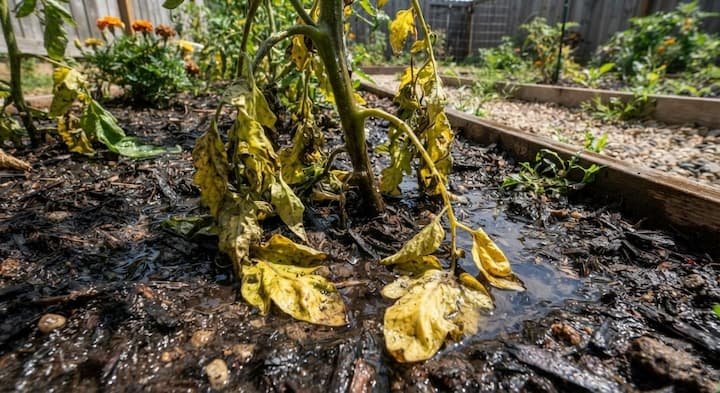
That mix-up fools plenty of backyard growers, and it’s why the signs of overwatered tomato plants get mistaken for thirst all the time. Roots need air as much as water, and flooding them shuts that off. Here’s how to read the clues, tell them apart from other problems, and bring the plant back.
How Overwatering Actually Hurts Tomato Roots
Roots breathe through tiny air pockets between soil particles. Flood those pockets and the roots can’t get oxygen, even with water all around. A 2013 study in Plant and Soil found that tomato roots sitting in waterlogged soil slowed down fast and eventually died, while roots above the soggy zone grew quicker to make up for it (Dresbøll et al., 2013).
Soggy ground also invites fungus. Tomato root rot from overwatering usually comes from Pythium and Phytophthora, two soil fungi that love low-oxygen mud, and they turn healthy roots to mush.
Meanwhile the suffocating roots can’t drink or feed the plant. Extra water also flushes nutrients past the roots, especially in sandy soil, and dilutes whatever is left.
Signs of Overwatered Tomato Plants You Can See on the Leaves
Leaves talk first, so start with the lower ones and work up. I think the droop is the clue that trips people up most, because a thirsty plant droops too. Check the soil before you grab the hose.
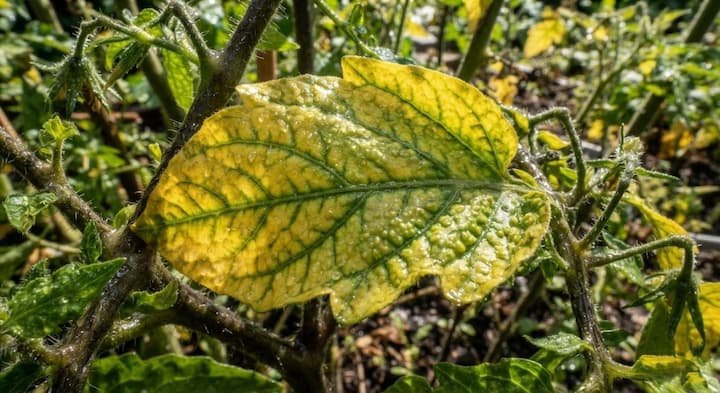
- Yellow lower leaves: older leaves turn pale while the veins can stay green, since waterlogged roots can’t pick up nitrogen. Browning leaf edges and a dull look are common too. For more, read about yellow tomato leaves.
- Drooping with wet soil: leaves and stems feel soft and floppy, not dry and crispy, and watering again doesn’t perk them up.
- Curling or cupping: leaves roll down and under, or cup. Sources describe the direction differently, so judge it next to the soil, never alone.
- Edema blisters: overwatered tomato plant leaves can show tiny bumps or blisters underneath, which happens when roots pull in more water than the leaves can release.
- Dark spots: black or brown patches can point to fungus that spreads in wet conditions, though spots alone don’t prove a watering problem.
Tomato Plant Overwatering Symptoms on Stems and Soil
Stems and soil give away what the leaves can’t.
- Soft, mushy stem base: firm stems turn soft and dark brown or black near the soil line. That’s a late warning of root rot.
- Stunted growth: the plant just sits there, thin-stemmed, weak, and short on vigor, with little or no fruit, even with plenty of sun.
- Sour smell: soil that smells rotten or stagnant has lost its oxygen.
- Algae, mold, or standing water: a green film or fuzzy mold on top means the surface stays wet far too long.
- Fungus gnats: small flies hovering around a pot show up when the soil stays damp.
Fruit Problems Tied to Too Much Water
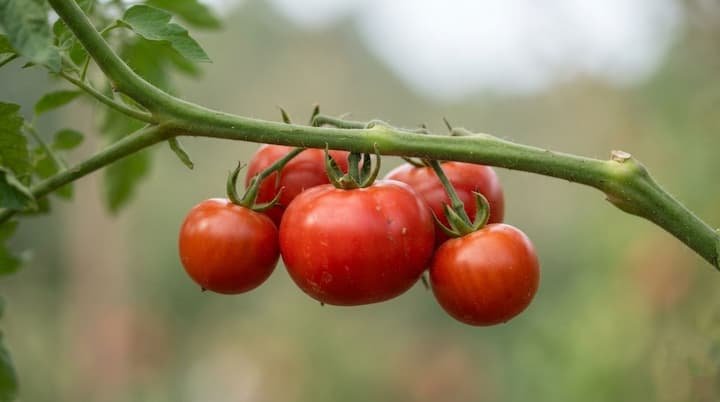
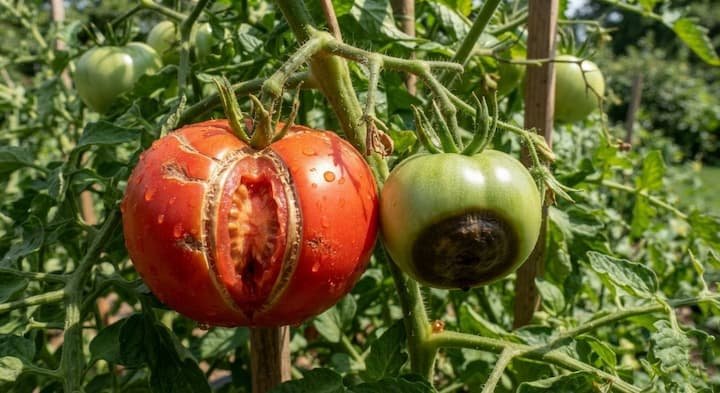
Cracked skin comes first: a big dump of water, often late-season rain, makes the fruit swell faster than the skin can stretch, and the cracks let pests in. Cracking isn’t always an overwatering problem, since heavy rain does it too, but uneven watering is the usual cause.
Next is blossom end rot, those brown, sunken spots on the bottom of the fruit. Damaged roots can’t move calcium up into the fruit, and extra water thins out soil nutrients, so adding more calcium rarely fixes it.
Affected fruit won’t heal once the watering is fixed, but you can cut off the bad spot and eat the rest. The full blossom end rot guide goes deeper. Flavor takes a hit too, since even the best tasting varieties turn watery and bland when roots are drowning.
When heavy rain is coming at the end of fall harvest, pick fruit that’s close to ripe and finish it on the kitchen counter.
Overwatering vs. Underwatering: Side-by-Side
Both make a plant wilt, so people guess wrong. This table sorts them out.
| What to check | Overwatered | Underwatered |
|---|---|---|
| Soil | Soggy, pooling, sour smell | Dry, cracked, pulling from the pot edge |
| Leaves | Yellow, soft, drooping, curling | Limp, then crispy and brown at the edges |
| Stems | Weak, thin, mushy at the base | Firm but limp |
| Roots | Dark, slimy, breaking apart | Dry and brittle |
| Fruit | Cracked, watery, blossom end rot | Small, weak, or bursting after a big drink |
| Recovery | Slower and harder to save | Usually quick once watered |
A thirsty plant perks up within hours of a good drink.
One trap: a plant left limp until it begs for water gulps a lot at once, and the fruit can burst on the vine. A little afternoon wilt on a hot day is normal, so look again in the evening.
Problems That Look Like Overwatering
Tomato plant overwatering symptoms overlap with several other issues, so read the soil and the leaf pattern together.
| Problem | Clue that points away from water |
|---|---|
| Nitrogen shortage | Lower leaves yellow evenly, soil feels normal or dry |
| Early blight | Brown spots with rings, like a target, on lower leaves |
| Septoria leaf spot | Lots of small round spots with gray centers and dark edges |
| Fusarium or verticillium wilt | Yellowing on one side or one branch, brown streaks inside a cut stem |
| Southern blight | White threads and tiny tan balls at the soil line in hot, humid weather |
| Cold soil | Purple-tinged leaves and stalled growth when soil sits under 50°F |
| Transplant shock | Wilting a few days after planting that clears up on its own |
Chewed leaves or missing foliage point to tomato hornworms, not water.
Simple Tests to Check Soil Moisture
Skip the calendar and test the soil.
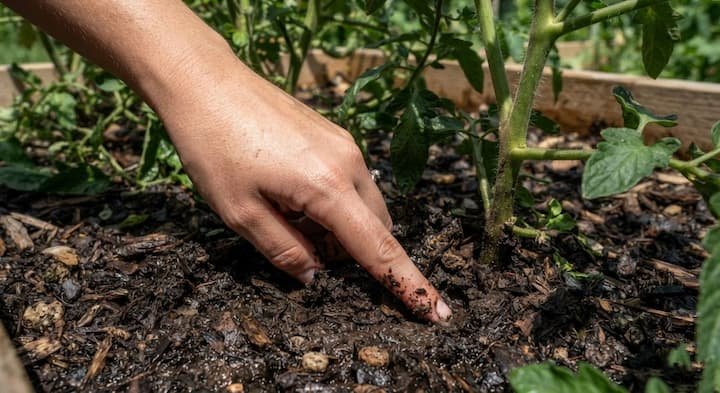
- Finger test: push a finger 2 to 3 inches down. If it feels wet, wait.
- Knuckle test: go in to the first knuckle near the base. If soil sticks to your finger, hold off. After watering, no water should sit on top for more than a few seconds.
- Squeeze test: grab a handful. It should clump without water running between your fingers.
- Pot weight: lift the container. A heavy pot is still wet.
- Moisture meter: a cheap probe takes the guessing out, especially for beginners.
- Chopstick test: push a wooden chopstick about 6 inches down and pull it out. Dark, damp wood with soil stuck to it means the root zone is still wet. I like this one for big containers.
Tomato Root Rot From Overwatering: How to Check the Roots
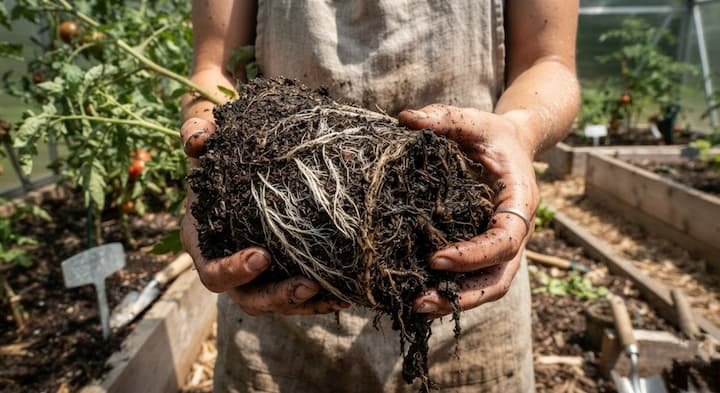
Dig gently at the edge of the root ball, or slide a potted plant out. Healthy roots are white or light tan and firm. Rotted roots are dark brown or black, slimy, and fall apart when you touch them. Press the stem right at the soil line too, since rot climbs up from the roots and leaves it soft.
A young plant with some white roots left and a firm stem is worth saving. If most roots are black and mushy, or the stem base is soft, toss it. Put it in the trash, not the compost pile, so the fungus doesn’t spread around your yard.
How to Fix Overwatered Tomatoes Growing in the Ground
Stop watering first and let the soil dry out for a few days to see if the leaves return to normal. If they don’t, work through these steps:
- Aerate gently: poke holes with a garden fork or stick around the root zone, a few inches out from the stem.
- Move the water away: dig shallow channels so pooled water drains off from the plant’s base.
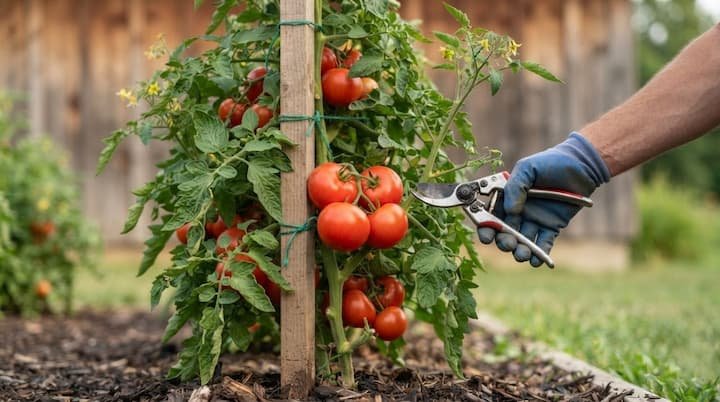
- Prune the damage: snip badly yellowed or diseased leaves, plus any touching the soil. I always wipe my pruners with rubbing alcohol between cuts. For the full method, see prune tomato plants.
- Open up airflow: lifting vines onto a tomato trellis helps leaves dry faster.
- Lift young plants: a small plant with a rotting root zone can be dug up, trimmed of mushy roots, and replanted in fresh soil.
- Add compost later: once the soil has dried a bit, work in compost to improve structure. Here’s how to start a compost pile.
Rescue Steps for Potted Tomatoes
First make sure the drainage holes aren’t blocked, and drill more if needed, then set the pot on pot feet or bricks so air and water can move underneath.
If the soil stays soggy, slide the plant out, shake off the wet soil, and snip black mushy roots with clean pruners. Lay the roots on paper towels in the shade for an hour or so, then replant in fresh potting mix. Use a pot of at least 5 gallons, since an oversized pot holds wet soil. More in growing tomatoes in pots.
How Long Recovery Takes and When to Let Go
New perky growth often shows up within a week once the soil dries, and a full bounce-back usually takes 1 to 2 weeks. Hold the fertilizer during that stretch, because feeding a stressed plant just adds pressure on weak roots. Wait for new growth, then go with the best fertilizer, and skip Epsom salt for now too.
A copper-based fungicide can slow fungal leaf spots if the label lists tomatoes, but it won’t cure rotted roots. Stressed plants also drop flowers, so later you may need to hand pollinate tomatoes to help fruit set.
If the plant keeps wilting after two weeks with dry soil, it’s likely root rot. Pull it out, which also protects nearby plants, and skip tomatoes in that spot for a while, because the fungus stays in the soil. Raised beds or containers are the safer move.
Quick recap on how to fix overwatered tomatoes: dry the soil, trim the damage, skip the fertilizer, and be patient.
Fixing Drainage for Good
I’d go with raised beds first if your backyard is heavy clay, 8 to 12 inches tall and filled with loose soil. In clay beds, mix in compost or perlite. Some growers add coarse sand, but small amounts can make clay set like concrete, so lean on compost.
In pots, use potting mix with perlite or coir, never plain garden soil, and know that fabric pots drain and breathe faster.
One myth to drop: a layer of gravel at the bottom of a pot doesn’t help drainage. It just pushes the soggy zone closer to the roots.
Smarter Watering Habits
A slow, deep soak builds deep roots, so aim for 1 to 2 inches of water per week, rain included. For an in-ground plant, roughly 2 gallons per watering a couple of times a week in summer is a fair starting point. In containers, water until it drips from the bottom, then wait. The watering schedule post has the full chart.
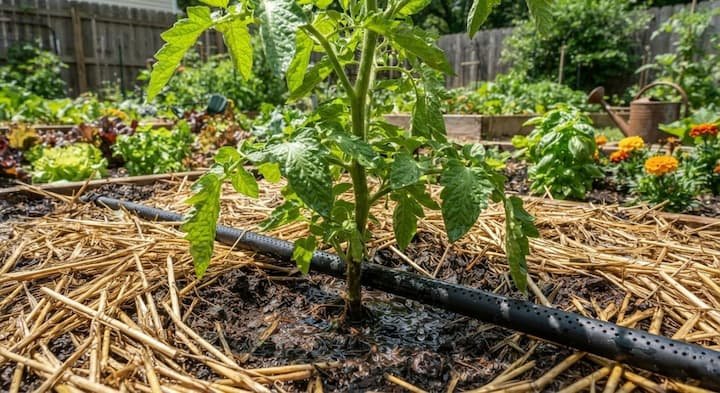
Water in the morning and at the base, so leaves dry out and fungus has less to work with. Drip or soaker hoses deliver water slowly to the root zone, and timers help as long as you adjust them for the weather. In my experience, a timer set in May and forgotten drowns more plants than any hose.
Mulch helps too: 2 to 4 inches of straw, shredded leaves, or wood chips holds moisture and cuts watering. Keep it about 2 inches off the stem, and during rainy stretches pull it back so the soil can dry. Compare the best mulch options.
Fruiting plants drink a lot, but easing off slightly as fruit ripens can boost flavor, as long as the soil never fully dries out. Containers dry out faster than ground beds, and hot, windy days speed it up, so check pots daily.
Determinate types fruit in one flush, so their thirstiest stretch is shorter than on indeterminate vines (see determinate vs indeterminate).
Rain, Weather, and Vacation Mistakes
Yes, rain counts as watering. After a storm, I run the finger test before watering again.
- Rain gauge: a simple one in the yard tells you how many inches fell.
- Cover or move containers: when a week of storms is coming, pull pots under an overhang.
- Know your zone: in humid USDA Zones 6, 7, 8 and 9, summer storms can soak beds for days. In drier parts of Zones 8, 9 and 10, you’ll water more, but the same soil checks apply.
- Sandy soil still floods: sandy beds drain fast, but hardpan underneath or a pot without holes still holds water.
- Hot days: above 90°F, pots dry out faster and leaves wilt in the afternoon, so check again in the evening.
- Vacation sitters: leave plain instructions like “water only if the top 2 inches are dry,” or set a timer.
Overwatering Seedlings and Young Transplants
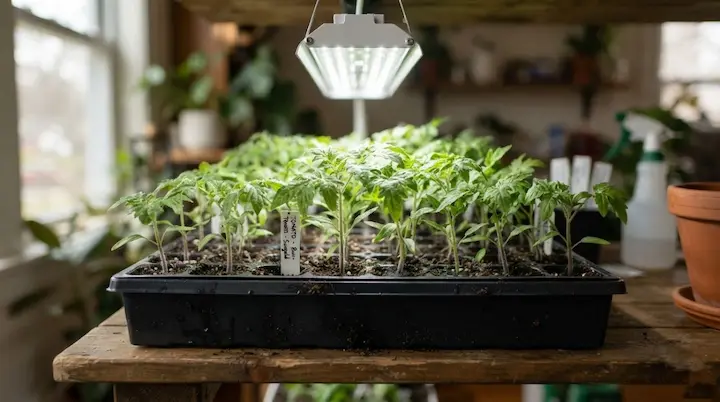
Damping off is the classic case: seedlings pinch at the soil line and flop over, caused by soggy trays plus fungus. Use clean trays and light watering, and see how to start seeds indoors, including seeds from store-bought tomatoes.
Bottom watering works well too: set the tray in about 1 inch of water for 15 to 20 minutes, then drain it.
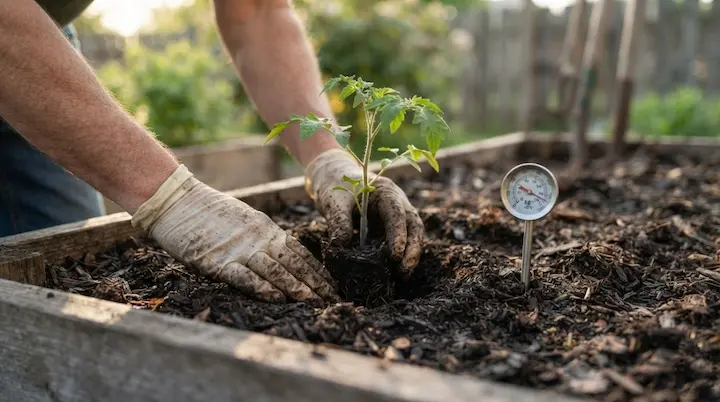
After transplanting, water moderately for the first two weeks while roots settle. Wait until nights stay above 50°F and the last 32°F frost has passed, and check when to plant for your area.
Final Thoughts:
Now you know the signs of overwatered tomato plants, from yellow lower leaves to mushy stems and cracked fruit. Check the soil before you water, fix drainage, and give stressed plants a week or two to bounce back. Most tomatoes forgive a mistake if you catch it early, so go look at your plants today.