Ever wonder why your ZZ plant looks perfectly fine three weeks after you forgot about it, while your pothos wilts if you skip a single Tuesday? The answer is buried underground in a part of the plant most people never see.
I’ve had readers tell me they killed their first ZZ plant out of pure kindness, watering it like a tomato in a community garden bed. Getting a proper zz plant watering schedule down isn’t about doing more for this plant. It’s about doing a lot less, and knowing exactly when “less” turns into “not enough.”
Why a ZZ Plant Watering Schedule Looks Nothing Like Other Houseplants
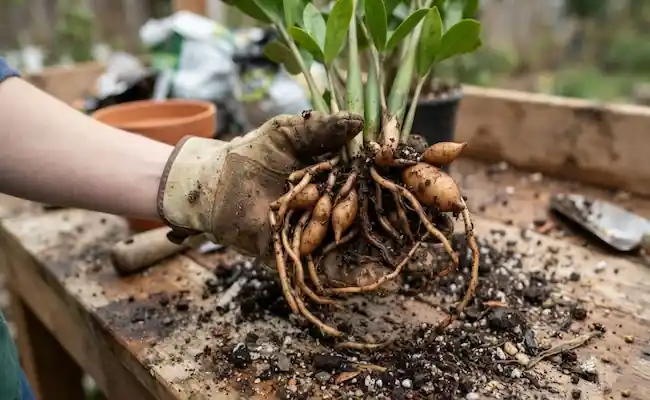
The ZZ plant (Zamioculcas zamiifolia) comes from the dry grasslands of East Africa, where rain shows up for a few months and then disappears almost completely. To survive that, it grew thick underground rhizomes that work a lot like a camel’s hump, storing water for weeks or months at a stretch.
Researchers publishing in the American Journal of Botany found that once a ZZ plant is water-stressed, it shifts part of its carbon dioxide intake to nighttime hours, a trick that cuts water loss almost right away (Holtum et al., 2007). That single adaptation is the whole reason this plant’s water needs run on weeks, not days instead of the every-few-days routine most tropical houseplants expect.
I think this is the part people miss when they bring one home from the garden center. You’re not dealing with a thirsty tropical plant here. You’re dealing with something closer to a succulent wearing a houseplant’s leaves.
Signs Your ZZ Plant Actually Needs Water
Skip the calendar reminders and check the plant itself. Here’s what I look for before I ever pick up a watering can:
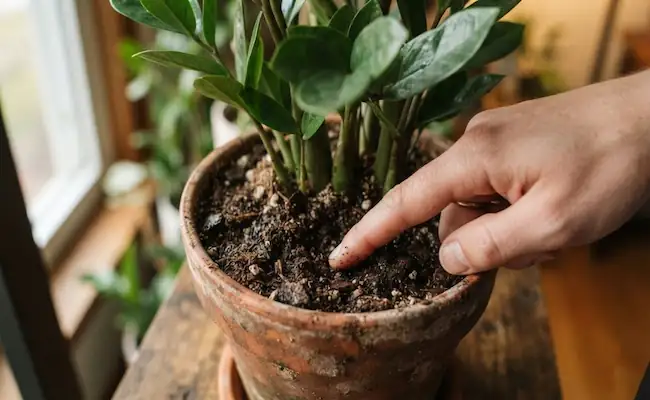
- Finger test: Push a finger 2 to 3 inches into the soil. If you feel any dampness at all, wait.
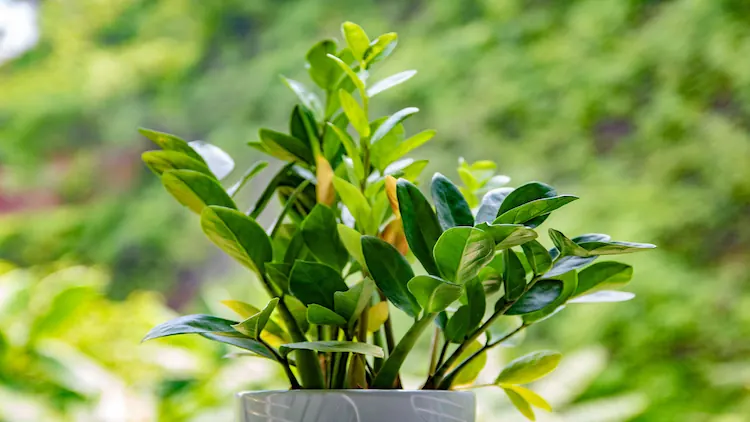
- Leaf check: Healthy leaflets are firm and glossy. If they start to curl or lose that shine and color, the plant is asking for water.
- Pot weight: Lift the pot right after watering, then again a week later. A dry pot feels noticeably lighter once you know the difference.
- Moisture meter: A cheap probe reading “dry” near the base is the most reliable signal if you don’t trust your finger.
For bigger pots or mature plants, try a wooden chopstick instead of your finger. Push it in near the edge of the pot, twist it a bit, and pull it out. Damp soil clings to the wood; dry soil doesn’t. This trick also keeps you from poking around too close to the rhizomes in the center of the pot.
If you’re growing the darker cultivar, our Raven ZZ care guide covers why those deep purple leaves can hide early stress signs a little longer than the standard green variety.
One more thing worth mentioning: a freshly repotted or newly purchased plant needs a lighter touch. Nursery soil is often already damp, and disturbed roots are more prone to rot right after transplanting. Wait until the top few inches are dry before giving a new or recently repotted plant its first drink, even if that means waiting longer than you’d expect.
You’ll also be surprised how long this plant can go without water once it’s established. A mature ZZ plant can usually handle 6 to 8 weeks without a drop in summer, and stretch to 10 weeks or more in winter, thanks to those same underground rhizomes. Missing a watering by a week or two almost never causes real damage.
Seasonal ZZ Plant Water Needs
Frequency shifts with the seasons, and honestly, this table covers about 90 percent of what you need to know.
| Season | How Often | Indoor Temperature |
|---|---|---|
| Spring | Every 2 to 3 weeks | 65°F to 75°F |
| Summer | Every 2 weeks | 75°F to 85°F |
| Fall | Every 3 to 4 weeks | 65°F to 75°F |
| Winter | Every 4 to 6 weeks | Above 55°F |
Growth slows down hard once Fall arrives, and by Winter the plant is close to dormant. Watering on a summer schedule during those cooler months is one of the fastest ways to end up with a mushy rhizome.
How to Water a ZZ Plant the Right Way
- Use room-temperature water. Straight-from-the-tap cold water can shock the roots.
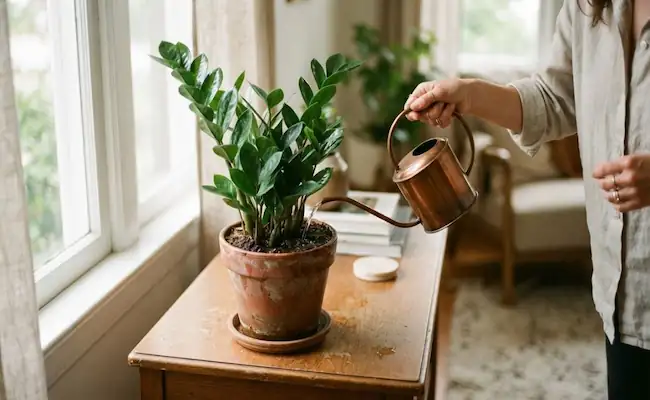
- Pour slowly around the base of the plant until water runs freely out of the drainage holes.
- Empty the saucer within 30 minutes. Standing water undoes the whole point of watering deeply and infrequently.
- For a 6-inch pot, about 2 to 3 cups (roughly a half gallon) is usually enough to fully soak the soil. Scale that up for bigger pots.
Bottom watering works too: set the pot in a few inches of water for 20 to 30 minutes, then let it drain completely before returning it to its saucer. I like switching between the two methods every so often just to keep salts from building up in one spot.
One quick myth to clear up: ice cubes are not a good substitute for a proper watering can. The idea is that a slowly melting cube releases water gradually, but in practice it just sits cold against the soil and roots near the surface, which can shock a plant that evolved in warm African grasslands. Stick with room-temperature water poured normally.
What Changes How Often to Water a ZZ Plant
A handful of factors push the schedule earlier or later than the table above suggests:
- Pot size and material: Terracotta dries faster than plastic or glazed ceramic. Bigger pots hold moisture longer than small ones.
- Light levels: Bright, indirect light speeds up water use. Low light stretches the interval out.
- Humidity and temperature: Warm, dry rooms dry the soil faster than cool, humid ones.
- Where you live: If you’re in USDA Zones 4, 5, 6 or 7, your ZZ plant stays indoors year-round since it can’t handle a hard freeze. Gardeners in USDA Zone 8 and warmer can move theirs to a shaded backyard or patio spot for summer, but it needs to come back in before the first cold snap.
Unlike zucchini or eggplant in a backyard vegetable bed that sulk the moment the soil dries out, a ZZ plant treats a dry stretch as pretty normal weather. That difference trips up a lot of longtime community gardeners who assume every plant wants the same routine.
Soil Mix and Pot Size Basics
Watering frequency also depends on what the roots are actually sitting in, so this part matters more than people give it credit for:
- Soil mix: A loose, fast-draining blend works best. Equal parts regular potting soil, perlite and coarse sand (or a straight cactus/succulent mix) drains fast and gives the rhizomes room to breathe.
- Pot sizing: Choose a pot only 1 to 2 inches wider than the current rootball. An oversized pot holds far more water than the roots can use, and that extra moisture just sits there waiting to cause trouble.
- Water quality: Good news here, at least. Regular tap water is fine for a ZZ plant, since it’s less sensitive to chlorine and fluoride than plants like dracaenas or spider plants. You don’t need filtered or distilled water, though flushing the soil occasionally (as mentioned below) still helps clear out mineral buildup over time.
Planning a vacation is another good reason to relax about watering rather than worry over it. Water thoroughly right before you leave, group the plant with others to raise humidity slightly, and keep it out of direct afternoon sun so it doesn’t dry out faster than usual. For trips under a month, most ZZ plants do just fine with zero help at all, which is more than you can say for a container full of basil back on the patio.
Overwatering Mistakes That Break a ZZ Plant Watering Guide
Overwatering, not neglect, is what actually kills this plant. University of Maryland Extension notes that excess water pushes oxygen out of the soil, which damages the fine roots a plant relies on to take up moisture in the first place.
Watch for:
- Yellowing at the base of the stems.
- A sour or rotten smell coming from the pot.
- Soft, mushy tissue where the stems meet the soil.
- Black or slimy roots instead of firm, pale ones.
If you catch it early, unpot the plant, trim away any blackened or mushy tissue with clean pruners, toss the ruined pieces in the trash, and repot into fresh, fast-draining soil. In my experience, plants recover well as long as more than half the rhizome is still firm.
Soggy soil brings along a second problem too: fungus gnats, These tiny flies breed in the top layer of wet potting mix, and seeing a few hovering around your plant is usually a sign that the soil has stayed damp longer than it should have. Letting the soil dry out fully between waterings, which this plant already prefers, tends to clear them up without needing any spray.
If a dog or cat likes to dig around in soggy potting mix, that habit brings its own risks worth knowing about, which our guides on ZZ plants and dogs and ZZ plants and cats both cover. Homes with a toddler crawling near floor-level shelves should also take a look at our ZZ plant baby safety guide before deciding where to place one.
A Few Extra Tips I’ve Picked Up Along the Way
- Flush the soil thoroughly every few months to clear out mineral buildup from tap water.
- Feed lightly during the growing season only; our worm castings guide is a gentle, natural option if you’d rather skip synthetic fertilizer.
- Once your plant outgrows its pot, this is also the easiest time to start new plants; check our ZZ plant propagation guide for the full walkthrough. New leaf cuttings need lighter, more frequent misting of the soil (not the leaves) until roots form, then they switch to the same dry-between-waterings routine as a mature plant.
- Keep it away from cold drafts and heating vents, both of which throw off how fast the soil dries.
This plant has become a centerpiece in office lobbies and living rooms for a reason, and most of that reputation comes down to how forgiving its water needs really are.
Final Thoughts:
At the end of the day, a solid zz plant watering schedule comes down to one habit: check before you pour, not after. I think that single change prevents more dead ZZ plants than any fancy gadget ever will. Match your watering to the season, trust the rhizomes to do their job, and resist the urge to treat this plant like anything growing in a backyard garden bed. Leave it alone for a while, and it rewards you with the kind of glossy, low-maintenance growth that makes it a favorite from Seattle apartments to Miami offices.