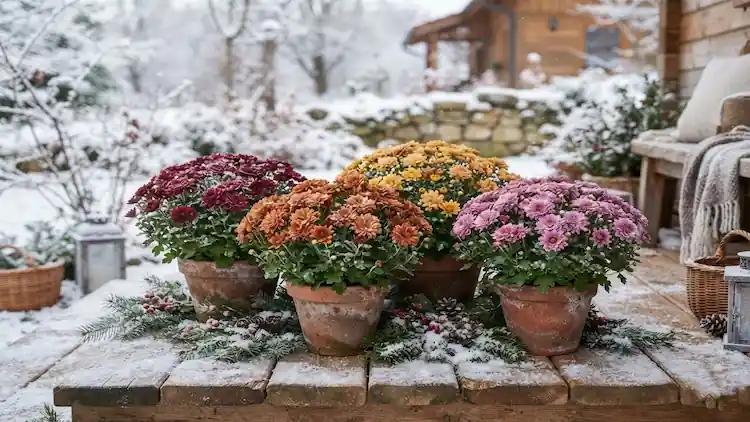
Why do some petunia beds look packed with color all summer while others turn leggy and tired by July?
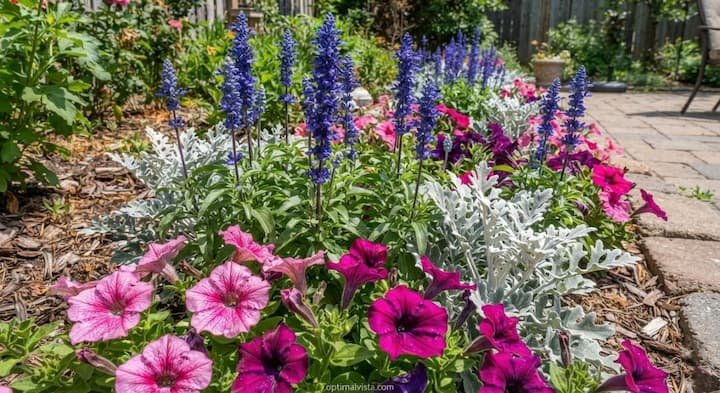
A lot of the answer sits in the neighbors. The wrong plant next door steals sun, drinks too much water, or sits in soil that petunias hate. The right one fills gaps, brings in pollinators, and covers bare stems. This guide covers the best companion plants for petunias, plus the pairs to skip.
Short answer: pick plants that want full sun and well-drained soil like petunias do, then mix heights so nothing hides anything else.
What Petunias Need Before You Pick Any Neighbor
A companion only works if it wants what the petunia wants. Match these four things first.
- Sun: 6 or more hours of direct light.
- Soil: well drained, slightly acidic to neutral.
- Water: even moisture, never soggy.
- Food: fertilize every 2 weeks in peak bloom.
Watering advice conflicts, since some sources say dry and others say moist. Let the top 1 inch of soil dry, then water deeply, about 1 inch a week in a backyard bed.
Pots dry faster, so I push a finger into the soil every morning before I water. More on petunia sun needs is in its own guide.
How Petunia Type Changes Your Pairings
Mounding or upright petunias (Grandiflora and Multiflora types) stay compact, so pair them with low, fine plants like sweet alyssum or calibrachoa.
Spreading types (Wave, Easy Wave and Shock Wave) look better beside upright plants like salvia or geraniums, and wave petunia care covers their upkeep. Double petunias have frilly, heavy blooms, so give them fine-textured partners like verbena or bacopa.
Why Companion Planting With Petunias Works, and Where It Falls Short
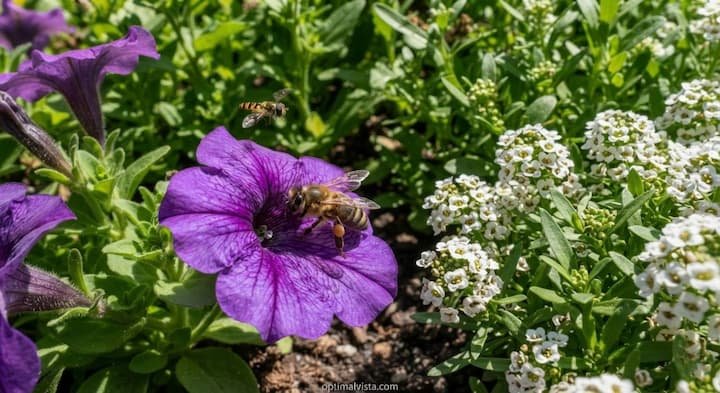
If you are wondering what to plant with petunias, start with the job you want done. Petunias pull in pollinators, and the right neighbors cover bare soil, add height, and bring in helpful bugs.
A 2011 hoverfly study in California lettuce fields found that sweet alyssum increased hoverfly egg laying, which meant more larvae and fewer aphids.
- Pollinators: bees, butterflies and hummingbirds visit the blooms.
- Weed cover: fast fillers shade bare soil.
- Moisture: low plants slow evaporation.
- Looks: mixed heights and textures give you thriller, filler and spiller layers.
That study is the proven part. The folklore is that petunias repel pests or protect tomatoes.
Their sticky stems catch a few small bugs, and some gardeners use petunias as a trap crop so aphids settle on the flowers first, but sources disagree. Treat it as a bonus, not a shield for a vegetable bed.
Companion Plants Compared at a Glance
These petunia planting partners cover most backyard situations.
| Plant | Role | Height | Sun | USDA zones | Best for | Watch-out |
|---|---|---|---|---|---|---|
| Salvia | Thriller | 18 to 36 inches | Full | 5 to 10 | Pollinators, deer areas | Needs room |
| Snapdragon | Thriller | 12 to 36 inches | Full to part | 7 to 10 | Cool seasons | Fades in heat |
| Gaura | Thriller | 24 to 48 inches | Full | 5 to 9 | Low upkeep | Floppy if overfed |
| Geranium | Filler | 12 to 24 inches | Full | 10 to 11 | Pots | Budworms |
| Marigold | Filler | 6 to 12 inches | Full | Annual | Veggie beds | Mildew in wet spells |
| Sweet alyssum | Edging | 4 to 6 inches | Full to part | Annual | Beds, edges | Slows in heat |
| Lobelia | Spiller | 6 to 9 inches | Full to part | 10 to 11 | Baskets | Gets leggy |
| Trailing verbena | Spiller | 9 to 12 inches | Full | 5 to 9 | Low upkeep | Mildew if crowded |
| Dusty miller | Foliage | 8 to 24 inches | Full | 7 to 11 | Contrast, deer areas | Likes lean soil |
Short on time? Pick by goal:
- Pollinators: salvia, lantana, gaura.
- Deer areas: salvia, candytuft, dusty miller.
- Low upkeep: gaura, verbena, dusty miller.
- Containers: geranium, lobelia, calibrachoa.
- Veggie garden: sweet alyssum, marigold, basil.
Best Companion Plants for Petunias That Add Height
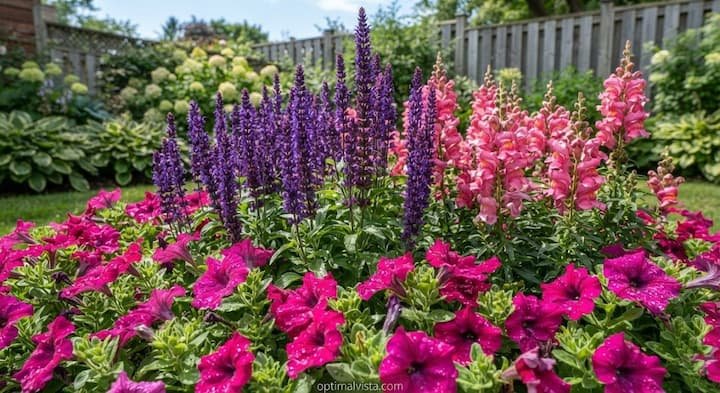
Petunias top out around 12 inches, so tall neighbors give a bed some shape. Plant them at the back or in the center of a pot.
- Salvia: red, pink, purple, white or yellow spikes from spring to fall, hardy in USDA Zones 5, 6, 7, 8, 9 and 10.
- Snapdragons: tall, easy, and happiest when nights are cool.
- Gaura: wiry stems with pink or white blooms, hardy in USDA Zones 5, 6, 7, 8 and 9.
- Coneflower: big daisy-like flowers in USDA Zones 3, 4, 5, 6, 7, 8 and 9, with regular water.
Celosia spicata adds bottle-brush spikes that can reach 4 feet in hot weather. Asters bloom from August to October, so they carry a bed after petunias slow down.
Heliotrope smells like cherry pie, and petunias smell fruity too. Angelonia gives compact, snapdragon-like spikes in summer heat. Pick one or two, since three tall plants in a 14-inch pot crowd the petunias out of sunlight.
Fillers: Plants That Go With Petunias Without Crowding
Fillers sit at about the same height as petunias, so they need the same sun and feeding. Geraniums are the easiest match.
I like them in pots because the round clusters look different from petunia trumpets. Marigolds work the same way, and they are cheap and easy to find at any garden center in spring.
- African daisy: big blooms in cool weather, hardy in USDA Zones 9, 10 and 11
- Sweet alyssum: tiny honey-scented flowers that carpet bare soil
- Candytuft: low and woody, so use it in beds, not pots
- Lantana: loves heat but is invasive in parts of the South, so check locally
Spillers: Petunia Companion Plants That Trail Over the Edge
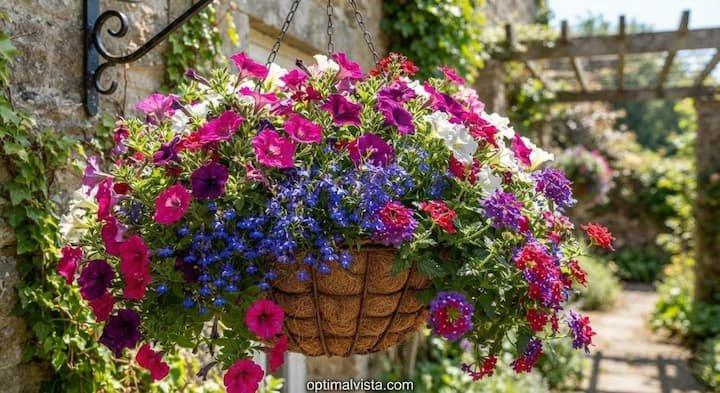
Spillers drape over the rim of a pot or basket and soften the edge, so pair them with mounding petunias. Lobelia has small blue flowers but gets leggy in late summer, so trim it.
Trailing verbena handles heat and likes the drier side, just like petunias. Calibrachoa, sold as million bells, looks like a mini petunia but is a different plant with the same needs. Bacopa, sweet potato vine and dichondra are quiet green or silver trailers.
Creeping Jenny and periwinkle (Vinca minor) are invasive in some states. Keep them in pots, and ask your local extension office before planting either in the ground.
Foliage Plants That Make Petunia Colors Pop
Foliage makes some of the most useful petunia companion plants because it looks good between flushes of bloom. Dusty miller has silver leaves that calm loud colors, handles heat and dry spells, and likes a midsummer haircut just like petunias.
Spike (Cordyline) is a tall, sword-shaped leaf for the center of a pot, and it needs USDA Zones 9, 10 and 11 to survive winter outside. Fountain grass adds pink, copper or purple plumes in USDA Zones 5, 6, 7, 8 and 9. Coleus and licorice plant fill out a basket. If you add only one, make it dusty miller.
Herbs as Petunia Planting Partners
Herbs earn a spot in a flower pot because they smell strong and you can eat them.
- Basil: gardeners say its scent confuses aphids, thrips and spider mites.
- Marigolds: the classic pest-fighting pair, though that is a possible bonus, not a guarantee.
- Society garlic: lavender-pink flowers, drought tolerant, hardy in USDA Zones 7, 8, 9 and 10.
I tuck basil along the front edge of my petunia pots every spring and snip it for dinner all summer. Dry-soil herbs like rosemary and lavender usually do better in their own pot, since petunias drink more.
What to Plant With Petunias in a Vegetable Garden
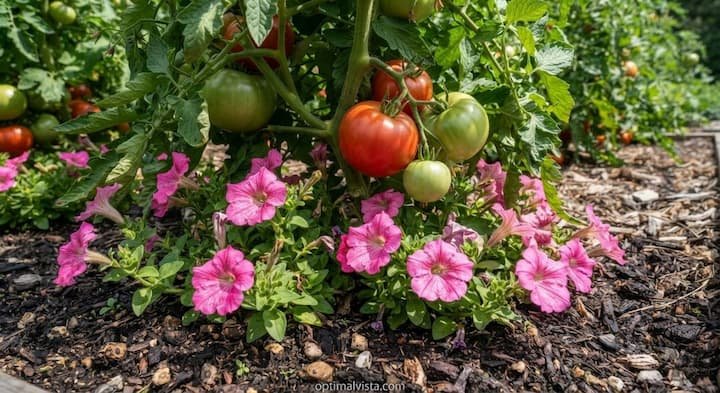
Petunias can sit next to vegetables and fruit, mostly for the pollinators. Check the catch for each crop first.
| Crop | Verdict | The catch |
|---|---|---|
| Tomato | Good | Both are nightshades, so some diseases and bugs can pass between them |
| Pepper | Good | Same nightshade caution, but petunias bring bees for fruit set |
| Strawberry | Good | Both want full sun and steady water |
| Peas | Fair | Cool-season crop that finishes by midsummer, then petunias fill the space |
| Lettuce | Fair | Cool-season crop, while petunias want warm weather |
| Grapes | Fair | Use petunias as a border at the edge of the root zone |
| Blueberry | Tricky | Needs soil around pH 4.5 to 5.5, more acidic than petunias like, so use a pot |
In a community garden plot, a crowded tomato bed is where disease spreads fastest. Leave air between plants and put any sick leaves in the trash, not the compost.
Matching Companions to the Season
Petunias bloom for a long stretch, but their neighbors do not, so layer bloom times.
- Early spring: if you are sorting out what to plant with petunias while nights are cool, go with snapdragons, pansies and sweet alyssum.
- Summer: salvia, geraniums, lantana and trailing verbena carry the heat.
- Fall: asters and ornamental kale keep color going.
- Succession: pull spent peas and lettuce in June and let petunias fill the gap.
A hard freeze at 32°F usually ends the petunia season. In USDA Zones 9, 10 and 11, summer heat slows them down, so many gardeners there grow petunias from fall through spring.
Container, Basket and Bed Layouts That Work
Use the thriller, filler, spiller formula in any pot, and start with a container that drains well. See petunias in pots and this petunia soil mix guide for the base.
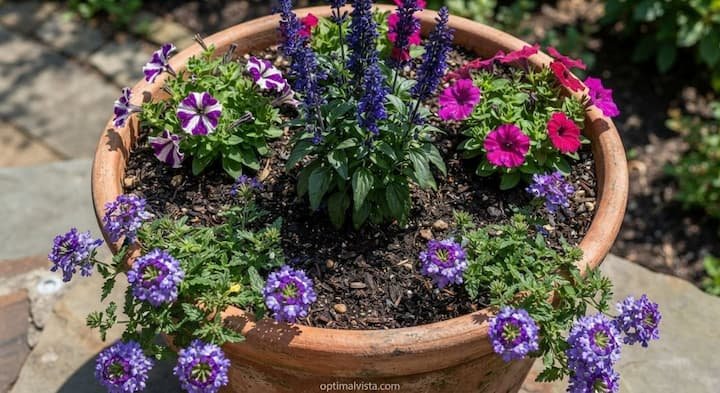
- Patio pot, 14 inches wide: 1 salvia, 3 mounding petunias, 2 trailing verbena.
- Hanging basket, 12 inches wide: 3 wave petunias, 2 lobelia, 1 dusty miller.
- Window box, 30 inches long: 3 trailing petunias, 2 dusty miller, 2 sweet alyssum.
- Ratio: about 3 petunias for every tall plant, in roughly 3 gallons of mix per plant group.
- Same watering: pick plants that go with petunias on water needs, not just looks.
In a bed, plant petunias in drifts of 3 to 5 and set a companion every 12 to 18 inches, with sweet alyssum along the edge.
Color Pairings and Design Basics
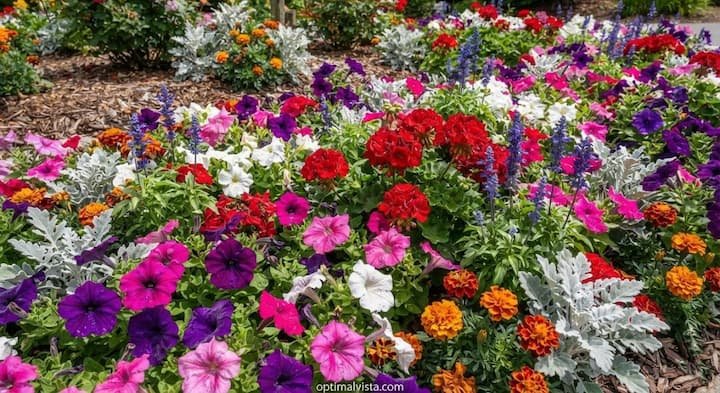
Color is where plants that go with petunias really earn their spot.
- Opposites: purple petunias with yellow or lime foliage.
- Same color, new shape: pink petunias with pink geraniums.
- Cool and calm: white petunias with dusty miller.
- Warm and loud: coral petunias with orange verbena.
For a single-color look, keep one hue and change shapes. Layer by height too: tall plants in the back or center, petunias in the middle, trailers in front. Put heliotrope near a seat or doorway, where you will smell it.
Plants to Keep Away From Petunias
Most bad pairings come down to one thing: the neighbor wants something petunias do not. Sources even give different reasons for the same plant.
So here is the short version:
- Sunflowers, corn, squash and zucchini: they shade petunias and compete for nutrients, and one seed seller says corn draws earworms.
- Cactus: needs much drier, poorer soil.
- Ferns and begonias: shade lovers that dry out in full sun.
- Irises and calla lilies: moisture lovers that wilt in drier soil.
- Spreaders: lantana, creeping Jenny and periwinkle can take over.
Fennel and kohlrabi also get listed as poor neighbors. I couldn’t find strong research behind those two claims, so I treat them as skip-if-unsure, not hard rules.
Deer, Rabbits and Pests Around Your Petunias
Deer will happily eat petunias, so the neighbors have to carry some of the load.
- Petunia companion plants for deer country: lantana, salvia, geraniums, candytuft, gaura and dusty miller.
- Rabbits: gardeners report candytuft and salvia get passed over.
- Mixed reputation: coneflower and snapdragon, which hungry deer still sample.
No plant is deer-proof, so use a fence or netting in heavy deer areas. Check under leaves weekly for aphids and whiteflies. Budworms chew buds on petunias and geraniums, so look for ragged buds and dark droppings. Natural pest control covers softer fixes.
Keeping the Whole Combo Healthy
One routine has to cover every plant in the pot, so keep it simple.
- Water: about 1 inch a week, plus a daily check in pots, as in watering petunias.
- Feed: slow-release fertilizer at planting, then liquid food every 2 weeks, per this petunia fertilizer guide.
- Deadhead: pinch spent blooms, as in deadheading petunias.
- Trim: cut tired stems back in midsummer with clean pruners to keep bushy petunias or fix leggy petunias.
- Annual or perennial: petunias reset each year, while salvia, gaura, coneflower and candytuft often return in many zones.
- Match the routine: choose petunia planting partners that fit the same schedule.
In my experience, a pot where every plant gets the same water and food beats a pot full of fussy plants.
Pet Safety, Invasive Plants and Winter Plans
Lantana is widely listed as toxic to pets, and its berries are risky for small kids too. Look up every plant on the ASPCA list before it goes in your yard.
- Invasive check: search your state plus the plant name plus “invasive”.
- Extension office: call before planting spreaders in the ground.
- Containers: keep creeping Jenny and periwinkle potted.
To carry petunias through winter, try overwintering petunias indoors.
Common Pairing Mistakes and a Five-Question Checklist
My first year, I packed a 12-inch pot with five different plants. By July the petunias were mostly bare stems. Crowding and mismatched needs cause most flops, and yellowing petunia leaves are often the first sign.
- Crowding: tall plants that shade petunias cut blooms.
- Wet, dry and hungry mixes: petunias are heavy feeders, while dusty miller and society garlic like leaner soil.
- Planting too early: wait until the last frost at 32°F is behind you.
Before you buy, ask yourself:
- Does it need 6 or more hours of sun?
- Does it like the same water?
- Will it fit the pot or bed at full height?
- Is it invasive or unsafe for pets here?
- Does it bloom when petunias need help?
Conclusion:
The best companion plants for petunias share their love of sun, drainage and steady feeding. Start with salvia, geraniums and dusty miller, add a trailer for the edge, and keep shade-casting or thirsty plants out of the mix. Match each pairing to your USDA zone and season, check for invasive spreaders, and give the pot room to breathe. Small, simple combos beat crowded ones.

I’m Avi Patel, founder of Optimal Vista, and I’ve been passionately gardening for six years. I created this space to share practical, no-nonsense tips tested right in my own backyard. My goal is simple: to help growers solve everyday plant struggles and enjoy thriving gardens all year round.