
Here’s something that trips up a lot of gardeners: the same yellow leaf can come from too much water, too little water, or a hungry plant, and each fix works against the others. So why are my petunias turning yellow, and what should you do today?
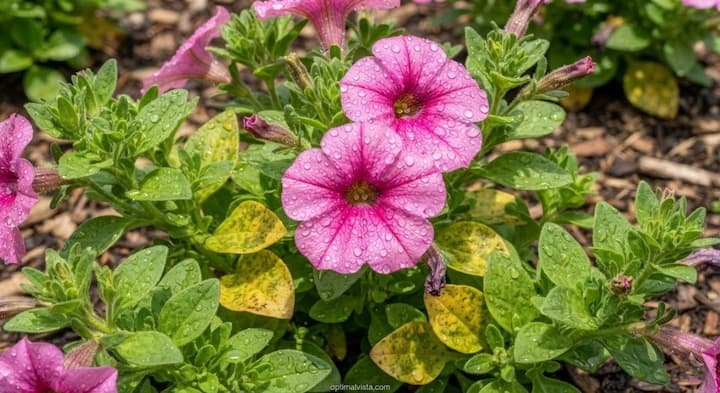
The short answer: it’s usually a watering or feeding problem, and where the yellow starts tells you which one. Below, every cause is laid out in order, from the quick checks to the rare ones, so you fix the right thing the first time instead of guessing.
Why Are My Petunias Turning Yellow? Read the Pattern First
Petunias tell on themselves by where the yellow starts. Old leaves at the bottom, new leaves at the top, spots, and blotches each point to different causes. Match what you see below, then jump to that section.
| What you see | Likely cause | First move |
|---|---|---|
| Older, lower leaves fade to pale yellow | Low nitrogen or dry soil | Check moisture, then feed |
| New top leaves yellow, veins stay green | Iron lockout from high pH | Test pH, chelated iron |
| Yellow between veins on older leaves | Low magnesium | Epsom salt drench |
| Soft yellow leaves, wilting in wet soil | Overwatering or root rot | Let it dry, check drainage |
| Crispy yellow leaves, dry soil | Underwatering | Deep soak |
| Golden mottling or blotches | Virus | Pull the plant |
| One side yellows and wilts | Fusarium | Remove, use fresh mix |
| Fine speckles or webbing | Spider mites | Spray the undersides |
| Yellow rings around brown spots | Bacterial leaf spot | Remove leaves, keep foliage dry |

The 3-Minute Check for Petunia Leaves Turning Yellow
Spend three minutes here before you add fertilizer or change anything. It solves a lot of cases on its own.
- Push a finger 2 inches into the soil. Is it wet, damp, or bone dry?
- Lift the pot. Heavy means water is sitting in there, and feather-light means it’s parched.
- Check the drainage holes for roots or clogs, then slide the plant out and look at the roots.
- Flip the leaves and look underneath for bugs, webbing, or sticky residue.
- Look at where the petunia leaves turning yellow sit: bottom, top, or one side of the plant.
I like the finger test most, since it costs nothing and never lies.
Overwatering, Soggy Soil and Root Rot
In my experience, overwatering is the top reason petunias go yellow. Roots sitting in soggy soil can’t breathe, so leaves turn soft and yellow, drop, and the plant wilts even though the soil is wet.
Heavy clay in yard beds is the usual culprit, so mix in compost before planting, since digging around established roots tears them up. In pots, a blocked drainage hole does the same damage. Petunias also hate wet leaves, so water at the base, and in yard beds wait until the top 2 to 4 inches are dry. A fast-draining petunia soil mix helps a lot.
Crown and root rot is the next stage, and you often don’t spot it until the plant starts to collapse. Pull the plant and look at the roots.
- Healthy roots are white and firm, and rotten ones are brown and mushy.
- Trim the bad parts with clean pruners and repot in fresh mix.
- Let the top inch dry before watering again.
- If most of the roots are mush, start over with a new plant.

Underwatering and Fast-Drying Pots
Thirst looks different. Petunia leaves turning yellow from dry soil go crispy and curl before they drop.
- Baskets dry out fastest, and on hot days they may need water daily.
- Pots and baskets need a drink at least two or three times a week.
- In yard beds, a deep soak once or twice a week beats a daily sprinkle because it pushes roots down and builds drought tolerance.
- Keep watering until it runs out the bottom of the pot.
- Once you find a rhythm that keeps the soil moist but never soggy, stick to it.
I think the most common mistake is a quick splash that never reaches the roots. The full schedule is in our guide to watering petunias.
Too Little Sun and Too Much Heat
Petunias want at least 6 hours of direct sun, and 8 or more is better. Shade is the number one killer of petunias, and the sun moves through the season, so a spot that was sunny in June can sit behind a tree or fence by September.
Dappled shade or a few hours of late-afternoon shade is fine, though. Heat is the other side, since afternoons past 90°F can scorch leaves, mostly on patio pots, and a mid-summer slump can fade the whole plant. Sudden swings between hot and cold shock it too. Our guide to petunia sun needs covers placement.
- Pale, thin leaves with wide gaps between them mean not enough light.
- Yellow or tan patches on sun-facing leaves, worst after hot afternoons, mean scorch. Move the pot to afternoon shade and keep it watered.
Nitrogen Deficiency in Older Leaves
Petunias are hungry, and nitrogen is the first thing they run out of. The plant pulls it out of old leaves to feed new growth, so the bottom leaves fade to pale green, then yellow, and the whole plant looks tired.
Feed with a balanced liquid fertilizer that has a bit more nitrogen. Pots lose food quickly because every watering flushes nutrients out the bottom, so pick the right petunia fertilizer and use it on a schedule.
Iron Deficiency in New Growth
Iron shows up the opposite way. New leaves at the top turn yellow while the veins stay green, like a green net over a yellow sheet. Gardeners call this chlorosis, and iron is the most common micronutrient shortage.
The plant can’t move iron out of old leaves, so new growth goes first. I like chelated iron here because it works fast, and new leaves usually come in green within a couple of weeks. Follow the label, and check pH first, because iron trouble is mostly a pH problem.

Magnesium, Potassium and Other Missing Nutrients
A soil test from your local extension office tells you which nutrient is really missing, so you can stop guessing.
Here’s what each one looks like:
- Magnesium: yellow between the veins on older leaves, sometimes with a red or purple tint. Dissolve 1 tablespoon of Epsom salt in 1 gallon of water and drench the soil, or mist it on as a foliar spray.
- Potassium: yellow along leaf edges and veins, then brown dead spots. Switch to a fertilizer with more potassium.
- Sulfur: new leaves turn pale greenish yellow. Use a complete fertilizer with micronutrients.
- Boron and manganese: rarer, and they hit new growth. A micronutrient mix fixes it.
Soil pH and Hard Water Problems
Sometimes the nutrients are in the soil but the plant can’t take them up, and pH is the gatekeeper.
Michigan State University Extension lists petunia as an iron-inefficient plant and suggests keeping potting mix pH between 5.4 and 6.2. Above that range, iron locks up and new leaves go yellow even when plenty of iron is present. Many other guides give a slightly wider target of 5.5 to 6.5.
Hard tap water pushes pH up over time, especially in small pots. Test with a cheap kit, and test yard soil before you plant in the ground. Elemental sulfur lowers pH, lime raises it, and peat moss in the mix adds acidity, which is why older advice calls for half peat and half soil in pots. In hard-water areas, rainwater or an acid-forming fertilizer helps.
Too Much Fertilizer and Salt Buildup
More food isn’t always better. Fertilizer salts build up in pots and burn roots and leaf tips. Petunias with yellow leaves and a white crust on the soil or pot rim are usually dealing with salt, not hunger.
I’ve burned a basket or two by feeding too hard, and the tips went yellow-brown within days. Flush the pot with plain water until it runs freely out the bottom, let it drain, and skip feeding for two weeks. Strong synthetic liquids burn tender leaves fastest, so dilute them as labeled.
Aphids, Spider Mites and Whiteflies
Sap-sucking bugs drain leaves and leave them yellow.
- Aphids: soft bugs clustered on new growth and under leaves, often with sticky honeydew and distorted leaves.
- Spider mites: tiny speckles that merge into yellow or bronze patches, sometimes with fine webbing.
- Whiteflies: small white bugs that fly up when you shake the plant.
Blast them off with a strong spray of water first, and cut off heavily infested leaves if the plant can spare them. Then use insecticidal soap, neem oil or pyrethrin on both sides of every leaf and repeat per the label, spraying in the evening so pollinators stay safe.
A very young plant with few healthy leaves left may need the stronger sprays. I check the undersides every Sunday, since that’s where they hide. More options are in our guide to petunia pests.

Tobacco Mosaic Virus and Other Diseases
Tobacco mosaic virus looks like golden yellow mottling, almost like a pattern. Aphids, thrips, leafhoppers, infected soil, and dirty hands and tools spread it, even the hands of a tobacco user, and tomatoes, peppers and cucumbers can catch it too.
Sick plants often look stunted and twisted as well. There’s no cure. Pull the plant and put it in the trash, not the compost, because a home pile doesn’t get hot enough to kill it. Community gardeners share tools, and tools spread virus, so wipe pruners with rubbing alcohol between plants.
- Fusarium wilt: yellowing on one side of the plant, with wilting that climbs from the bottom.
- Bacterial leaf spot: brown spots ringed with yellow halos.
For both, pick off affected leaves, water at the soil instead of the foliage, and give plants room for airflow. Use a label-approved fungicide only if you catch it early.

Cold Snaps and Early Frost
Petunias are tender perennials, and frost at 32°F turns leaves yellow and then kills them. Cold snaps above freezing stress them too.
- In USDA Zones 4, 5, 6, 7 and 8 most people grow petunias as annuals, so the first fall frost ends the season.
- Farther south, in USDA Zones 9, 10 and 11, they can hang on much longer.
- Move pots and baskets into a garage or the house for several extra weeks.
- Cover yard plants with old sheets or towels the night before a frost.
To keep them alive all winter, see overwintering petunias.
Transplant Shock, Root-Bound Pots and Normal Aging
New nursery plants often yellow for a week after planting while they adjust. Handle the roots gently, water well, and give them time. Root-bound pots cause the same look. The roots circle the pot, the soil dries in hours, and leaves yellow. Slide the plant out, loosen a tight root mat, and repot into a container about 2 inches wider with fresh mix, since old mix packs down tight.
A few yellow petunia leaves at the base of a big, healthy plant are just normal aging, and they drop on their own as the season winds down. If new growth is green and flowers keep coming, leave it alone or pinch them off.
Petunias With Yellow Leaves: Pots vs Yard Beds
The same symptom can mean different things depending on where the plant grows.
| What to check | Pots and baskets | Yard beds |
|---|---|---|
| Watering | Every 2 to 3 days, daily in heat | Deep soak 1 to 2 times a week |
| Feeding | Every 1 to 2 weeks, half strength | Slow-release at planting, light feed every 2 to 4 weeks |
| Drainage | Holes plus fresh mix | Fix clay with compost before planting |
| Usual yellow cause | Thirst, hunger, salt buildup | Soggy soil, root rot, high pH |
If you grow in containers, read up on petunias in pots too.
Wave and Supertunia Types Yellow Faster
Wave and Supertunia types spread wide and bloom nonstop, so they eat and drink more than classic petunias. In that group, yellowing petunias usually need food before anything else, then water.
Calibrachoa, the mini look-alike, has the same iron trouble. More on wave petunias is in our care guide.
Should You Pull Off Yellow Petunia Leaves?
Yes, once a leaf is mostly yellow. It won’t turn green again, and it just sits there feeding fungus. Pull it off with clean pruners or your fingers, and snip a few spent blooms while you’re there, since deadheading petunias pushes fresh growth.
- Pinch off yellow petunia leaves once more than half the blade has changed color.
- Leave leaves that are only slightly pale, since they still feed the plant.
- Trash anything that looks diseased instead of composting it.
After you fix the cause, new growth should come in green within two to three weeks. If the plant looks thin afterward, cut it back for bushier petunias or follow the steps for leggy petunias.

A Feeding Schedule That Keeps Leaves Green
- At planting: mix slow-release fertilizer into the soil or pot mix. It releases food over time and washes out less than liquid.
- Pots and baskets: liquid feed every 1 to 2 weeks at half strength. Some guides say every 2 to 3 weeks, but heavy bloomers do better at the shorter end.
- Yard beds: a light liquid feed every 2 to 4 weeks.
- Stressed plants: fix the water or root problem first, then feed.
- Late fall: stop feeding when growth slows.
Mistakes That Make Yellowing Petunias Worse
A few habits turn a small problem into a dead plant.
- Watering on a calendar instead of checking the soil.
- Feeding petunias with yellow leaves when the roots are soggy or rotten, which burns what’s left.
- Changing three things at once, so you never learn what worked.
- Watering overhead late in the day, which invites disease.
- Treating one cause when two are going on. Work through water, light, food, then bugs and disease, in that order.
- Overdoing iron or Epsom salt because a little worked.
Monthly Checklist and When to Replace the Plant
- Spring: buy healthy plants from a reputable nursery, use fresh, fast-draining mix or compost, slow-release feed, 6 or more hours of sun, and a pH check.
- Early summer: look under leaves weekly. Some companion plants, like sweet alyssum, can bring in helpful insects.
- Midsummer: water pots more often, add afternoon shade past 90°F, and keep up the feeding schedule.
- Fall: check yellowing petunias for aphids before bringing pots indoors, and watch the forecast for frost.
Replace the plant if it has a virus, if most of the roots are mush, or if the yellow keeps spreading after three weeks of fixes. After Fusarium, use fresh mix, not the old soil.
Final Thoughts:
Next time you ask, “why are my petunias turning yellow,” put a finger in the soil, note which leaves changed first, and fix one thing at a time. Stay calm, because most plants bounce back within two to three weeks once the cause is gone. Give them 6 hours of sun, steady water, and regular food, and they’ll keep blooming until frost.
Pingback: How to Treat Petunia Pests Naturally: 8 Bugs and Fixes