Why do some petunias look packed with color in August while the plant next door is half brown and worn out? It comes down to what each faded flower is doing on the stem. Once you know how to deadhead petunias for massive blooms, you stop the plant from burning energy on seeds and push it back into making flowers.
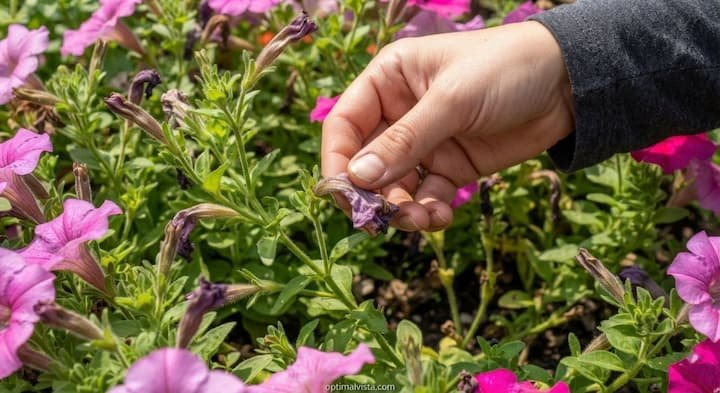
The short answer is to pinch or snip off each faded flower and the small green seed pod behind it, just above a leaf, about once a week. Below you’ll find the tools, timing, and mistakes that cost you flowers.
Why Deadheading Petunias Gives You More Blooms
A petunia has one job, and that’s making seeds. Most petunias are annuals that live for one season, so they rush to get it done. Every flower you leave on the plant turns into a seed pod, and the plant spends a big chunk of its energy growing it.
Pull the faded flower off early and the plant has to try again, and that gets you more petunia flowers.
Quick science Nebraska extension educators explain that seed production is the signal that tells an annual it has finished its job, so the plant starts cutting back on flowering. Remove the seeds and that signal never fires.
Here’s what regular deadheading gets you:
- Fresh flowers pushing out from the same stems for months.
- A tidier plant, with no brown mush sitting on top of the color.
- Less mold hiding in the foliage.
- Stems that branch out instead of stretching.
What Spent Petunia Blooms Actually Look Like
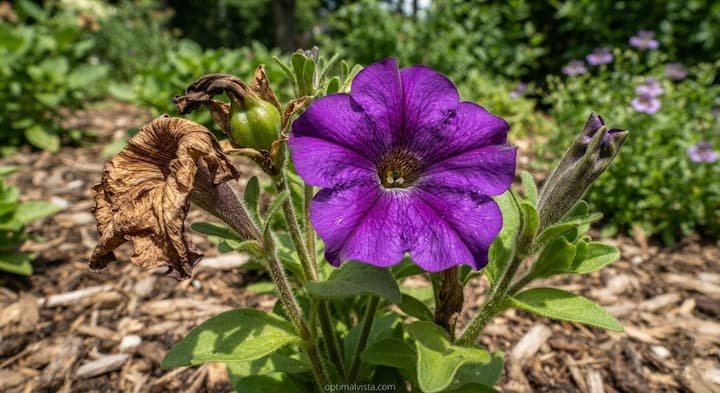
A spent flower goes limp first. The petals fold up, fade, and turn papery or brown, and the whole flower hangs loose on the stem. Right behind it you’ll see a small green bulge. That’s the seed pod, and it’s the part you really want gone. Even after the petals drop, the pod can stay on the stem, so look for it.
New buds look different. They’re tight, upright, and sit at the tips of the stems, so leave those alone. If you’re not sure about one, wait a day. A truly spent flower won’t look any better tomorrow.
Do You Really Need to Deadhead Every Petunia?
No. Skipping deadheading petunias won’t kill them, but you’ll get more brown flowers and fewer new ones as summer goes on. Most petunias look better when you stay on it. The exception is the self-cleaning kind, which drop their own old flowers.
Check the plant tag or ask the garden center for the words “self-cleaning.” Those improved varieties cost a bit more than seed-grown plants, but plenty of people find the saved work worth it. Here’s how the main types shake out.
| Petunia type | Does it need deadheading? |
|---|---|
| Grandiflora | Yes, regularly. The big flowers hold rain and turn to mush fast. |
| Multiflora | Yes. It keeps the plant compact and blooming. |
| Milliflora | Rarely. The tiny flowers mostly drop on their own. |
| Supertunia and other spreading types | No. They’re self-cleaning. |
| Wave types | Light work. The seed-grown ones still like a trim. |
Even self-cleaning plants get leggy by midsummer, so they still need a haircut now and then. The full rundown on wave petunia care has the details on that group.
When to Start and How Often to Go Out There
Start when the first flowers wilt. There’s no calendar date for it, because your variety, weather, and region all change when the first flush fades.
Six-pack plants from the garden center bloom fast, while seed-grown ones take longer because they have to sprout and build roots first. Either way, wait until flowers actually fade before you touch anything. After that, check the plants about once a week.
Morning works best. I do mine before the sun gets hot, when the leaves are dry and the stems are firm.
| What’s happening | How often to check |
|---|---|
| Peak bloom in early summer | Every 2 to 3 days |
| Normal summer weeks | Once a week |
| Rainy stretch | Right after it clears, since wet petals rot fast |
| Heat above 90°F | Just pick the obviously dead ones |
| Early fall | Every week or two, as blooms slow down |
Can’t keep up with a weekly check? Do one full cleanup around the end of July or early August instead, using the midsummer haircut below.
Here’s a 5-minute weekly routine that fits most yards:
- Walk the plants with your pruners and a small bucket.
- Pinch or cut every faded flower and pod, working from the top down.
- Trim any long, bare stem tips just above a leaf.
- Dump the bucket in the trash and wipe your blades.
Tools That Make the Job Easier
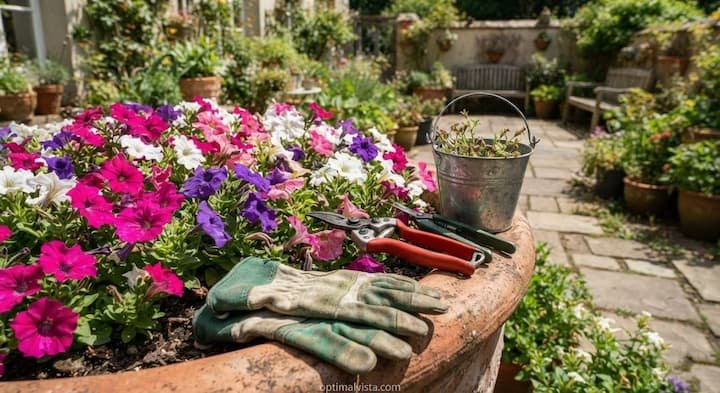
You can do all of this with your hands. For cleaner cuts, grab something small and sharp.
- Your fingers and thumbnail, for quick weekly pinching.
- Garden scissors or micro-tip snips.
- Precision pruners or bonsai shears, which fit between the stems.
- Light gloves, if the sticky stuff bugs you.
Skip big bulky pruners. They crush stems and clip more than you meant to. Clean the blades first by dipping them in rubbing alcohol for 5 minutes and letting them air dry, or by scrubbing them with warm soapy water. Do it again between plants if one looks sick.
How to Deadhead Petunias for Massive Blooms, Step by Step
Pinching and cutting follow the same 7 steps.
- Look for spent petunia blooms. They sit higher on the stem than the fresh ones, wilted or brown.
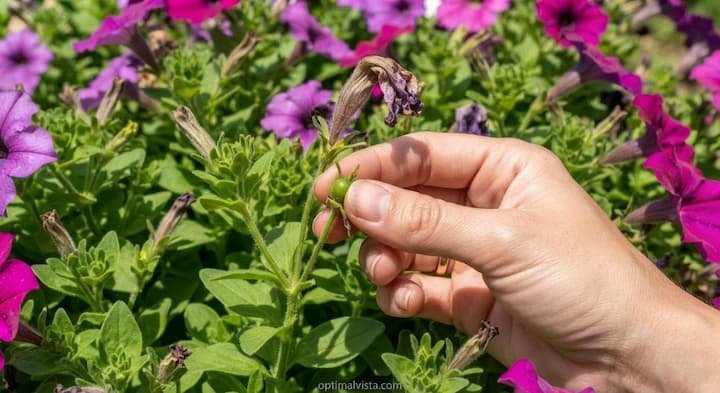
- Follow the flower stalk down to the small green seed pod behind the flower.
- Take off the flower, the pod, and the little stalk, all the way down to where it meets a leaf or the main stem.
- Cut or pinch it clean. Don’t pull, because a hard tug can snap the whole branch.
- Finish that stem, then move on to the next one.
- Drop the clippings in the trash instead of leaving them on the soil.
- Come back next week and do it again.
Method 1: Pinching With Your Fingers
Pinching is the fastest way and needs zero tools. Grab the stalk just below the flower between your thumb and finger, then squeeze and twist. If the stem is tough, dig your thumbnail in to cut through it. It also works on spent petunia blooms hidden under fresh leaves, and it’s the best way to take off long leggy tips.
Method 2: Snipping With Pruners or Scissors
If the sticky stems bug you, use a tool. Cut the stalk just below the flower and pod. When several faded flowers sit on one branch, cut the whole group back to just above a leaf pair. Make every cut clean. A ragged cut gives bugs and disease an easy way in.
Dealing With Sticky Petunia Hands
Petunia stems and leaves are covered in tiny sticky hairs, and after a few minutes your fingers feel like you grabbed duct tape. Here’s how to keep it under control.
- Wear thin gloves. I keep a cheap pair of nitrile gloves in the bucket for this.
- Keep a rag with a little rubbing alcohol nearby to wipe your fingers and blades when the gunk builds up.
- Wash up with soap afterward, since the residue collects dirt.
- Wear an old shirt, because the sticky stuff gets on your sleeves.
How Far Down to Cut
Where the blade goes decides how the plant grows back. The flower stalk comes off clean and the plant branches from the spot you cut above.
- Normal trim: cut just above a leaf node or a pair of leaves.
- Long, stringy stem: take off as much as half the branch, as long as the cut sits above a leaf.
- Bare brown stem with no leaves: don’t cut into it, because petunias often won’t sprout new growth from leafless wood and you’d just leave a dead stub.
- Stem with buds on it: you can cut it, but the plant takes a few extra weeks to bloom again, and it comes back fuller.
The Midsummer Haircut That Makes Petunias Keep Blooming
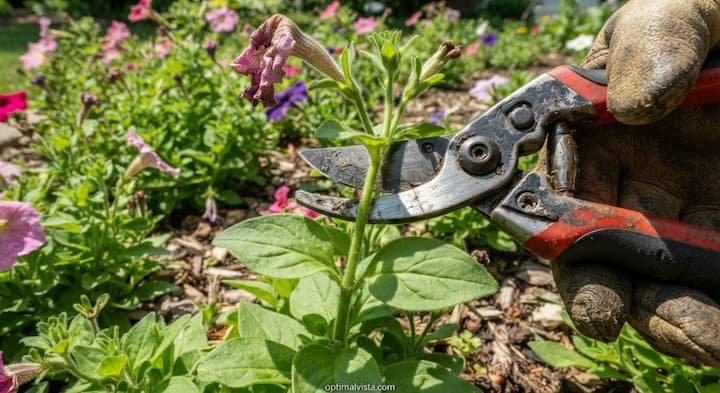
By late July or early August, many petunias look stretched and thin. That’s when a bigger cut pays off. Remove all the spent blooms and cut leggy stems back by a third to a half, always above a leaf. The plant looks rough for about a week, then new growth shows up. Expect fresh flowers in 2 to 3 weeks. I usually do mine around the first week of August.
On a big plant, cut in stages. Do half now and the other half a week later, so you’re never left with a bare pot. If your plants got long and floppy long before midsummer, the steps to fix leggy petunias are in their own article.
Pinching Leggy Growth to Keep Plants Bushy
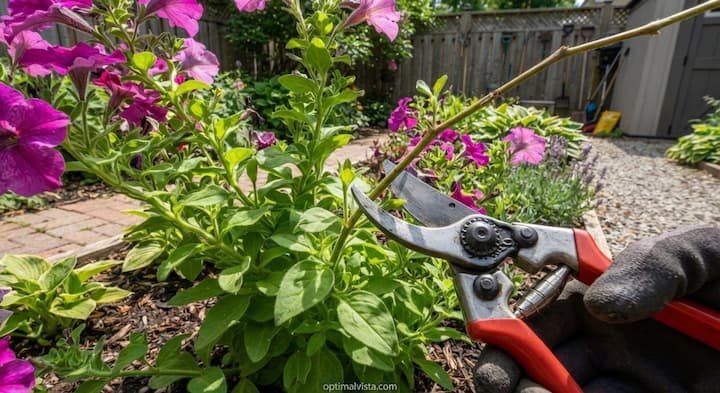
Between the big cuts, pinch the tips of the longest stems just above a leaf or bud. Each pinch usually sends out two new branches from that spot, so the plant gets fuller instead of longer. Cut or pinch cleanly instead of pulling, or you can snap the whole branch. This is the main trick for bushier petunias, and it works all summer.
Start with:
- Bare stems.
- Branches with lots of dead leaves.
- Anything hanging toward the ground.
How Much Is Too Much to Cut at Once:
Don’t scalp the plant. Removing too many branches at once cuts into your flowers.
- Small plants: trim one stem a week.
- Big plants with dozens of stems: up to 10 at a time.
- Any plant: leave at least half the leaves in place, since that’s where it makes its energy.
Hanging Baskets and Containers
Baskets work the same way. Clip each faded flower along with the pod behind it. Stay on it weekly and your petunias keep blooming right into fall.
- Reaching in: the stems trail down and hide under the mounded top, so lift the plant with one hand and look underneath.
- Water and food: baskets and pots dry out faster than a bed, so they burn through both quicker.
- Soil and pot size: covered in the guide to growing petunias in pots.
Petunias in Garden Beds and Borders
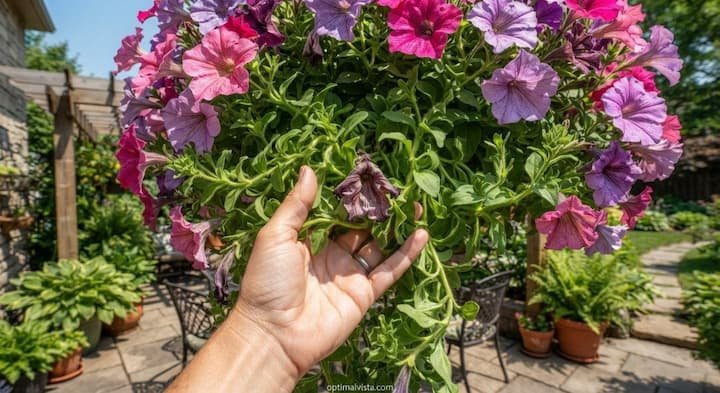
A big patch of petunias in the backyard can feel like too much to clean by hand. Don’t try to pick every flower. Walk the bed once a week, work the plants along the edge first, and pinch the biggest clumps of brown.
For a large patch, you can shear the tops with hedge shears every few weeks, then water and feed. It looks ugly for a minute and fills back in fast. In my experience, a 10-minute walk-through beats a 1-hour cleanup once a month. A few companion plants nearby also hide the gaps while the petunias recover.
What to Do After Deadheading to Get More Petunia Flowers
Cutting only frees up the plant’s energy. It still needs food and water to turn that energy into buds. Soak the soil after a big cutback until water runs out the bottom of the pot.
Check the top 1 inch of soil, and water when it feels dry. Pots in summer heat may need water every day, and the guide to watering petunias breaks it down.
Petunias are hungry plants. I think weekly feeding is the step most people skip. Mix a water-soluble bloom fertilizer in 1 gallon of water at the label rate. If you want help choosing, the rundown on petunia fertilizer compares your options.
- Water deeply after a big cutback.
- Feed every 1 to 2 weeks so your petunias keep blooming.
- Keep plants in full sun, at least 6 hours a day.
Common Deadheading Mistakes
- Pulling instead of cutting, which snaps whole branches.
- Leaving the seed pod behind, so the plant keeps making seeds.
- Cutting into bare, leafless stems.
- Working on wet plants, which makes mold more likely.
- Using dull or dirty tools.
- Cutting off healthy buds, which costs you more petunia flowers.
- Treating deadheading petunias as a once-a-summer job instead of a weekly habit.
- Skipping for weeks, then chopping everything at once.
Why Aren’t Your Petunias Blooming Again?
If you’ve been at it for weeks and the flowers still won’t come back, check the usual suspects.
- Not enough sun: Petunias want at least 6 hours of direct light, and the sun requirements are stricter than most people think.
- Heat: When it sits above 90°F for days, blooming slows down. They pick up again when it cools off.
- Hungry plants: Pale leaves and few buds mean it’s time to feed. If the leaves are turning, read up on yellow petunia leaves.
- A cut that was too hard: Give it 2 to 3 weeks to bounce back.
- A root-bound pot: If roots circle the bottom, move up a size.
Fix one thing at a time and give it a couple of weeks before changing anything else.
Dead Petals, Mold, and Plant Health
Dead petals stick to wet leaves and start to rot. That’s where gray mold likes to begin, especially after rain or in humid weather.
- Pick up fallen petals from the soil and the pot rim and put them in the trash.
- If you see fuzzy gray spots or slimy stems, clean your tools before moving to the next plant.
- Clearing dead flowers also removes a hiding spot for bugs, and if you spot tiny insects or a sticky mess, check the guide on petunia pests.
When to Stop in Fall
Keep going until the season ends. In USDA Zones 4, 5, 6, 7 and 8, petunias are annuals, and a frost around 32°F finishes them, so there’s no point in a big cleanup right before that.
- Want seeds? I think the last 2 weeks of the season are the best time to let a few pods ripen. Hybrid petunias don’t grow true from seed, so next year’s plants may look different. When you’re ready, you can start seeds indoors.
- In USDA Zones 9, 10 and 11, petunias can last through mild winters, so keep up the routine
- Want to save a favorite plant before frost? Look into overwintering petunias
Final Thoughts:
Now you know how to deadhead petunias for massive blooms: pinch the faded flower and the pod, cut above a leaf, and repeat weekly. Add a midsummer haircut, steady water, and regular feeding, and the plants keep going until frost. Grab your pruners this weekend and start a 5-minute weekly routine on the plants closest to the door. You’ll see the difference in two weeks.