
Ever wonder why one hydrangea in the backyard explodes with blooms while the identical shrub next door gives you nothing but green leaves?
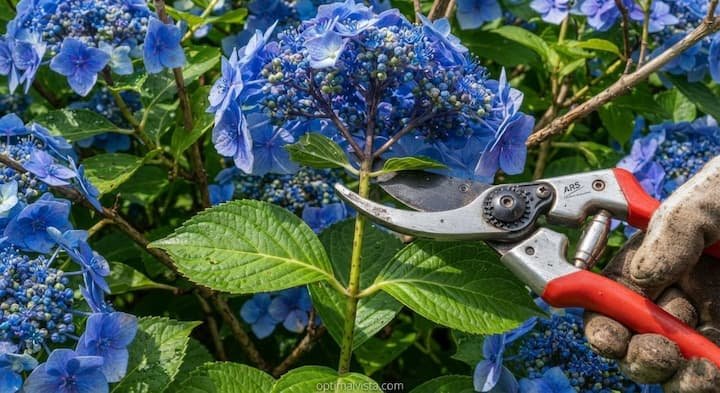
The difference usually comes down to a single pair of pruners and the calendar date you used them. Cut at the wrong moment and you snip off next summer’s flower buds before they ever open.
Short answer: bigleaf, oakleaf and mountain types need trimming only right after they bloom, while panicle and smooth types get cut in late winter. Knowing when to prune hydrangeas for your exact type, plus how much to take off, is what this guide walks you through, step by step.
Why Getting the Timing Right Matters
Hydrangeas are tougher than most people think. They don’t need a trim to grow or flower, so the only real danger with pruning hydrangeas is cutting off buds. I think most gardeners prune too much, not too little.
A good trim clears dead and diseased wood so decay does not spread, opens the center for light and airflow, pushes fresh growth for better flowers and keeps the shrub from flopping over your walkway. Overdoing it removes next year’s buds, and skipping it for years leaves crowded, weak stems.
The University of Maryland Extension says cutting at the wrong time of year for the variety is the most likely reason hydrangeas fail to bloom. A few minutes of planning pays off.
Step 1: Identify Your Hydrangea Type
Everything depends on how your shrub makes flower buds.
- Old wood: buds form on last year’s stems by late summer or fall and sit there all winter, so a cut in fall, winter or spring takes them off.
- New wood: buds form on fresh spring growth, so there is nothing for winter or pruners to damage.
- Reblooming: flowers on both, so a frost or a bad cut still leaves a second chance.
| Type | Blooms on | Easy ID clue |
|---|---|---|
| Bigleaf (H. macrophylla) | Old wood (rebloomers: both) | Thick, glossy leaves; mophead or lacecap flowers |
| Mountain (H. serrata) | Old wood (rebloomers: both) | Looks like a bigleaf, with lacecap flowers |
| Oakleaf (H. quercifolia) | Old wood | Oak-shaped leaves, cone-shaped white flowers |
| Smooth (H. arborescens) | New wood | Thin, matte leaves; round white or pink flowers |
| Panicle (H. paniculata) | New wood | Cone-shaped flowers, usually the biggest shrub |
| Climbing and Cascade | Old wood | Climbing types cling to walls and fences |
Not sure which one you have? Figure it out first, because how to prune hydrangeas depends entirely on the type.
Check three things:
- Leaves and stems: thick, textured leaves on stout green stems point to bigleaf or mountain; thin, matte leaves on slimmer brown stems point to smooth or panicle.
- Flower shape: round mopheads and flat lacecaps lean bigleaf, while cones lean panicle or oakleaf.
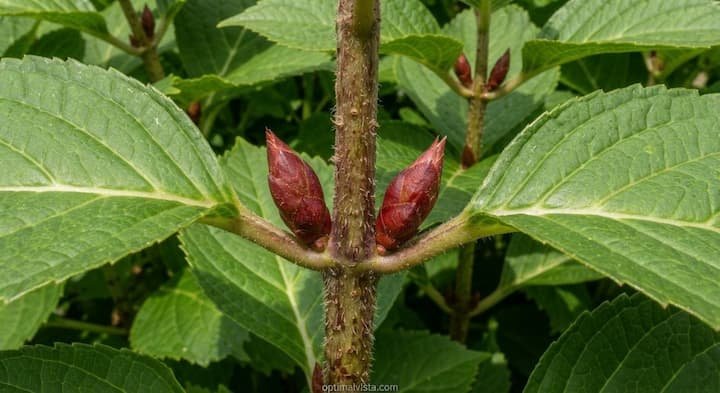
- Bud check: I like doing this in October because it takes a minute. Look where the leaves meet the stem. Reddish, pointed buds already there mean old wood; bare spots mean new wood.
Step 2: When to Prune Hydrangeas by Type
Old wood (bigleaf, mountain, oakleaf and climbing)
These start setting next year’s buds in August and September. Any real trimming has to happen right after the flowers fade, and no later than the first of August in the Northern Hemisphere. Some experts skip even that and only remove fully dead branches once the shrub leafs out.
The safest path sits in between: leave healthy stems alone, clear dead wood in spring, and do any shaping by late July. Oakleaf types need the least work, and the oakleaf spring care guide covers it.
New wood (smooth and panicle)
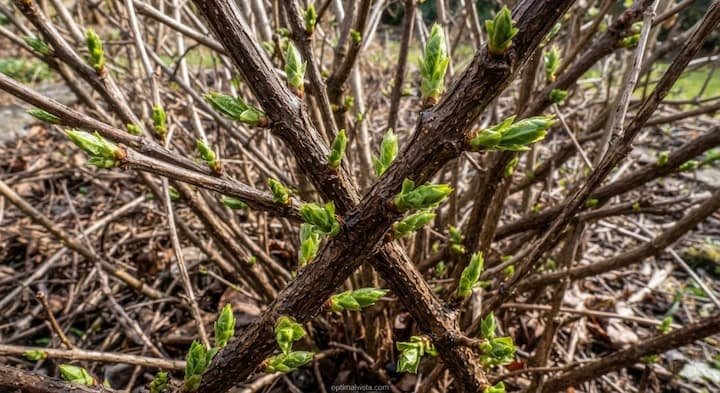
These are the forgiving ones, and the only group where when to cut back hydrangeas hard isn’t a gamble. Cut in late winter or very early spring, just as growth starts.
USDA Zones 7, 8 and 9 usually handle it in February or March, USDA Zone 6 lands in March, and USDA Zones 3, 4 and 5 often wait until April. Late fall or early winter works too once the plant is dormant, because the buds don’t exist until spring.
Choose that window if heavy snow bends your stems or you like a tidy winter yard; otherwise leave the dried heads until spring.
Rebloomers (Endless Summer, Tuff Stuff and similar)
Handle them like old wood. In mid to late spring, once you can see which stems survived winter, remove the dead ones. Skip fall through early spring cuts, since the first round of buds is already on the stems. This Endless Summer care covers the feeding side.
The Best Time to Prune Hydrangeas Month by Month
| Window | What to do | Who it’s for |
|---|---|---|
| Late winter (Feb–Mar) | Cut back stems | Panicle and smooth |
| Spring, once leaves open | Remove winter-killed stems | All types |
| Right after bloom | Light shaping, spent flowers | Old wood |
| August 1 | Last safe day to trim | Old wood |
| Fall | Remove only dead or broken stems | All types |
| Late fall to early winter | Optional cleanup | Panicle and smooth |
Those months fit the Northern Hemisphere. Garden south of the equator and you flip the calendar by about 6 months. Put the dates in your phone now, because the best time to prune hydrangeas is easy to miss when the shrub is bare or buried in snow.
Skip fall through early spring on old-wood types, anything after early August on those same shrubs, and any mid-season trim meant to keep the plant short, since it just grows back.
Step 3: Pick the Right Tools
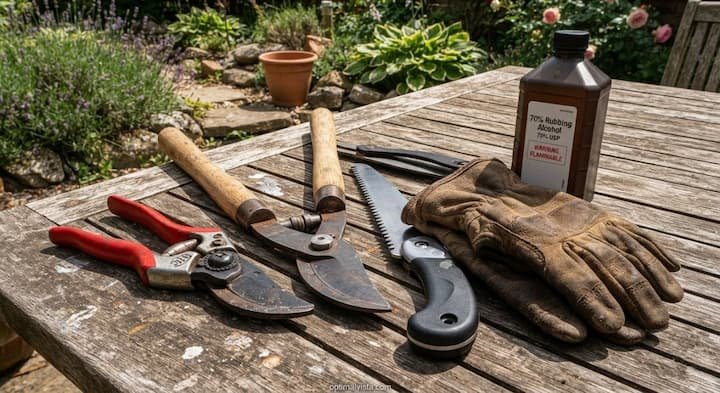
In my experience, one sharp pair of bypass pruners handles most of the job. Use them on stems up to ¾ inch thick, since the blades slide past each other like scissors for a clean cut.
Switch to bypass loppers for stems from ¾ inch to 1½ inches, and a pruning saw for anything thicker. Keep anvil pruners for dead wood only, because they crush live stems. Wear gloves for rough bark and thick old canes.
Clean blades matter as much as sharp ones, so wipe them with rubbing alcohol or a diluted bleach mix between shrubs and after cutting diseased wood. That way you don’t spread problems around the yard.
How to Prune Hydrangeas the Right Way
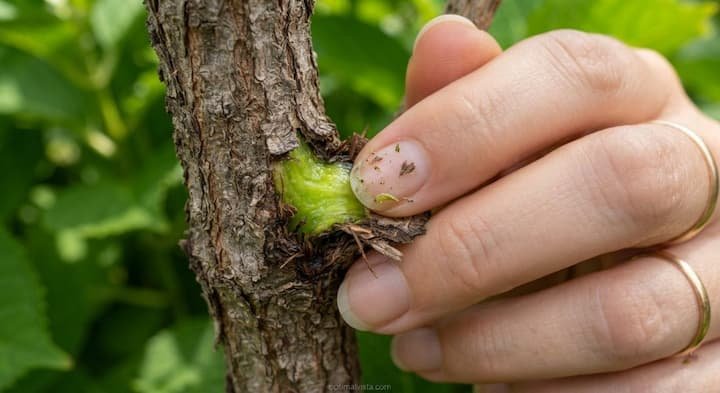
Work in order: clear the bad wood first, then shape. I always start with the scratch test. Scrape a little bark with your fingernail. Green underneath means the stem is alive, while brown and dry means it’s dead.
Follow each dead stem down to healthy wood, or to the soil, and cut there. Remove damaged, diseased and crossing stems at any time of year.
For the cuts themselves:
- Cut about ¼ inch above a pair of healthy leaves or a strong bud.
- Angle the cut slightly so water runs off.
- Take weak or broken stems out at the base.
- Favor the strongest stems and open up the center.
Take no more than about one-third (30%) of the shrub at once. On a hydrangea standing 6 feet tall, that’s roughly 2 feet off the top and sides. Cutting deeper strips the sturdy framework and leaves too little foliage to feed the roots.
Also know the difference between two jobs. Deadheading means removing faded flowers any time to keep things neat, and it won’t hurt next year’s buds if you cut just above a leaf set. Pruning means deeper cuts for shape, size or renewal, saved for the right window.
Cutting Each Type: Old Wood, New Wood and Rebloomers
- Old wood: keep it light and selective. Pruning hydrangeas in this group means trimming spent blooms back to the first strong bud below the flower, then, on a crowded shrub, removing up to one-third of the oldest, thickest stems at the base. No flat haircuts.
- New wood: cut stems back to 12 to 24 inches above the ground. Lower cuts give bigger flowers on stems that can flop; taller cuts give sturdier stems with smaller blooms. Leave stems at mixed heights for a fuller shrub.
- Smooth types: light trimming gives lots of smaller blooms, while hard cutting to 12 to 18 inches gives fewer, larger blooms that may need staking.
- Panicle types: keep the strongest stems and remove small side shoots to build a sturdy frame. Hard cutting gives fewer, larger blooms, while light trimming gives more, smaller ones. The Limelight pruning guide shows this on a popular variety.
- Rebloomers: use a light hand. Trim spent flowers back to the first healthy bud, skip big cuts into live old wood, and do heavier shaping on a small share of the oldest stems each year.
Climbing and Tree-Form Hydrangeas
Climbing hydrangeas bloom on old wood and need very little. Remove stray stems or shape lightly after flowering. Heavy cutting can slow growth and delay flowers for years.
Tree-form panicles follow panicle timing, so late winter works. Keep the trunk and main frame, shorten last season’s stems to a few buds, and pull off any shoots sprouting at the base so the head stays balanced under heavy flowers.
Rejuvenation: When to Cut Back Hydrangeas Hard
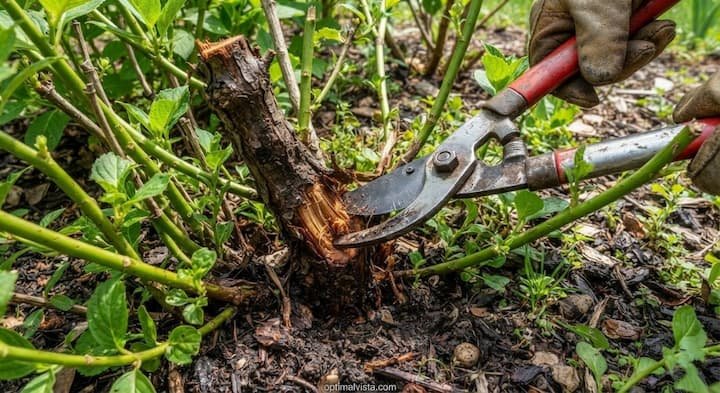
Overgrown or neglected shrub? Don’t chop it all at once. My rule is one-third a year. Remove about one-third of the oldest, thickest stems at the base in year one, another third in year two, and the last of the old wood in year three.
Do the cuts in the window for your type. Only smooth hydrangeas can be cut right to the ground; other types can be damaged for good.
If the shrub is simply too big for its spot, trimming won’t hold it. Cutting stimulates growth, so it comes back at its old size or bigger. Dig it up while dormant in early spring and move it, or replace it with a smaller variety. Better yet, plant it where it has room for its mature size, and it will rarely need heavy cutting.
Special Cases: New Plants, Pots, Frost Damage and Cut Flowers
- New plants: leave a first-year shrub alone except for dead or broken stems, and let the roots settle in. Planting this fall? Read about planting hydrangeas.
- Potted shrubs: how to prune hydrangeas in a 10-gallon container follows the same type rules as in the ground. The potted hydrangeas guide covers the rest.
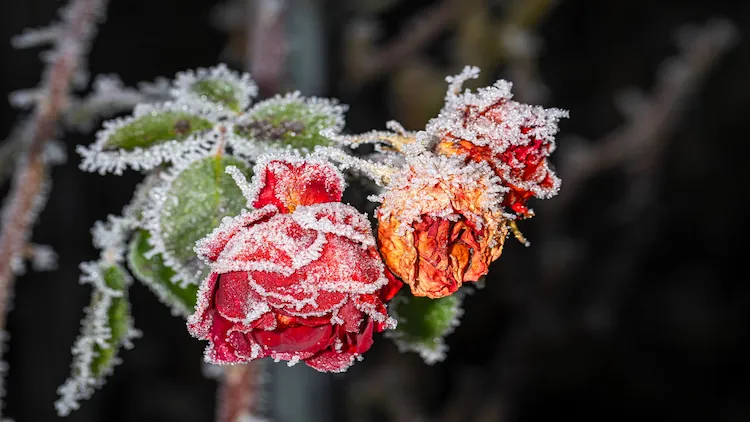
- Frost damage: wait until leaves open and nights stay above 32°F, then do the scratch test. Cut damaged shoots back to the first undamaged pair of buds. If it looks rough, see reviving hydrangeas, and for prevention, frost protection tips.
- Cut and dried flowers: cutting blooms for a vase counts as light trimming, so cut just above a leaf set. On smooth and panicle types, leave the dried heads for winter color and trim in spring.
Aftercare: Water, Mulch and Feeding
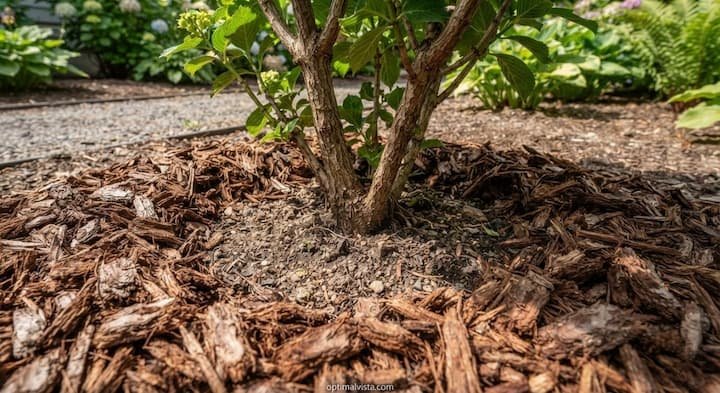
Give a dry shrub a slow soak after cutting, around 2 to 3 gallons for a mid-size plant. Then spread 2 to 3 inches of shredded bark or compost around the base, keeping it a few inches away from the stems so the bark doesn’t rot.
Feeding depends on when you cut:
- Late winter cuts (panicle and smooth): feed in early spring as growth starts.
- Summer cuts (bigleaf and oakleaf): add a thin layer of compost, then save the main feeding for spring.
- What to use: a slow-release balanced fertilizer like 10-10-10, or one made for flowering shrubs; see the hydrangea fertilizer guide.
- What to avoid: high-nitrogen lawn fertilizer, which grows leaves and fewer flowers.
Spring chores stack up fast, so this early spring checklist helps. Bag diseased cuttings and put them in the trash, not the compost pile. Healthy tips of new growth can root, so try propagating hydrangeas.
Common Mistakes People Make When Pruning Hydrangeas
I made the first one in my second year: a bigleaf trimmed in October, and no blooms the next summer.
- Cutting old-wood types in fall, which removes the buds.
- One flat haircut across the whole shrub.
- Trimming all season to keep it short.
- Dull or dirty tools.
- Cutting everything to the ground: only smooth types handle that, so learn when to cut back hydrangeas hard before you try.
What If You Cut at the Wrong Time?
Don’t panic. Old-wood types will probably skip flowers this year but recover, new-wood types usually still bloom later in the season, and rebloomers can flower on new growth.
Stop cutting, leave what’s left, and water and mulch as usual without heavy feeding. Wait through summer, since new shoots may still flower. Next year, write down your type and the best time to prune hydrangeas in a phone note.
Trimmed Right but Still No Flowers?
If your timing was solid, check the usual suspects. Start with bloom troubleshooting for the full list.
- Light: too much shade thins flowers and blazing sun scorches them; see full sun hydrangeas.
- Nitrogen: yard fertilizer that favors grass over flowers.
- Frost: a late freeze can kill overwintering buds on bigleaf types.
- Age: young shrubs sometimes need a season or two.
Conclusion:
Knowing when to prune hydrangeas comes down to one question: does your shrub bloom on old wood or new wood? Trim old-wood types only right after flowering, cut new-wood types in late winter, and take no more than a third at a time. Keep your tools clean and your cuts light. If you’re ever unsure, wait a season and just remove the dead stuff.
Pingback: How to Change Hydrangea Color: 7 Tips to Get Blue or Pink
Pingback: Why Is My Hydrangea Not Blooming? 13 Causes & Quick Fixes