Why is my hydrangea not blooming when the leaves look so healthy? It’s one of the most common questions backyard gardeners ask, and the answer is usually hiding in plain sight.

Short answer: wrong pruning time, too little sun, or too much nitrogen. The strange part is that most of these are one-season mistakes, not permanent damage.
Once you know which kind of hydrangea you have and what happened to its buds last year, the fix gets pretty simple. Ignore the usual advice to just fertilize more, because that often makes it worse. Here is what to check, in order.
Why Is My Hydrangea Not Blooming? Find Your Type First
Before you change anything, figure out which type you have, because the fix depends on it. Check the plant tag, or compare the leaves and flowers to this list:
- Bigleaf: big rounded leaves, with ball-shaped (mophead) or flat (lacecap) flowers.
- Mountain: smaller, tidier leaves and mostly lacecap flowers.
- Oakleaf: leaves shaped like oak leaves, with cone-shaped white flowers that fade to pink.
- Panicle: cone-shaped flowers that open in mid to late summer, like Limelight.
- Smooth: big white round flower heads, like Annabelle.
- Climbing: a vine that clings to walls and fences.
No tag? Snap a photo and show it at a garden center. I do that with any mystery shrub.

Old Wood vs. New Wood Bloomers
This is the biggest piece of the puzzle. Some hydrangeas build next year’s flower buds in late summer and fall on old wood, which is last season’s stems. Others bloom on new wood, which is growth from the current season.
Clemson Cooperative Extension notes that bigleaf hydrangeas set flower buds on old wood in late summer and fall, so a cut made after that removes next summer’s flowers.
| Type | Blooms on | USDA Zones | Sun | Prune |
|---|---|---|---|---|
| Bigleaf | Old wood | 5-9 | Morning sun, afternoon shade | Right after flowers fade |
| Mountain | Old wood | 6-9 | Partial shade | Right after flowers fade |
| Oakleaf | Old wood | 5-9 | Partial shade to some sun | Right after flowers fade |
| Climbing | Old wood | 4-8 | Shade to partial sun | Right after flowers fade |
| Panicle | New wood | 3-8 | Full sun to part shade | Late winter or early spring |
| Smooth | New wood | 3-9 | Part shade | Late winter or early spring |
Rebloomers like Endless Summer bloom on both old and new wood, which is why they are my pick for areas with late frosts. The Endless Summer care guide covers the details. Oakleaf types follow old wood rules too, and oakleaf spring care shows the timing.
Hydrangea Not Flowering Because It’s Too Young?
A new shrub spends its first seasons building roots.
Gardeners call it sleep, creep, leap: almost no growth the first year, slow growth the second, then real flowers around year three. It can take 2 to 5 years. If your hydrangea has no flowers in its first year, that is usually normal.
Also check the calendar. Bigleaf types open in late spring to early summer, while panicles wait until mid to late summer. A bigger pot from the garden center usually means an earlier show than a small one-gallon start.
Wrong Pruning Timing Is the Top Culprit
Pruning at the wrong time is the number one cause. A hydrangea not flowering after a hard cut-back usually lost its buds right there, under the pruners. Old wood types (bigleaf, mountain, oakleaf, climbing) only need a light trim right after the flowers fade.
Cut them in fall, winter or early spring and the buds go with the stems. New wood types (panicle and smooth) can take a harder cut in late winter or early spring.
Check when to prune for timing, and the Limelight pruning guide if you grow a panicle.
Hydrangeas bloom best with little pruning, so give them room to reach full size. Only cut when temps stay reliably above 32°F.
Common pruning mistakes:
- Cutting everything to the ground in fall to tidy up.
- Trimming old wood types in early spring.
- Giving the shrub a haircut every year, then wondering about a hydrangea refusing to bloom.
- Deadheading old wood types in late fall, which leaves new buds exposed to frost.
- Cutting stems that only look dead.
Stems that look dead in winter may be fine. Old wood often stays bare until the leaves open. Scratch a little bark with a fingernail: green underneath means alive.
My rule is simple: no pruning until the leaves open, then cut only what is truly dead.
A few more rules by type:
- Old wood types only need cuts to control size and remove winter-killed stems.
- Rebloomers like Endless Summer need no pruning except dead or damaged stems.
- Snip spent blooms off the first flush so rebloomers can set buds on new growth.
- A pruning mistake costs one season, as long as you stop making it.

Hydrangea Refusing to Bloom in Too Much Shade?
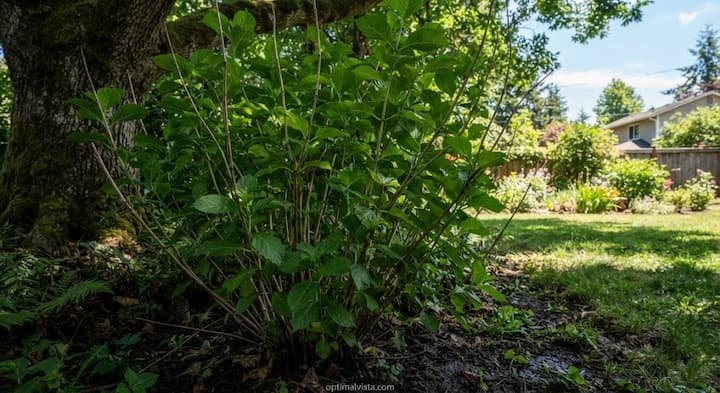
Hydrangeas like a mix of sun and shade, but deep shade stops bud formation. Aim for at least 4 hours of direct sun, ideally morning sun with afternoon shade.
Signs of too little light:
- A hydrangea has no flowers but plenty of long, stretched stems.
- The plant leans toward the nearest bright spot.
- It sits under a big tree or on the north side of the house.
Oakleaf types handle shade better than most, while bigleaf types sulk in it. Count the hours of direct sun over one day, because under 3 to 4 hours is too little for most types.
Trim a few lower limbs on the tree above it, or move the shrub in fall or early spring. If the whole yard is dim, switch to shade loving hydrangeas instead of fighting it.
Too Much Sun and Heat Stress
Hot afternoon sun is just as bad. A stressed plant saves energy by skipping flowers, so a hydrangea not producing flowers while the leaf edges look scorched, yellow or brown is a classic sign. Bigleaf types need protection from hot afternoon sun, especially in warmer climates.
Panicles favor more sun and can handle six hours or more, even full sun in northern yards.
Not sure what your yard can support? See which full sun hydrangeas actually work. Otherwise, move the shrub or give it afternoon shade from a taller plant nearby.
Not Enough Water
Hydrangeas drink a lot. Buds form in late summer, so a dry summer can cut flowering the next year. Aim for about 2 inches of water per week, more during heat waves.
Watch for these:
- Wilting leaves in the afternoon.
- Crispy leaf edges.
- Soil that is dry 2 inches down.
- A hydrangea not flowering after a dry summer.
Mulch 2 to 3 inches deep, keep it off the stems, and water slowly at the base. I think a drip hose beats a sprinkler every time, and a slow soak of a few gallons beats a quick spray.
Mulch also keeps roots from swinging between hot and cold. In sandy soil, mix in compost so water sticks around. Oakleaf types handle dry spells better than other types.
Overwatering and Soggy Soil
Too much water causes trouble too. Roots sitting in soggy soil can’t work right, and a stressed plant focuses on staying alive, not flowering. A leafy plant with no buds is common here.
Heavy clay and low spots hold water, and a hydrangea refusing to bloom there is often stressed at the roots.
Try this:
- Stick a finger 2 inches into the soil, and skip watering if it feels wet.
- Mix compost into heavy clay.
- Plant on a slight mound in low spots.
- Yellow leaves with wet soil point to this problem.
Hydrangea Not Producing Flowers? Check the Nitrogen
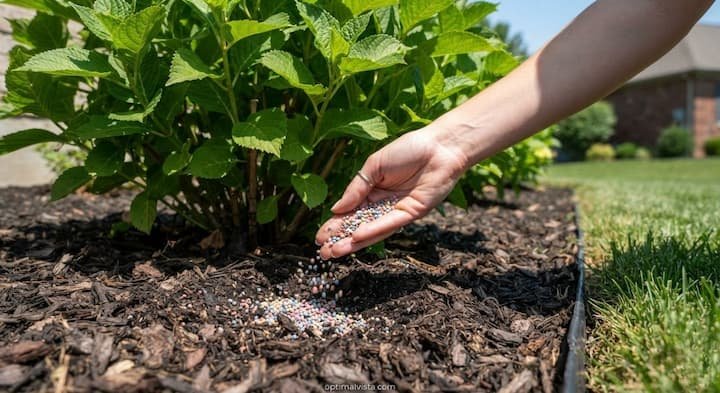
Too much nitrogen gives you a leafy green bush with few or no flowers. Two common sources are lawn fertilizer drifting into the bed and heavy doses of 10-10-10.
Pick a fertilizer made for flowering shrubs with more phosphorus, or add bone meal. Feed once in spring with a slow-release product and skip late summer feeding. The best fertilizer breakdown shows what to buy.
That extra nitrogen also pushes soft, leggy growth that bugs love. A mix like 10-30-10 has more phosphorus, but follow the label rate.
Quick checks:
- Does your lawn spreader pass near the bed?
- What are the N-P-K numbers on the last bag you used?
- Skip any high-nitrogen “lawn and garden” mix.
Poor Soil and Wrong pH
Hydrangeas want rich, well-drained soil that is slightly acidic. Extreme pH locks up nutrients, and that can affect bud formation. A soil test from your county extension office is cheap and saves guessing.
- Mix 2 to 3 inches of compost into poor soil.
- Keep the soil slightly acidic.
- Retest every few years.
- Don’t guess: a hydrangea not producing flowers in bad soil needs a test, not more fertilizer.
Hydrangea Has No Flowers After a Hard Winter?
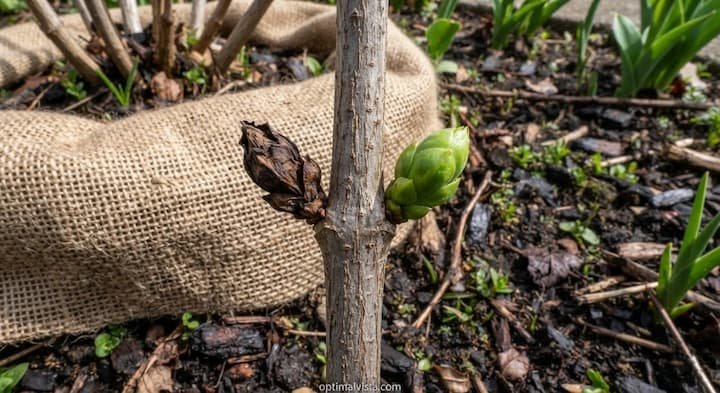
Cold is the sneakiest cause. Bigleaf and oakleaf types set buds in fall, so winter can kill them. Buds are in danger once temps hit 5°F, and a late spring frost at 32°F or below can brown buds after they swell. In my experience, a warm spell followed by a freeze does the most damage.
To check, look at the stems in spring. Plump green buds are alive. Brown, black or mushy ones are dead.
Follow these steps to protect them:
- Wrap with burlap during cold snaps, never plastic.
- Mulch the base with several inches of leaves, compost or straw in fall.
- Plant in a spot sheltered from wind.
Unwrap the burlap once spring settles in. If late frosts keep hitting your yard, leave spent blooms on over winter to shield the new buds.
The protect from frost steps go deeper. If the whole shrub looks rough, learn how to revive dying hydrangeas.
Wrong Hardiness Zone
Some hydrangeas simply don’t fit your climate. Check the zones before you blame anything else:
- Bigleaf and oakleaf types like USDA Zones 5, 6, 7, 8 and 9.
- Panicles handle USDA Zones 3, 4, 5, 6, 7 and 8.
- Smooth types cover USDA Zones 3, 4, 5, 6, 7, 8 and 9.
- A bigleaf in Zone 4 will keep losing its buds.
- If the tag doesn’t match your zone, switch to a panicle, a smooth type or a rebloomer.
A shrub rated only to Zone 7 will lose its buds in a Zone 6 yard, and many bigleaf types struggle in Zone 6 for the same reason. Rebloomers still flower there on new growth. Always read the tag before you buy.
Deer, Rabbits and Other Critters
Deer love hydrangea buds. Old wood types form buds in fall, so winter browsing can wipe out next year’s flowers.
In the growing season, deer eat tender new growth and buds on panicle and smooth types. Torn, ragged leaves point to deer. Neat snips point to rabbits. Deer are hungriest in late winter and early spring, when little else is green.
- Fence about 8 feet tall for deer, and use short wire fencing for rabbits.
- Wrap the shrub in burlap over winter.
- Use repellent sprays and reapply after rain.
- Plant tougher neighbors, like these companion plants.

Pests, Weeds and Diseases
Pests and diseases are usually a side issue, but they add stress:
- Aphids suck sap and weaken stems, so knock them off with a hard blast from the hose.
- Weeds steal water and nutrients, so mulch and pull them weekly.
- Powdery mildew and leaf spot can stress a plant too.
- Put badly spotted leaves in the trash, not the compost pile.
- Community gardeners spread disease fast between plots, so wipe pruners with rubbing alcohol between plants.
Gift Hydrangeas, Transplant Shock and Root Competition
Florist hydrangeas come from greenhouses with controlled conditions, and a few other situations cause the same no-bloom year:
- Gift plants often skip blooming for a year or more in the backyard, since the tops aren’t suited to your winters, even if the roots survive.
- A recently moved shrub skips a season while the roots recover, and when to plant covers the best windows.
- Big tree roots steal water and food from nearby hydrangeas.
- Potted plants freeze faster because the roots sit above ground, so move pots to a sheltered spot and read up on growing in pots.
I’ve lost count of how many gift hydrangeas went into a bed and never bloomed again.
Quick Diagnosis: Symptom to Fix
| Symptom | Likely cause | Fix |
|---|---|---|
| Lots of leaves, no buds | Too much nitrogen or shade | Stop feeding, add sun |
| Brown or black buds in spring | Frost damage | Burlap next winter, wait a season |
| Buds vanish, leaves torn | Deer or rabbits | Fence or repellent |
| Scorched leaf edges | Too much sun or dry soil | Afternoon shade, deeper watering |
| Healthy but newly planted | Too young | Wait 2 to 5 years |
| Bare after a hard prune | Wrong pruning time | Prune right after flowers next year |
Seasonal Plan to Get Blooms Back
- Fall: Stop fertilizing, mulch the base, wrap tender types, leave spent blooms on old wood types
- Winter: Don’t prune, and keep deer away
- Spring: Wait for leaves, scratch-test stems, feed once, add mulch
- Summer: Water about 2 inches per week, and prune old wood types right after flowers fade
Fix the cause now and most hydrangeas bloom the next season. If frost killed the buds, expect flowers back the following year.
How long until flowers return:
- Pruning mistake: next season, once you stop the bad cuts.
- Frost-killed buds: the following year.
- Too much shade or nitrogen: usually the next season after the fix.
- Too young: year 2 to 5, with steady water and sun.
Conclusion:
So, why is my hydrangea not blooming? Most of the time it comes down to pruning, light, nitrogen or winter cold. Find your type, fix the one thing that fits, and give the shrub a full season. The fixes are cheap and most plants bounce back fast. Pick one cause from this list and change it this fall.