Why does one Limelight throw huge, cone-shaped blooms while the shrub next door flops over with a few skinny flowers, even with the same sun and water?
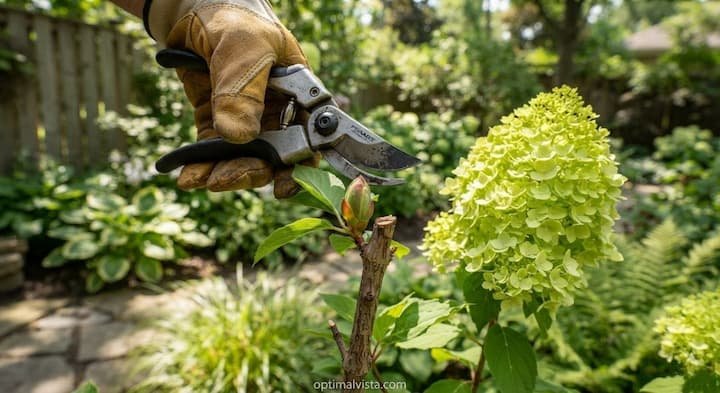
Most of the time, the difference is thirty minutes with a pair of pruners in late winter and one smart choice about where to cut. This limelight hydrangea pruning guide covers timing, tools, and every cut, so you know exactly what to do and when.
Short answer: prune once a year in late winter or early spring, take back about one-third of the plant, and stop before the buds start swelling.
Know Your Hydrangea and Why Pruning Matters
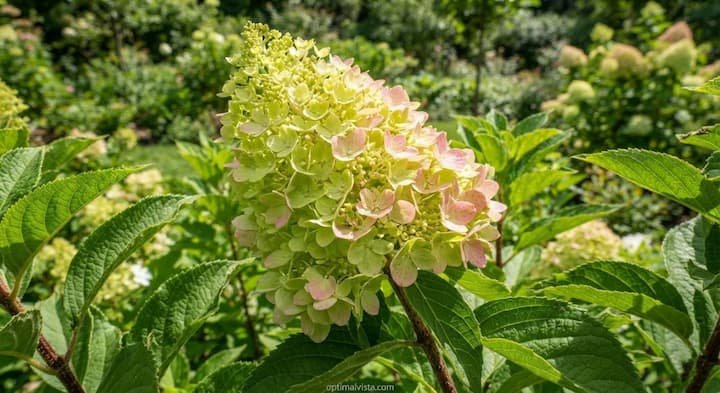
Limelight is a panicle hydrangea (Hydrangea paniculata). The blooms open a lime-green color in midsummer, then fade to cream, pink, and burgundy by Fall. Cornell’s Woody Plants Database lists it as hardy to zone 3b and 5 to 8 feet tall, so it handles USDA Zones 4, 5, 6, 7 and 8 without drama.
The big thing to know is that Limelight blooms on new wood. Flower buds form on growth that appears this spring, which makes cutting it back forgiving.
Bigleaf types such as Endless Summer are different because many bloom on old wood, so read Endless Summer care before you cut one.
No tag? Look for cone-shaped flowers instead of round balls, plus upright stems and toothed, oval leaves. Growth takes off in spring, flower buds form in early summer, and the show runs from July into Fall.
Skip pruning and a Limelight turns leggy, flops under its own flowers, and makes fewer, smaller blooms.
Pruning pays off in a few ways:
- Stronger stems that hold up heavy blooms.
- Better air flow through the center of the shrub.
- Bigger flower heads on fewer, healthier stems.
- No more flopping after a July rainstorm.
Tools You Need and How to Keep Them Clean
Grab these before you head out to the backyard:
- Bypass pruners for stems up to about 1/2 inch thick.
- Loppers for older canes up to roughly 1 1/2 inches.
- Pruning saw for the rare thick trunk.
- Gloves to protect your hands.
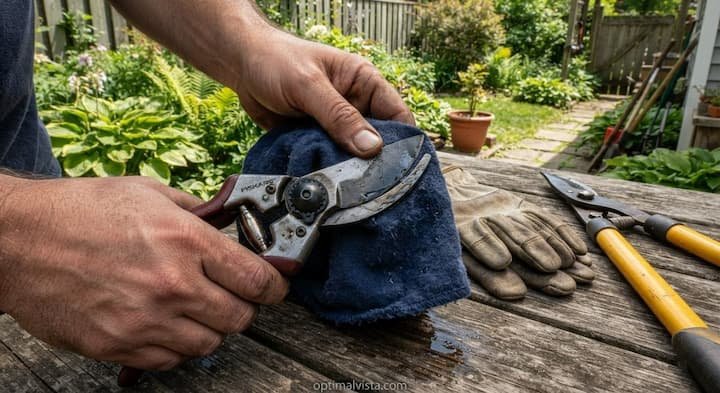
- Disinfectant like 70% rubbing alcohol or a 10% bleach mix.
I like bypass pruners over anvil styles because they slice clean instead of crushing the stem. Wipe the blades with alcohol before you start and between plants, then dry them so they don’t rust.
Sharpen them each Fall, since dull blades leave ragged cuts that heal slowly. Check your pruners’ rating too, because some handle 3/4 inch and some give up sooner.
When to Prune Limelight Hydrangeas in Your Zone
The best window for when to prune limelight hydrangeas is late winter to early spring, while the shrub is still asleep. You can technically cut any time after the leaves drop in Fall, but late winter wins because you can see the whole structure.
You can see the full shape without leaves in the way, and the plant has plenty of time to push new stems.
Go while the buds are still tight and unswollen, and stop once new leaves are out, because cutting then wastes the energy the plant just spent. Wait until daytime highs stay above 32°F, then use this table.
| USDA Zone | Pruning Window |
|---|---|
| Zone 4 | Late March to early April |
| Zone 5 | Mid to late March |
| Zone 6 | Early to mid March |
| Zone 7 | Late February to early March |
| Zone 8 | Mid to late February |
Signs it’s time to cut:
- Best answer to when to prune limelight hydrangeas: buds are tight and the worst cold is behind you.
- Dead stems snap easily, and a scratch test shows brown instead of green under the bark.
- Stems cross and rub against each other.
- The center is packed, with weak growth fighting for light.
- Branches have grown past the space you gave them.
Growing other types too? See when to prune for each one.
How to Prune Limelight Hydrangeas Step by Step
Here is how to prune limelight hydrangeas in six steps, and a mature shrub takes under an hour. In my experience, walking around the plant once before the first cut saves a lot of regret.
- Step 1, look it over: Check the overall shape and where the thick, older stems are.
- Step 2, remove dead and damaged wood: Cut broken or diseased stems back to a main stem or to the ground.
- Step 3, thin the center: Take out inward-growing, crossing, and spindly stems. Aim to remove about one-third of the older canes each year.
- Step 4, cut back last year’s growth: Pick your height from the how-much section below.
- Step 5, make clean cuts: Cut just above a healthy bud, as explained next.
- Step 6, shape it up: Step back and trim any stray branch. A Limelight is a rounded vase, not a topiary.
Finding the Right Bud and Making the Cut
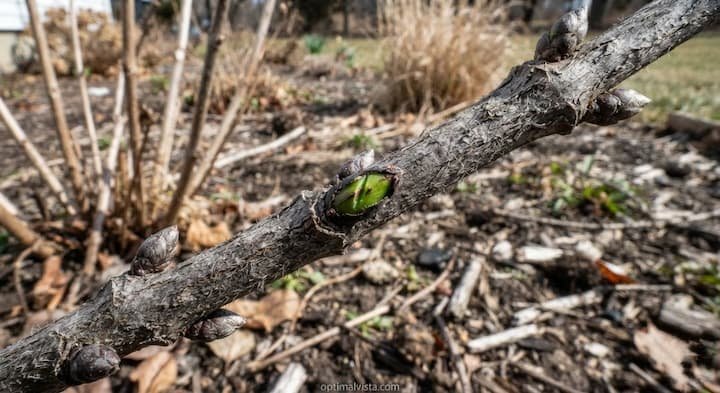
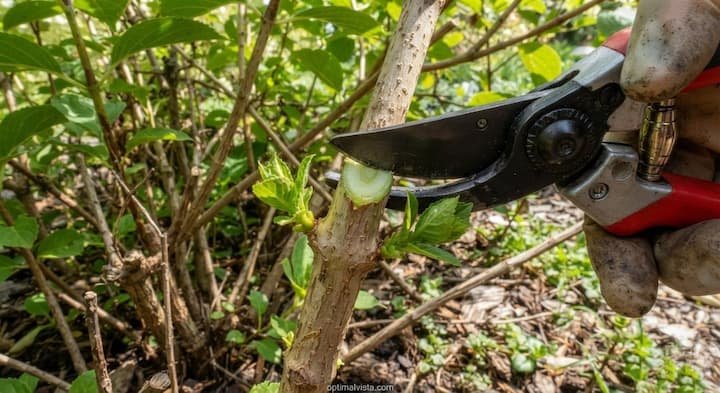
Buds sit in pairs on opposite sides of each stem, and the plump ones are the keepers. Pick a pair facing outward, because that new growth opens up the center instead of crowding it.
- Cut about 1/4 inch above the bud.
- Angle the cut so water runs away from it.
- Never cut midway between buds, since that leaves a stub that dies back.
- Use a sharp blade so the cut is smooth, not chewed.
No leaves means buds can be hard to read. Look for firm, rounded bumps along the stem, not the shriveled gray ones near the tips.
Your Limelight Hydrangea Pruning Guide to How Much to Cut
Some sites say never remove more than one-third of the plant, and others say cut stems down to 18 to 24 inches. Both work, since they chase different goals.
I think the one-third rule is the safest starting point, and you can go harder once you know what you want. Harder cuts favor bigger blooms, while lighter cuts favor more of them.
The reason is simple: with fewer buds left, the plant pours its energy into each one.
| Goal | How Much to Cut | What You Get |
|---|---|---|
| Taller shrub, more blooms | Cut stems back about one-third | Fuller plant, slightly smaller flowers |
| Bigger blooms | Cut to 18 to 24 inches from the ground | Fewer but larger flower heads |
| Size control | Cut to 12 to 18 inches | Shorter shrub, fewer flowers that year |
Pruning Young, Established, and Old Plants
Age changes the plan.
- Year 1 and 2: Remove only dead wood and do light shaping. The roots are still settling in, and when to plant matters here too.
- Established, 3 years or more: Follow the full routine above.
- Old and leggy: Use the renewal plan further down.
Small yard or container? Cutting to 12 to 18 inches each year keeps it compact. For pots, check these tips on hydrangeas in pots, and a dwarf type fits better.
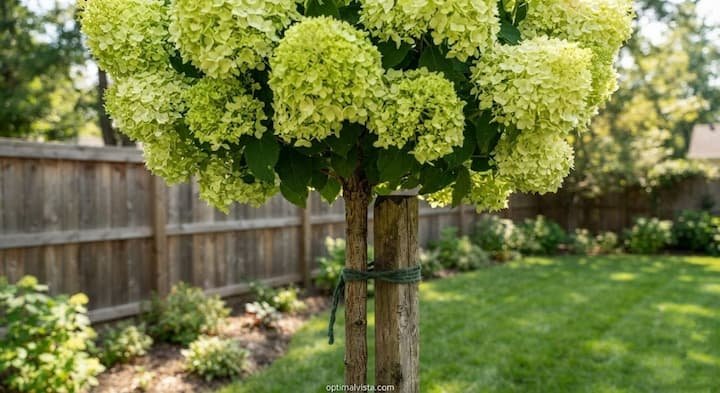
Limelight Hydrangea Tree Pruning for a Single Trunk
Good limelight hydrangea tree pruning starts with picking one strong, straight stem as the trunk. Stake it and tie it every few inches so it grows upright. I trained my first tree over three seasons, and patience was the hard part.
Most trees are branch-headed standards, meaning one trunk topped with a round canopy, and you want it to stay that way instead of drifting back to a multi-stem shrub.
- Year 1 to 3: remove side shoots on the trunk up to about 4 or 5 feet, and let the top branch out into a head.
- Yearly limelight hydrangea tree pruning: cut last year’s growth back about one-third and thin crossing branches.
- Pull suckers off the base and trunk as soon as you see them.
- On a grafted tree, remove anything growing below the graft union, and on an own-root tree, pull any base shoots the same way.
Limelight vs Little Lime and Other Panicle Hydrangeas
Little Lime stays around 3 to 5 feet, and Bobo is even smaller. Quick Fire blooms earlier in summer, Limelight Prime is a bit more compact, and Vanilla Strawberry gives you white blooms that blush strawberry-pink.
All of them bloom on new wood, so the late-winter timing stays the same. The only change is how hard you cut. Dwarfs need shaping, dead wood removal, and spent flowers taken off, not hard cuts. Limelight needs the bigger size reduction.
Limelight Hydrangea Pruning Tips for Summer Deadheading and Cut Flowers
A few limelight hydrangea pruning tips for summer: deadheading is optional and has no effect on next year’s blooms. Many people leave the dried heads, which turn pink and burgundy and look great with frost on them.
To deadhead, cut just below the flower head, above the first set of healthy leaves. It tidies things up and sends energy to the roots and stems.
- Cut flowers in the early morning, with a long stem.
- Limelight hydrangea pruning tips for dried bouquets: wait until the blooms turn pink or tan, then hang them upside down.
- Don’t strip a young plant of stems.
- Skip heavy cutting after mid-summer.
Rejuvenating an Old or Overgrown Limelight
Two options for a tired shrub, and either one works in late winter.
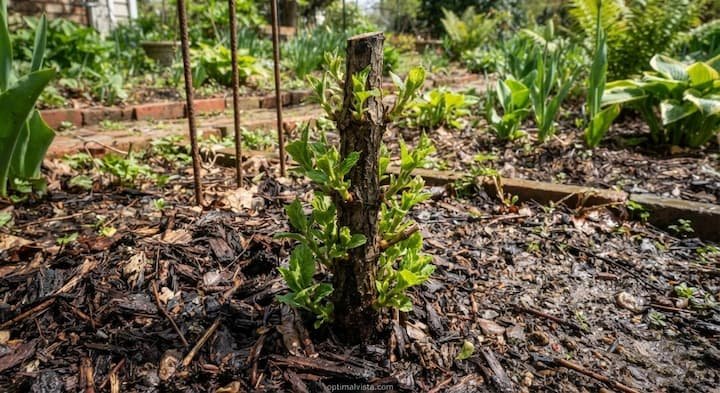
- Hard renewal: Cut every stem to 12 to 18 inches. Expect fewer flowers the first season. Some gardeners go as low as 6 to 12 inches on a badly neglected shrub, and it still grows back hard.
- Gradual renewal: Remove one-third of the oldest stems each year for three years.
It looks bare at first, then fills in fast. For a plant that’s declining for other reasons, read how to revive a hydrangea.
Common Pruning Mistakes to Avoid
- Pruning in late spring after new growth is several inches long.
- Only snipping tips, which leads to weak, leggy stems.
- Skipping the basics of how to prune limelight hydrangeas, like clean, sharp tools.
- Cutting hard on a plant that’s only a year or two old, which delays flowers, shrinks the blooms, and leaves weak, leggy stems.
- Pruning in Fall, which some people allow, but I wait for late winter because dried heads protect the lower buds.
Pruned at the Wrong Time? Recovery and Late Frost Fixes
Fall pruning can push tender growth that frost burns. Mid-winter cuts take cold damage, and summer cuts remove developing buds. If it already happened, stop cutting, water well, and give it a light feeding. Blooms may come late and smaller, so leave it alone until next late winter and it should return to normal.
A hard freeze after leaf-out is different. Cover the shrub when temps drop below 28°F, and wait before trimming damaged tips so new growth shows what’s alive. More on late frost protection is in a separate guide.
Aftercare After Pruning
Feed with a balanced, slow-release fertilizer like 10-10-10 when leaves emerge, skip high nitrogen, and stop feeding by mid-summer so new growth can harden off before winter.
See the best hydrangea fertilizer options, plus early spring care. Water about 1 inch a week, which is roughly 0.6 gallons per square foot, so about 6 gallons over 10 square feet. Finish with 2 to 3 inches of shredded bark mulch, kept a few inches from the stems.
What to Do With the Cuttings
Don’t toss healthy stems yet. Cut pencil-thick pieces into 6-inch sections with a few nodes, strip the lower leaves, and push them into moist soil. Late winter cuttings root slower than summer ones, so be patient. Here’s how to propagate from cuttings.
Dead or diseased wood goes in the trash or yard waste, not the compost pile. If you’re a community gardener sharing a plot, bag it so nothing spreads to your neighbors’ plants.
Troubleshooting No Blooms, Flopping, and Leggy Stems
No blooms usually means pruning too late, under 6 hours of sun, or a dry summer. I always check sun first. See hydrangea not blooming and full sun hydrangeas.
Flopping means the stems are too long and thin, so cut harder next year. A leggy, bare base needs old canes thinned over three years. Small flowers mean too many stems or too little water, so thin more. Lopsided growth usually points to one side getting less light.
Your Year-Round Limelight Care Calendar
- Late winter: Prune and clean your tools.
- Spring: Fertilize and mulch at leaf-out.
- Summer: Water, deadhead if you like, cut flowers, and watch for pests and disease.
- Fall: Ease off watering, leave dried heads, rake leaves, and add companion plants.
- Winter: Leave it alone, and mulch heavily in Zones 4 and 5.
Final Thoughts on Limelight Care:
Pruning a Limelight is one of the easiest jobs in the yard once you know the rhythm. Use this limelight hydrangea pruning guide each late winter: clean tools, dead wood out, center thinned, stems cut back about one-third. You’ll get strong stems and big blooms from July through Fall. Grab your pruners and pick a mild morning.