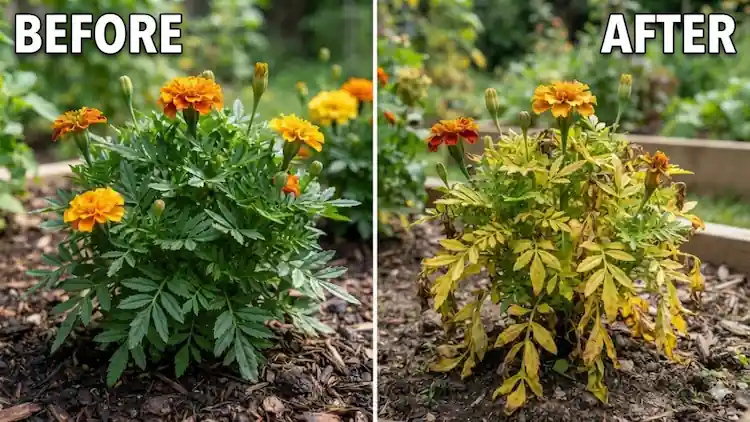
A hydrangea that looks finished in July is often still alive underneath, and that is the part most people miss. The leaves crisp up, the stems flop, and the shrub heads for the garbage before anyone checks the roots. Slow down first, because most of these plants are tougher than they look.

Short answer: scratch a stem, find the one thing stressing the plant, fix it, and give it a few weeks. Below is how to revive a dying hydrangea, starting with how to tell if it is truly gone and ending with a prevention plan for your yard.
How to Tell If Your Hydrangea Is Dormant, Stressed, or Dead
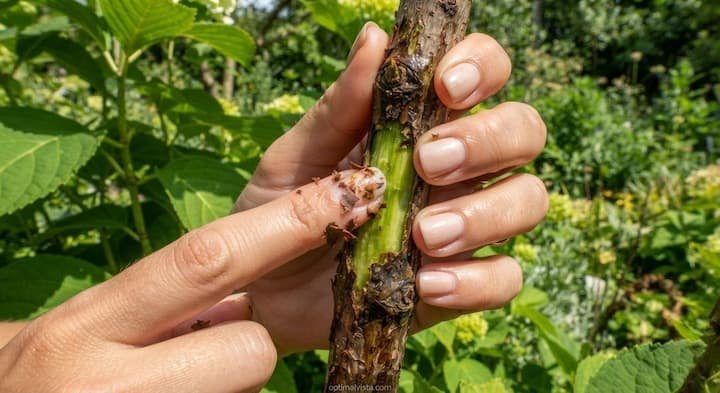
Start with the scratch test. Scrape a thin strip of bark off a stem with a thumbnail or pocketknife. Green and moist underneath means the stem is alive. Brown and dry means it is dead, so test a few stems from tip to base. A bare hydrangea in winter is just dormant.
Watch the daily pattern, too. A hydrangea that droops at 3 p.m. in July and recovers by evening is only coping with heat. One that is still limp the next morning has a real problem.
To revive a wilted hydrangea that perks up overnight, deeper watering usually does it. A torn or scorched leaf will not grow back, but new leaves will replace it. A plant that looks smaller and thinner than last year, with drooping leaves, brown or black spots, or yellowing, is also asking for help.
Then dig a few inches down at the edge of the root ball and check the roots:
- Firm white or tan roots mean the plant is healthy underground.
- Black, brown, or mushy roots that smell sour point to root rot.
- Thin, dry, brittle roots point to drought damage.
If every stem is brown inside and the roots are mush, the plant is gone. The replacement section near the end covers what comes next.
Quick Diagnosis Table for a Dying Hydrangea Plant
Match what you see to the likely cause.
| What you see | Likely cause | First fix |
|---|---|---|
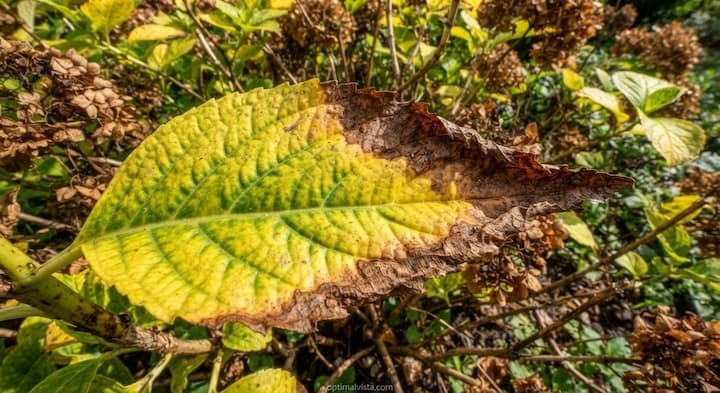
| Brown, crispy leaf edges | Sun scorch or dry soil | Water deeply and add afternoon shade |
| Yellow leaves with green veins | Iron deficiency (chlorosis) | Soil test, then a small dose of iron |
| Wilted leaves but wet soil | Root problem | Stop watering and check the roots |
| Whole plant yellow, soil soggy | Overwatering or root rot | Stop watering and improve drainage |
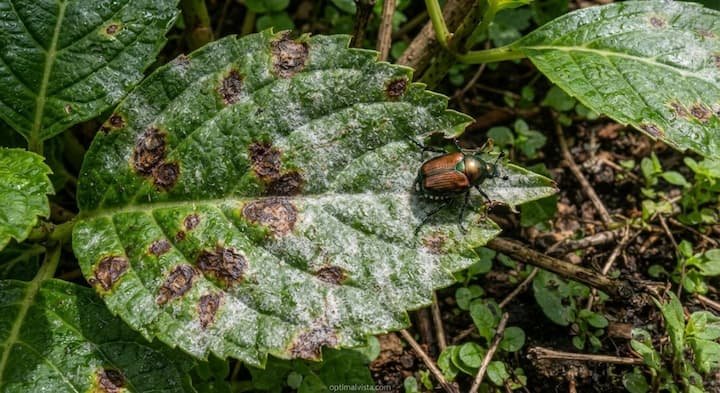
| Brown or purple spots on leaves | Fungal leaf spot | Remove spotted leaves and thin for airflow |
| White powdery coating | Powdery mildew | Open up the plant and treat per the label |
| Black or brown stems after winter | Frost or winter damage | Wait for spring growth, then prune dead wood |
| Limp plant, dry soil | Underwatering | Slow, deep soak at the base |
Water Problems: Too Little or Too Much
In my experience, water is behind most sick hydrangeas. They want about 1 inch a week, roughly 0.6 gallons per square foot of root area, and hot weeks, sandy soil, and panicles in full sun push that up. I give established shrubs a slow soak of about 5 gallons at the base in the morning.
The Washington State University HortSense fact sheet on leaf scorch explains that scorch happens when leaves lose water faster than roots can supply it, so drought, hot wind, and damaged roots can all leave the same brown edges.
- Too dry: dry soil, brown crispy leaves and flowers, and wilting that lasts after sundown. Add compost to sandy soil, and mulch to hold moisture; mid-spring works well, though any season is fine.
- Too wet: yellow leaves that drop, stunted growth, soggy soil, white fungus at the crown, and sometimes half the plant looking dead. Let the soil dry before watering again.
- Finger test: push a finger 1 to 2 inches down. Dry means water, damp means wait. A rain gauge and a soil moisture meter take out the guessing.
- To revive a wilted hydrangea after a dry spell, soak the base slowly in the morning and recheck that evening.
If the soil stays muddy, work in compost or perlite, or move the shrub to a better spot or a large container. Watering fixes usually show within a week or two, but rotted roots rarely come back.

Too Much Sun, Too Much Shade, and Heavy Soil
Panicle hydrangeas want 6 or more hours of sun and handle it in USDA Zones 4, 5, 6, 7 and 8 with enough water. Other types prefer 4 to 6 hours, mostly morning sun.
Burned leaves and crisp flowers mean too much light, and the rules for full sun vary by type. Small or missing flowers, weak stems, and extra fungus mean too little, so pick shade loving varieties for dim spots.
I think a phone timer is the easiest way to track light. Check the spot every hour for a day. If it is wrong, move the shrub in early fall or spring (summer only if you can watch it daily), or hang shade cloth during heat waves. Snip off sunburned leaves and the plant should push new growth.
Heavy soil is the quiet killer. Dig a hole about 12 inches deep, fill it with water, and see how it drains. If water is still standing after a few hours, the roots are sitting in a bog.
Roots need air, and root rot can kill a plant underground before the top shows anything, since the fungi behind it love cool, damp soil in spring and fall. Mix in compost or perlite, or plant on a raised mound, and add fresh compost about once a year. Smooth hydrangeas handle clay better, so water them a little less there.
Fertilizer Burn and Iron Deficiency
Hydrangeas need little food. One spring feeding plus compost covers most plants, and the right fertilizer is a gentle, low-nitrogen one made for hydrangeas, diluted and used sparingly. Too much burns the roots and cuts down blooms, and the plant browns, droops, and dies back.
- Get a soil test through your county extension office first.
- Over-fertilized with a water-soluble product? Flush the root zone by watering slowly with far more water than normal. Granular organics flush poorly but rarely overdose a plant.
- Yellow leaves with green veins mean iron deficiency (chlorosis). Add a small dose of iron, since too much causes its own damage.
Winter Damage, Late Frost, and Transplant Shock
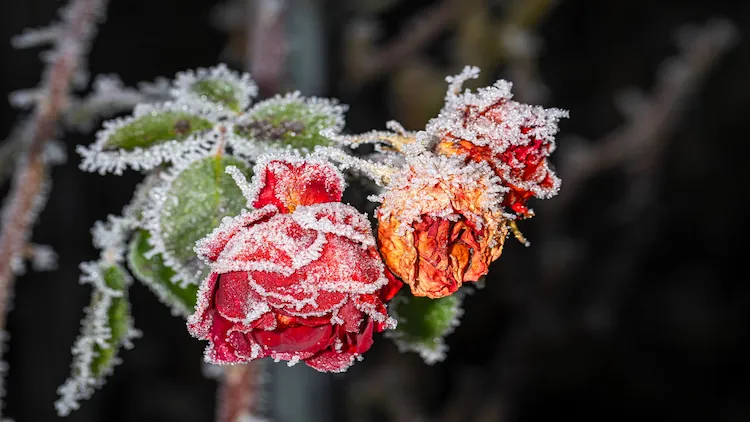
Bigleaf and oakleaf types set buds on old wood, so a freeze after the buds open hurts. When the forecast drops to 32°F in spring, cover the shrub overnight with a bedsheet or frost cloth. A 2 to 3 inch layer of mulch over the roots in fall also protects them through winter. The guide on late frost has more options.
After a cold snap, wait. Stems that look dead in April often leaf out in late May or June, so rerun the scratch test before cutting. Most of the time you can bring a hydrangea back to life after a cold hit by pruning only what is clearly dead.
Transplant shock looks like sudden wilting after a move. Plant or move shrubs in early fall or spring, because the right planting time matters a lot. I like early fall, while the soil is warm and the air is cool. Water often for the first few weeks.
Wrong Plant, Wrong Place, and Wind
Check the tag against your USDA zone, which shows the coldest winter temperatures a plant can take, or ask the staff at your garden center. Panicle and smooth types handle USDA Zones 4, 5, 6, 7 and 8 easily, while bigleaf types lean toward USDA Zones 6, 7, 8 and 9.
A shrub wrong for your zone gets winter-killed, and that is the hardest case to save a dying hydrangea from, since the cure is a different spot or variety.
A borderline favorite can live in a container and winter in a garage or shed. Dry wind scorches and shreds leaves, so add a burlap screen on stakes or a taller shrub on the windy side.
Pests, Diseases, and Critters
If a dying hydrangea plant has leaf holes, sticky residue, or a white film, pests or disease are likely involved.
- Aphids, scale, slugs, and Japanese beetles: insecticidal soap handles most of them, and hand-picking beetles in the morning helps.
- Black vine weevil: the grubs eat roots, so damage shows late. Use beneficial nematodes in the soil, diatomaceous earth on leaves and stems for adults, or a labeled granular systemic.
- Deer and voles: deer browse the tops, and voles chew roots and bark under snow. A wire cage around the base stops voles.
Leaf spot (including cercospora) and powdery mildew spread by splashing water and love humid, crowded spots.
- Watch for irregular leaf spots, a white film, brown spots on buds or petals, and dieback.
- Space shrubs 3 to 6 feet apart, and thin or deadhead the center so air moves.
- Keep weeds down and clean up fallen leaves, since spores overwinter in debris.
- Remove infected parts and bag them into the garbage, not the compost.
- If you need a fungicide, a copper product used exactly as labeled is common.
Step-by-Step: How to Revive a Dying Hydrangea Without Guessing
Work through these six steps in order.
- Diagnose first. Scratch test, finger test, root check. Pick one main cause.
- Remove the dead parts. Use clean, sharp pruners, wipe the blades with rubbing alcohol, and bag diseased material for the garbage.
- Fix water and soil. Adjust watering, amend the ground, or flush out extra fertilizer.
- Mulch 2 to 3 inches deep. Keep it a few inches back from the stems.
- Wait and check weekly. Watch soil moisture, leaf color, and new buds.
- Propagate as a last resort. Root a healthy 4 to 6 inch stem tip, lower leaves stripped, in moist potting mix. The guide on rooting cuttings shows how.

Pruning a Struggling Hydrangea, Type by Type
Do not cut a sick hydrangea to the ground by reflex. It depends on whether the plant blooms on old or new wood, and the guide on when to prune goes deeper.
A hard cut is safe only on panicle and smooth types, since the others would lose next year’s buds.
| Type | Blooms on | Care needs | Pruning a stressed plant | Common weak spot |
|---|---|---|---|---|
| Bigleaf | Old wood | Morning sun, afternoon shade, steady moisture | Remove only dead wood, after new leaves appear | Frost and dry soil |
| Oakleaf | Old wood | Part shade to sun, well-drained soil | Dead wood only, light shaping after bloom | Wet, heavy soil |
| Panicle | New wood | 6+ hours of sun, regular water | Can be cut back hard in late winter | Dry soil in full sun |
| Smooth | New wood | Part sun or shade, handles clay | Can be cut back hard in late winter | Floppy stems in shade |
Panicles like Limelight take hard pruning well, per the Limelight pruning guide, while oakleaf types need a gentler hand, covered in the oakleaf care guide.
Cut leggy stems back near the soil line, tidy old blooms, and wipe pruners clean between plants so disease does not travel.
Bring a Hydrangea Back to Life in a Container
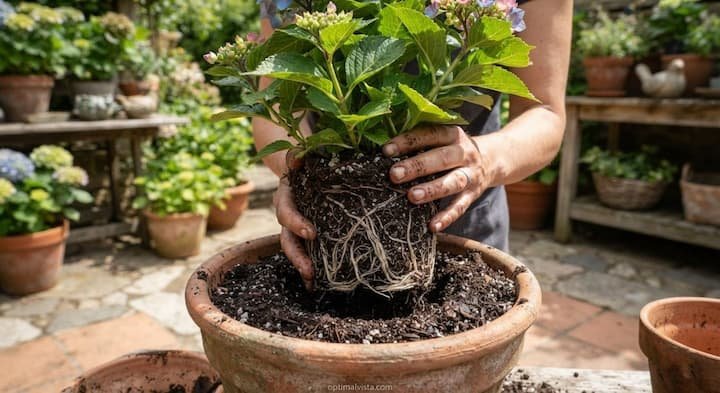
Potted hydrangeas fail faster because the root ball dries out in hours and drowns when drainage is poor. The guide on growing in pots covers the basics.
- Pick a pot with drainage holes and repot one size up, about 2 inches wider.
- Use fresh, well-draining mix with compost, plus perlite if it feels heavy.
- In July heat, water daily if needed. If the root ball shrinks from the pot sides, soak the pot in a tub for 30 minutes.
- Keep it out of hot afternoon sun, and shelter it in a garage or shed in winter.
How Long Recovery Takes
A stressed shrub does not bounce back overnight.
- 1 to 2 weeks: a dry-soil wilt should look better.
- 4 to 6 weeks: new leaves show along healthy stems.
- Frost-hit plants: new growth can wait until late May or June.
- Rooted cuttings: a few weeks to a couple of months before they hold their own.
- Flowers: a dying hydrangea plant that recovers usually blooms less, or not at all, that season.
- Patience helps you bring a hydrangea back to life more than any product does.
Mistakes and Myths That Make Things Worse
- Dumping fertilizer on a weak plant to feed it back to health.
- Watering every day in a panic without checking the soil.
- Moving the shrub in the middle of a heat wave.
- Cutting a bigleaf to the ground and wiping out next year’s buds.
- Changing five things at once, which hides what helped you save a dying hydrangea.
Skip the folk remedies too. Vinegar and baking soda drenches swing soil pH fast and can stress roots, rooting powder is for cuttings, and a rusty nail fixes nothing.
Soil pH shifts bloom color on bigleaf types, which the guide to change hydrangea color covers, but it does not decide whether the plant lives.
Prevention Calendar for the Rest of the Year
- Spring: soil test, one feeding, fresh compost, and a mulch refresh.
- Summer: about 1 inch of water a week, a rain gauge, and shade cloth in heat waves.
- Fall: the best time to plant or move shrubs, plus raking leaves from sick plants into the garbage.
- Winter: mulch the roots, add a windbreak, and wire up the base against voles.
- New plants: water on a schedule for the first two years while roots spread.
A community gardener I know shreds healthy fall leaves for mulch and pairs shrubs with plants that share their watering needs, like the ones in the companion plants guide.
When to Save a Dying Hydrangea and When to Replace It
Some plants are not worth another season. I’d replace the shrub if:
- Every stem is brown inside after a full growing season.
- The roots are black and mushy.
- No leaves have returned by midsummer.
- The same problem keeps coming back in the same spot.
Pick a variety that fits your zone and light, and fix the soil or drainage first.
Bonus: Revive a Wilted Hydrangea Bloom in a Vase
Cut blooms wilt fast because the big heads lose water quicker than the stem can supply it. Trim an inch off the stem at an angle, strip any leaves that would sit underwater, and float the whole bloom face down in cold water for 30 to 60 minutes. Shake it off, recut the stem, and return it to a clean vase.
Conclusion:
That is how to revive a dying hydrangea in plain terms: test the stems, fix the cause, prune only what is clearly dead, and give the plant time to respond. Check the water, sun, and drainage each season so the same trouble does not return. Most shrubs come back if the roots are alive, so start with the scratch test today and go from there.