
Why do some Wave petunias spill over a basket like a purple waterfall while the ones next door look thin and tired by July?

The plant isn’t the difference. It’s a handful of small habits that most people skip. Once you know how to care for wave petunias, they pay you back with a thick carpet of color from spring until frost.
Short answer: give them 6 hours of full sun, steady moisture, light weekly feeding, and a quick trim when stems get stretched. The rest of this guide breaks down each step, with real numbers, so you can copy it in your own yard.
What Are Wave Petunias and Where Did They Come From?
Wave petunias are hybrids bred to trail and spread instead of standing upright. The Japanese beer company Kirin teamed up with PanAmerican Seed and launched the first one, Purple Classic, in 1995.
HGTV ran the plant as an ad in 1999, and demand took off from there. The plants grow roughly 8 to 12 inches tall and spread into a carpet that blooms all summer.
- Plant type: trailing hybrid petunia.
- Family origin: grasslands of South America (Uruguay, Argentina and Brazil).
- Stem length: up to 4 feet.
- Exposure: full sun.
Wave vs Regular Petunias and Calibrachoa
Breeders split petunias into grandiflora (blooms up to 5 inches wide), milliflora (under 2 inches), multiflora (tons of flowers) and floribunda (a mix of grandiflora and multiflora). Wave petunias are the trailing group. Their biggest perk is that they clean themselves, so you skip the constant snipping regular petunias need. That’s why wave petunia care feels so easy next to other bedding plants.
Calibrachoa, often sold as Million Bells, looks like a mini petunia but is a separate plant with smaller flowers. Wave petunias cost more because they’re patented hybrids. They’re generally listed as safe around cats and dogs, though a chewed plant can still upset a stomach.
Wave Series Compared
Not every Wave is the same plant. Here’s how the main series differ:
| Series | Height and Spread | Best Spot |
|---|---|---|
| Original Wave | Low and very wide, carpet-like | Ground cover and big beds |
| Easy Wave | Mid-height mound that trails over edges | Containers and hanging baskets |
| Tidal Wave | Tallest of the group, wide and vigorous | Back of beds and large planters |
| Shock Wave | Compact and tidy, smaller flowers, weather tough | Window boxes and baskets |
Always check the plant tag for exact height and spread, because they shift by variety.
Best Wave Petunia Varieties
These five colors show up at most garden centers:
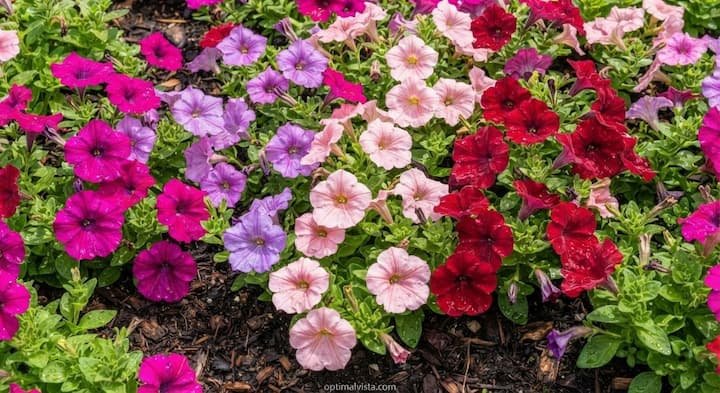
- Purple Classic: the original 1995 plant with magenta blooms.
- Misty Lilac: soft lilac flowers and a slightly taller habit.
- Lavender: magenta-pink petals with lavender-blue centers.
- Pink: a soft pastel that hugs the ground.
- Carmine Velour: an All-America Selections winner with dark cherry red blooms that stay low.
Annual or Perennial? Your USDA Zone Decides
In USDA Zones 10 and 11, Wave petunias act as tender perennials. Most of the country, including USDA Zones 4, 5, 6, 7 and 8, treats them as annuals that quit after the first hard frost, so plan on replanting each spring.
Before you start growing wave petunias in a colder yard, know that you can still stretch the season by bringing baskets inside (more on that below).
When to Plant Wave Petunias
Wait until the soil hits 60°F and nights stay above 50°F. Cold ground stalls them.
Rough timing by zone:
- USDA Zones 4, 5 and 6: mid-May to early June.
- USDA Zones 7 and 8: late April to early May.
- USDA Zones 9, 10 and 11: early spring, or fall for a winter show.
Starting from seed? Sow indoors 10 to 12 weeks before your last frost date, and move seedlings out once they have 3 or 4 leaves. Seedlings can sit in 4-inch pots until nights stay warm enough to move them into final containers.
Growing Wave Petunias in Garden Beds
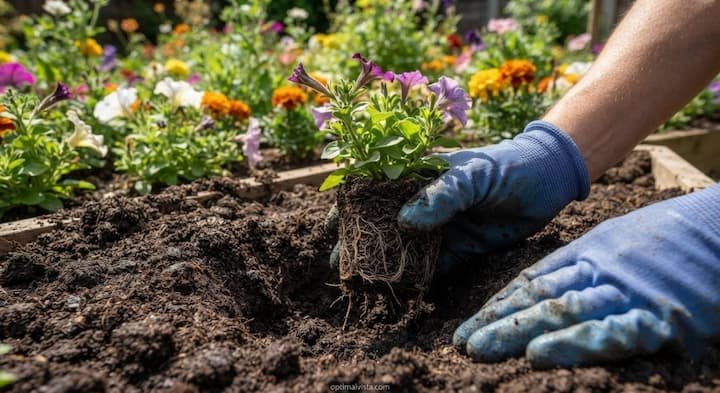
Slide the plant out of its nursery pot gently so the root ball stays intact. Dig a hole about 2 times wider than the pot, set the plant at the same depth it was growing, and give it full sun. Space plants 12 to 18 inches apart so air can move between them.
- Plant a row along the base of a 3 foot fence for a blooming hedge.
- Run a double row from the street to the porch for a flower path.
- Use them as ground cover in a sunny backyard bed.
Containers and Hanging Baskets
A 12-inch pot holds 2 to 3 plants, and a depth of 12 to 14 inches gives roots room to spread. Every pot needs drainage holes, and a saucer should be emptied soon after watering.
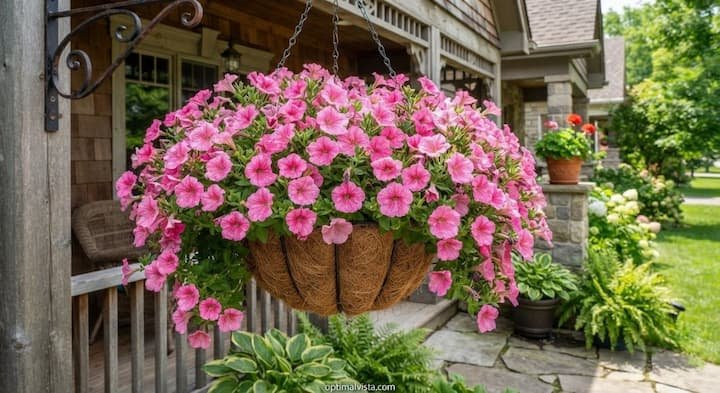
Bigger pots hold moisture longer, so they can go a little longer between drinks. The basics of petunias in pots apply here too. Put one plant in the center of a coir basket and the rest around the edge for a full globe of color, or let stems cascade down from planters by the front door.
Pot material changes how fast things dry out:
- Terracotta: breathable and cooler in summer, but dries fast.
- Plastic: light, holds moisture, easy to drag inside before frost.
- Fabric grow bag: great airflow and no circling roots.
- Self-watering pot: steady moisture if you travel.
- Glazed ceramic: heavy enough to stay put in wind.
Sunlight: The First Rule of How to Care for Wave Petunias
Give them at least 6 hours of direct sun, with 8 to 10 hours being ideal. In my experience, a spot with only 4 hours of sun looks sparse by July, with stretched stems and half the flowers.
In hot yards where afternoons top 90°F, a little afternoon shade stops leaf edges from browning. Indoors, use a south window or grow lights. This breakdown of petunia sun or shade needs helps you pick a spot.
Watch for these signs:
- Stretched, weak stems: not enough sun.
- Fewer flowers and faded color: not enough sun.
- Yellowing leaves: low light or too much water.
- Brown, crispy edges: blazing afternoon sun.
Watering: The Heart of Wave Petunia Care
Wave petunias drink a lot, but they hate sitting in mud. I stick a finger 1 to 2 inches into the soil every morning, and if it feels dry, the plant gets a deep soak. A 12-inch pot takes roughly ½ gallon, and a big hanging basket closer to 1 gallon.
Baskets can need water twice a day in a heat wave, while beds usually do fine every other day. Skip watering for 2 to 3 days after steady rain. Morning is the best time to water, since plants drink before the sun burns it off. As fall cools things down, ease off on watering. For more detail, read about watering petunias.
- Best wave petunia care habit: water the soil, not the leaves, so foliage is dry by evening.
- Overwatered: yellow lower leaves, mushy stems, sour smell.
- Underwatered: wilting that doesn’t bounce back, cracked soil.

Soil and pH
Wave petunias want loose, well-drained soil full of organic matter. Mix compost and a little worm castings into beds, and use potting mix with perlite or coarse sand in containers.
Mulch holds moisture. PanAmerican Seed’s growing guide lists an ideal pH of 5.5 to 6.3 for these plants. For mix ideas, see this petunia soil mix article.
- Growing wave petunias in heavy clay? Mix in compost or build a raised bed.
- Container mix: potting soil plus perlite.
- Check pH with a cheap test kit.
Taking Care of Wave Petunias: Fertilizing for Nonstop Blooms
Garden writers disagree on how hungry these plants are, but light, regular feeding wins every time. I favor a half-strength liquid feed once a week, starting 2 weeks after planting.
A slow-release granular at planting works too, and compost tea or fish emulsion add micronutrients. Look for a balanced or bloom-leaning formula with numbers like 20-10-20, and check this list of petunia fertilizer picks.
- Too much: yellow lower leaves, white crust on the soil, stunted growth.
- Too little: pale leaves, sparse flowers, weak stems.
- Hot yards and baskets: feed a bit more often.
- Cool regions: stretch feeding to every 4 weeks.
- Fertilizer burn: keep granules off stems and leaves.
- Windy hanging baskets: lighter, more frequent liquid feeds make up for runoff.
Water after every feeding, and ease off in late summer when blooming slows. If new leaves turn yellow with green veins, that’s usually an iron problem from high pH, covered in petunias turning yellow.
Wave Petunia Maintenance: Pinching, Pruning and Deadheading
Stems get long by midsummer. Pinch leggy runners back 1 to 2 inches to force branching, and don’t clip off tiny buds. If plants look tired, cut them back by about a third. Badly stretched plants can take a harder reset after the first flush, down to 4 to 6 inches above the soil.
Pull off yellowing or dead leaves every week to keep disease from spreading. I clean my pruners with rubbing alcohol first, and the plants bounce back fast. Deadheading is optional since Waves clean themselves, but you can deadhead petunias for extra density.
Want a fuller shape? Try this guide to make petunias bushy, or fix leggy petunias that already stretched.
- Pinch leggy stems 1 to 2 inches.
- Cut back about a third in midsummer.
- Wave petunia maintenance time: around 10 minutes a week.
- Pull off yellow or dead leaves every week.

Heat, Cold and Weather Stress
They like temperatures above 60°F, and nights in the 50s slow growth. The weather side of taking care of wave petunias comes down to two numbers: 90°F and 32°F.
- Above 90°F: add afternoon shade and extra water.
- Cold snap: taking care of wave petunias means frost cloth or a cold frame near 32°F.
- Humid weather: add 2 to 3 inches of extra spacing and prune a bit more often.
- Heavy rain and wind: move baskets under the porch.
Common Problems and Quick Fixes
I think most failures trace back to three things: shade, soggy soil and hunger. Here’s a fast diagnosis.
| Problem | Likely Cause | Fix |
|---|---|---|
| Leggy stems | Too little light | Move to full sun, pinch 1 to 2 inches |
| Wilting | Dry soil in heat, or root rot | Water deeply in the morning, check drainage |
| Yellow leaves | Overwatering, hunger or high pH | Cut back water, feed lightly, test pH |
| Few blooms | Shade or underfeeding | 6+ hours of sun, weekly feed |
| Sticky leaves | Normal fine hairs, or aphid honeydew | Check leaf undersides for insects |
| Faded color | Low light or heat stress | Afternoon shade in extreme heat |
Pests and Diseases
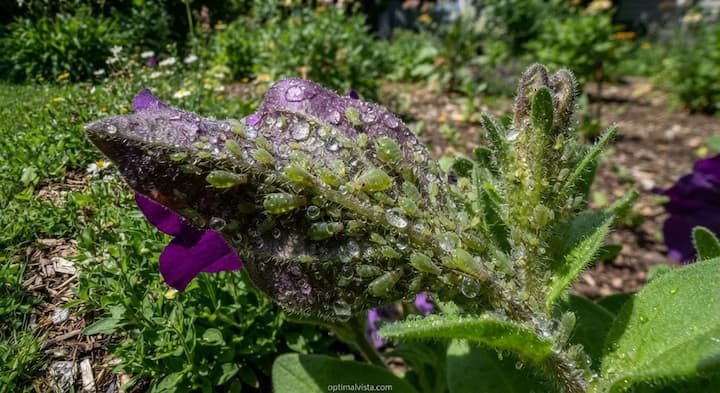
Aphids, thrips, cutworms, whiteflies, slugs and petunia budworms are the usual suspects, and sticky streaks of honeydew are a giveaway. Space plants properly and welcome ladybugs and wasps into the yard. If an infestation gets heavy, spray neem oil on affected spots until they clear. Find more ideas on how to treat petunia pests without harsh sprays.
Diseases mostly come from wet soil: stem, crown and root rot, plus powdery mildew on lower leaves and gray mold (botrytis) in damp, cool weather. Pull infected plants and put them in the trash, never the compost pile.
- Check new growth for aphids.
- Look under leaves for whiteflies.
- Watch for chewed buds from budworms.
- Spot powdery mildew early.
- Look for slime trails and ragged holes from slugs.
- Gray fuzzy mold on flowers points to botrytis.
Propagating and Overwintering
Fall is when wave petunia maintenance shifts to saving your best plants. Snip a healthy 6-inch stem, strip the lower leaves, dip the end in rooting hormone, and set it in well-drained mix. Mist the soil and keep the cutting out of direct sun until new growth shows. Harden it off before it goes outside.
To save a whole basket, bring it in before 32°F and park it in a sunny window. In USDA Zones 10 and 11, leave plants outside and cut feeding in half over winter. I’ve saved baskets this way in my backyard for years, and this guide to overwinter petunias indoors walks through it.
Best Companion Plants
Pair them with sun lovers that won’t crowd them. Community gardeners often tuck marigolds along the front of the bed. For more ideas, see these petunia companion plants.
- Marigolds: easy, average water needs.
- Lobelia: soft blue color that contrasts nicely.
- Verbena: handles drier soil, so grow it in a nearby pot.
- Lantana: heat lover for hot yards.
- Salvia: tall spikes behind trailing stems.
Final Thoughts:
Now you know how to care for wave petunias without guesswork: 6 hours of sun, deep watering when the top inch dries, light weekly feeding, and a trim when stems stretch. Pick your series, match your pot size, and watch for pests early. Do that and your yard, patio or porch will stay covered in color until the first frost. Go plant a few this weekend.
Pingback: Best Fertilizer for Petunias: 12 Picks for Bigger Blooms
Pingback: How to Deadhead Petunias for Massive Blooms: 7 Easy Steps
Pingback: How to Make Petunias Bushy: 7 Simple Tips
Pingback: Petunias Sun or Shade Requirements: 7 Facts Growers Miss!
Pingback: How to Fix Leggy Petunias Fast: 7 Mistakes Everyone Makes
Pingback: Growing Petunias From Seed Indoors: 7 Secrets for Success