Ever wonder why some hydrangea beds look like a magazine cover while others look crowded and tired?
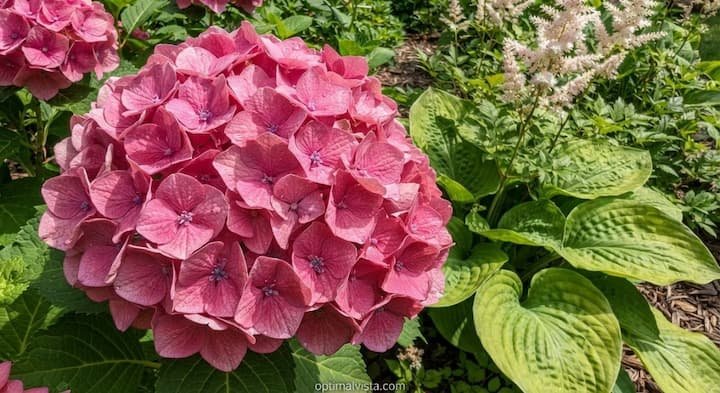
The shrub is rarely the problem. The neighbors are. Pick the wrong ones and they steal water, block light, or quietly change your soil. Pick the right ones and every bloom looks better. This guide covers the best companion plants for hydrangeas, from shade lovers to sun-friendly perennials, shrubs, bulbs, and a few edibles.
Short answer: choose plants that want the same light, water, and soil as your hydrangea, and keep anything aggressive or thirsty far from its roots.
What Makes a Good Companion for Hydrangeas
Before the plant list, one rule. I think the biggest mistake people make is picking neighbors for looks alone. The question of what to plant with hydrangeas really comes down to matching light, water, and soil.
A plant that wants dry, lean ground will sulk next to a shrub that likes a steady drink. After that, think contrast. Hydrangeas have big round leaves and ball-shaped blooms, so spiky flowers, feathery plumes, and fine grassy leaves make them stand out.
Also remember the roots. They’re shallow and spread wide, so any neighbor that digs deep or guzzles water causes trouble fast.
Match Your Pairings to the Hydrangea Type
Hydrangea companion plants don’t work the same way for every shrub, because light needs change by type.
Here’s the quick rundown:
- Bigleaf (USDA Zones 5, 6, 7, 8 and 9): Morning sun, afternoon shade. The Endless Summer care routine fits this type.
- Panicle (USDA Zones 3, 4, 5, 6, 7 and 8): Takes more sun. Limelight pruning is the easy example.
- Smooth (USDA Zones 3, 4, 5, 6, 7, 8 and 9): Annabelle’s type, happy in sun to part shade.
- Oakleaf (USDA Zones 5, 6, 7, 8 and 9): Handles shade well, and oakleaf hydrangea care is simple.
Panicle and smooth types can even handle full sun in cooler areas, so your type sets how much sun the neighbors can take.
Where you plant matters as much as who you plant next to. Aim for morning sun and afternoon shade, well-drained soil mixed with compost, and a spot sheltered from strong wind. Skip hot, dry corners.
On the house, the east or north side suits bigleaf and oakleaf types, while the south or west side only works for panicle and smooth types that handle all-day sun.

Soil pH and Hydrangea Color
Here’s the one fact that surprises people. UMass Extension reports that bigleaf blooms come out blue in acidic soil below about pH 5.5, pink above pH 6.5, and purple in between.
So your neighbors can change your flower color. Acid lovers like azaleas and blueberries are safe bets. Trouble starts with plants that like sweet, limey soil.
Lavender is the classic, and it’s one of the plants to avoid near hydrangeas if you want to keep blue blooms, because the lime it likes drifts into the root zone. Even mortar or concrete near a foundation can push pH up. Only bigleaf and mountain types shift color, and the steps to change hydrangea color are in their own post.
To keep blue blooms, test your soil first, lower the pH slowly with sulfur or aluminum sulfate, and keep limey neighbors and concrete edging away. Changes take a full season or more, so don’t expect color overnight.
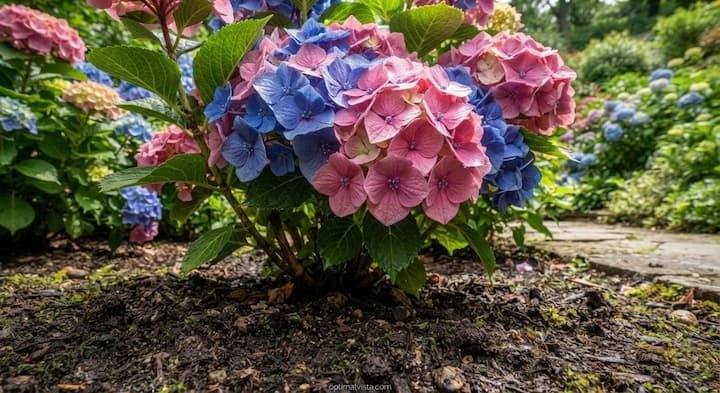
Best Companion Plants for Hydrangeas in Shade
Shade is where hydrangeas are happiest, so this is the easy part. In my yard, a hosta up front and a fern behind it did more for a bare bed than any pricey plant.
Still choosing the shrub itself? Look at these shade loving hydrangeas first.
- Hostas: Bold leaves. Use two or three per shrub.
- Ferns: Japanese painted and lady fern add lacy texture.
- Astilbe: Pink, red, or white plumes that love moist soil.
- Coral bells (heuchera): Burgundy to lime leaves. Same plant, so don’t buy both.
- Bleeding heart: Spring hearts that fade by midsummer.
- Brunnera: Tiny blue flowers and heart-shaped leaves.
- Lungwort: Spotted leaves, tough in deep shade.
- Tiarella (foamflower): Lacy leaves and frothy white blooms.
- Hellebores: Bloom in late winter, before hydrangeas wake up.
- Columbine: Nodding, spurred flowers in part shade.
- Begonias: Treat as annuals in most areas.
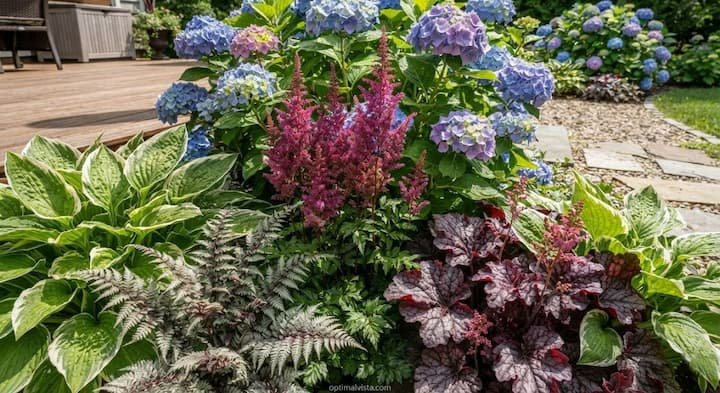
What to Plant With Hydrangeas in Full Sun
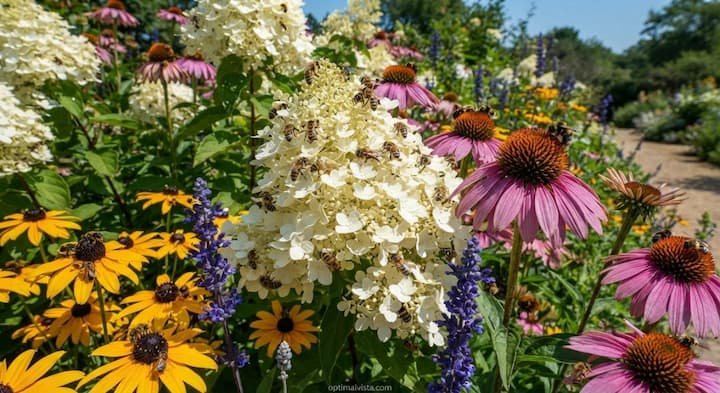
Panicle and smooth hydrangeas take more sun, which opens up a bigger list. The catch is water, so pick neighbors that don’t mind the same routine. Many of these also bring bees, butterflies, and hummingbirds into the yard.
- Daylily: Strappy leaves, blooms with many hydrangeas.
- Coneflower: A pollinator magnet.
- Black-eyed Susan (rudbeckia): Yellow color late in the season.
- Salvia: Blue, purple, or red spires.
- Speedwell: Spiky blooms, and some types rebloom.
- Cranesbill geranium: Low, cools roots, holds weeds back.
- Delphinium: Tall blue backdrop that wants afternoon shade in hot spots.
- Bellflower (campanula): Soft bells in blue, purple, or white.
- Foxglove: Tall spires, 2 to 6 feet.
- Phlox: Fragrant, cottage-style clusters.
- Lamb’s ear: Silver edging.
Shrub Pairings: Hydrangea Companion Plants With Structure
Shrubs give the bed bones, especially in winter when hydrangeas are bare sticks. Boxwood gives a formal evergreen edge, and Japanese pieris adds hanging white flowers in early spring.
Gold-leaf spirea looks sharp next to blue mopheads. Weigela, viburnum, and Virginia sweetspire add flowers on a different schedule, while potentilla and lilac want more sun. Low junipers edge a border and stay green all year.
Then there’s the argument about azaleas and rhododendrons. Some lists call them perfect partners, others say never plant them together. Both have a point. They like the same acid soil and light, but packed tight they fight over water and root space. Give them 3 to 4 feet of room.
Trees That Work Overhead
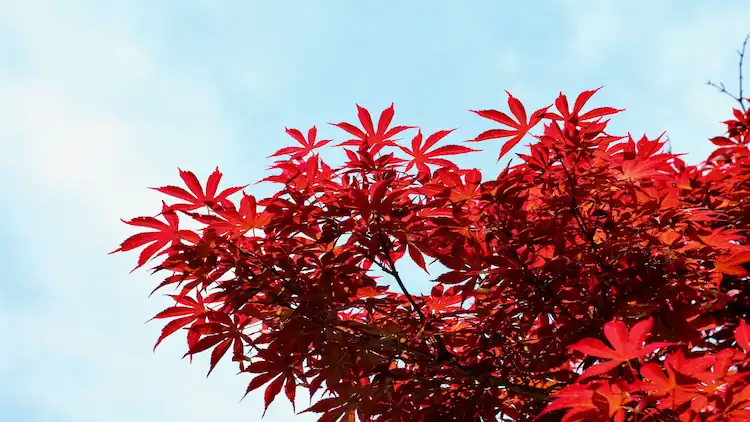
A small tree gives hydrangeas welcome shade in hot summers. Flowering dogwood (USDA Zones 5, 6, 7, 8 and 9 for most types) and Japanese maple (USDA Zones 5, 6, 7 and 8) both give dappled shade, and a red-leaf maple looks great behind green foliage.
Plant the hydrangea at the edge of the canopy, not against the trunk. Big, shallow-rooted trees like large maples, willows, and poplars drink up water, so a hydrangea beside one usually struggles.
Grasses and Groundcovers
If you’re wondering what grows well with hydrangeas at ground level, grasses and low spreaders are the answer. Japanese forest grass (Hakone grass, USDA Zones 5, 6, 7, 8 and 9) is one of the few grasses that likes shade, and its golden leaves light up a dark corner.
Blue fescue (USDA Zones 4, 5, 6, 7 and 8) edges sunnier spots. Cranesbill and foamflower fill gaps and keep weeds down. Skip aggressive runners like vinca, which take over a backyard fast.
Spring Bulbs for Early Color
Hydrangeas wake up late, so bulbs fill the April gap, and the new leaves hide the fading bulb foliage later.
- Daffodils: Deer usually skip them.
- Alliums: Ball-shaped purple blooms that echo the hydrangea.
- Tulips: Big color, though they fade after a few years.
- Snowdrops and crocus: First color of the year.
- Planting tip: Set bulbs in fall once soil cools below 60°F, 4 to 6 inches deep.
What Grows Well With Hydrangeas: Edibles Worth Trying
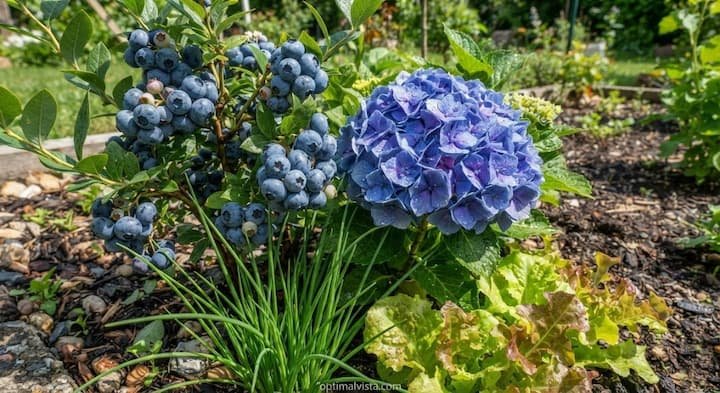
Edibles work if you pick the right ones. I like blueberries next to a bigleaf hydrangea because both want acid soil, and the fall color is a bonus.
- Fruit: Blueberries, currants, gooseberries, and elderberries. Raspberries need more sun, and a kiwi vine on a nearby fence gives a leafy backdrop.
- Veggies: Lettuce, Swiss chard, and carrots handle part shade, and bush beans fit in gaps.
- Herbs: Chives, oregano, and lemon balm, which self-seeds like its mint cousins.
A few popular suggestions deserve a second look. Rosemary and sage want dry, lean soil while hydrangeas want regular water, so one usually suffers. Cucumbers trained up a trellis sound smart, but they need full sun and heavy feeding, which is hard to give under a shrub.
Quick Reference Table
Here’s a cheat sheet to screenshot before the nursery trip.
| Plant | Light | USDA Zones | Height | Bloom time |
|---|---|---|---|---|
| Astilbe | Part shade to sun | 3–9 | 1 to 4 feet | Summer |
| Hosta | Part to full shade | 3–9 | 2 to 48 inches | Summer |
| Coral bells | Part sun to shade | 4–9 | 6 to 18 inches | Late spring to midsummer |
| Hakone grass | Part sun to shade | 5–9 | 1 to 2 feet | Grown for leaves |
| Cranesbill | Sun to part shade | 3–9 | 6 to 24 inches | Spring to fall |
| Daylily | Sun to light shade | 3–9 | 1 to 6 feet | Late spring to fall |
| Foxglove | Sun to part shade | 3–8 | 2 to 6 feet | Late spring to summer |
| Blue fescue | Sun to light shade | 4–8 | 6 to 12 inches | Summer |
| Spirea | Sun to light shade | 4–8 | 2 to 10 feet | Spring to fall |
| Virginia sweetspire | Sun to part shade | 5–9 | 2 to 8 feet | Late spring to midsummer |
| Japanese painted fern | Part to full shade | 3–9 | 12 to 18 inches | Grown for leaves |
| Speedwell | Sun to part shade | 3–9 | 3 to 48 inches | Spring to fall |
Season-Long Bloom Timeline
A good bed has something happening in every season.
Here’s how to stack it:
- Late winter: Hellebores, snowdrops, and daffodils. Watch for a late frost, since 32°F or lower can burn new bigleaf growth.
- Late spring: Bleeding heart, columbine, tiarella, and azalea. This is also what grows well with hydrangeas before the big flowers open.
- Early summer: Foxglove, daylily, speedwell, and spirea.
- Midsummer: Hydrangeas peak with astilbe, coneflower, and salvia.
- Late summer to fall: Rudbeckia, oakleaf fall color, and burgundy leaves.
- Winter: Boxwood, pieris, and juniper hold the structure.
Color Combos by Hydrangea Shade
Pick neighbors based on the bloom color you actually have, not the one on the tag.
- Blue mopheads: Hydrangea companion plants in gold and silver make blue pop, like Hakone grass, golden spirea, or lamb’s ear.
- Pink blooms: Burgundy coral bells, purple cranesbill, and salvia.
- White types (Annabelle, panicle): Coneflower or blue delphinium.
- Lime-green Limelight: A burgundy Japanese maple or purple heuchera.
- Foliage contrast: Gold, silver, burgundy, and variegated leaves keep the bed interesting even when nothing is blooming.
Layering and Spacing
Think in layers: tall at the back, mid-height in the middle, low in front. A mature hydrangea is often 3 to 8 feet wide, so leave room, and keep shrub neighbors 3 to 4 feet from its edge.
Good planting time helps too, since early spring or fall gives roots time to settle. I plant new perennials about 18 inches out from the main stems and dig small holes so I don’t cut the shallow roots.
Planting two hydrangeas side by side works fine if you space them at their mature width, which is 3 to 8 feet depending on the type. Time it for after the last frost in spring, or in fall, and avoid the hottest weeks of summer and deep winter, since new roots struggle in extreme weather.
- Back: Delphinium, foxglove, or a small tree.
- Middle: The hydrangea plus astilbe or daylilies.
- Front: Plants 6 to 18 inches tall, like coral bells or blue fescue.
- Mulch: 2 to 3 inches of shredded bark, a couple of inches off the stems.
- Hostas: Two or three per hydrangea, spaced so the branches don’t cover them.
Companions for Pots and Containers
A potted hydrangea (see hydrangeas in pots) needs small neighbors with similar water habits.
- Thriller, filler, spiller: The hydrangea is the thriller, coleus fills, and sweet potato vine spills.
- Keep it shallow-rooted: For what to plant with hydrangeas in a pot, stick to begonias, impatiens, and coleus.
- Water often: Pots dry fast, so check daily in summer.
- Skip big perennials: They crowd the roots, and the pot gets top-heavy.
Plants to Avoid Near Hydrangeas
Some plants just don’t get along with hydrangeas. In my experience, the spreaders cause the most regret, because they look harmless for a season and then take over.
| Plant | Why it causes trouble | What to do |
|---|---|---|
| Black walnut | Roots and leaves release juglone, which stunts many plants | Plant far away, or use raised beds |
| Sunflowers | Tall, thirsty, and they shade the shrub | Give them their own bed |
| Eucalyptus | Dense shade, heavy water use, and soil-altering oils | Keep it well away |
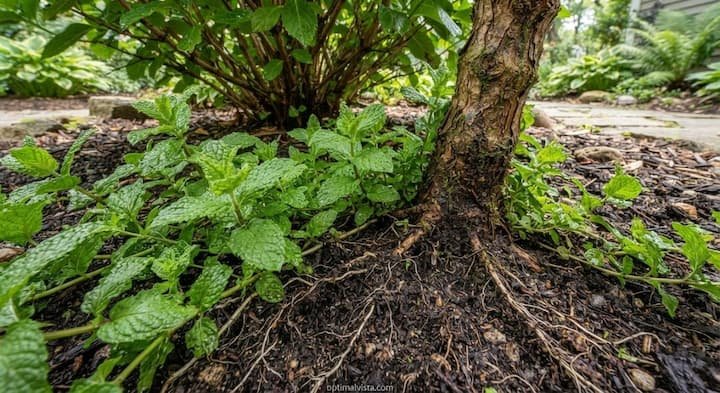
| Mint | Spreads fast and chokes neighbors | Grow it in a pot |
| Catnip | Spreads quickly, takes space and water | Grow it in a container |
| Lavender | Wants lean, dry, limey soil in full sun | Give it a separate dry bed |
| Large thirsty trees, dense evergreens | Steal water and cast deep shade | Plant at the canopy edge |
Roses split the experts. They work next to a sun-tolerant panicle hydrangea, but many need all-day sun, which is too much for a bigleaf. Rosemary and sage get the same treatment as lavender.
If a black walnut is already in your yard, a root barrier or raised bed gives the hydrangea a fighting chance.
Common Mistakes and Care After Planting
Most problems come from rushing the planting, not from the plants.
- Overcrowding: Poor airflow invites mildew.
- Mismatched watering: Hydrangeas like about 1 inch of water a week, more in a heat wave. Neighbors that want less will rot.
- Heavy feeding: Too much nitrogen pushes leaves over flowers, so stick with a balanced hydrangea fertilizer.
- Letting runners in: Mint and catnip are the classic plants to avoid near hydrangeas, even in a small pot.
- Forgetting deer: Pair hydrangeas with foxglove, daffodils, lamb’s ear, and boxwood.
- Wrong pruning: Bigleaf types set buds on old wood, so check the pruning timing before using pruners on the shrub.
- Skipping mulch: Bare soil dries fast and runs hot, so add 2 to 3 inches of shredded bark each spring.
If blooms still don’t show up after a new planting, check light and pruning first, and the checklist on why a hydrangea is not blooming covers the rest.
Wrap-Up:
The best companion plants for hydrangeas share the same light, water, and soil, and add contrast in leaf shape, bloom color, or season. Start with hostas, ferns, and astilbe in shade, or daylilies and coneflowers in sun, and keep runners and thirsty trees far away. I’d start small, watch the bed for a season, then fill in the gaps.