
Why do some hydrangeas sulk in a shady backyard while others bloom like they own the place? It comes down to the type you pick, not how much you fuss over it.

The short answer: the best shade loving hydrangeas are oakleaf, climbing, mountain and bigleaf types, and nearly all of them want a few hours of morning sun. Deep shade with zero direct light gives you leaves and almost no flowers.
Below you will find more than 30 varieties sorted by light level, plus planting, pruning and care for USDA Zones 3 to 9.
How Much Shade Can Hydrangeas Really Handle?
I’ve grown hydrangeas in my backyard for about six years, and this is how I sort shade, since plant tags are pretty vague:
- Full shade: 2 hours of direct sun or less, mostly reflected light.
- Part shade: 3 to 5 hours of sun, ideally in the morning.
- Dappled shade: filtered light all day under tall trees with a high canopy.
- Deep shade: no direct light at all. Healthy leaves, few or no flowers.
Picking hydrangeas for shade starts with measuring your light, not guessing. Check the spot at 9 am, noon, 3 pm and 6 pm on a clear day and write down when direct sun hits it. Most hydrangeas need at least 2 to 3 hours of morning sun to set flower buds, and no variety fixes a spot that never gets any.
Tree roots matter too. Maple and oak roots steal water, so planting under a big tree means digging carefully, skipping roots thicker than 2 inches, and watering more often.
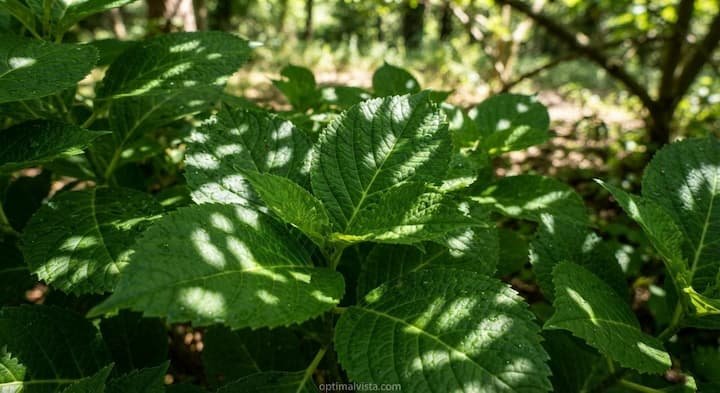
Which Hydrangea Types Do Best in Low Light?
Light tolerance depends on the species.
- Bigleaf (Hydrangea macrophylla): both mophead and lacecap do best in dense shade, and their color follows soil pH.
- Oakleaf (H. quercifolia): native to the southeastern US, drought tolerant once settled, with burgundy color in fall.
- Bigleaf and oakleaf together: the most dependable hydrangeas for partial shade.
- Climbing (H. anomala subsp. petiolaris): covers shady walls and fences but takes about 3 years to really take off. I think climbing hydrangeas are the most underrated of the bunch.
- Mountain (H. serrata) and aspera (H. aspera): at home on woodland edges.
- Smooth (H. arborescens): types like Annabelle flop in too much shade because the wood is weaker.
- Panicle (H. paniculata): Limelight and Pee Gee are sun lovers that still bloom in part shade with fewer flowers, so they are shade tolerant hydrangeas only up to a point. Their cone-shaped blooms also shed water, which helps against fungus in damp spots.

Shade Hydrangea Comparison Table
Here are six reliable picks side by side.
| Variety | Type | Size | USDA Zones | Best light | Blooms on | Color | Best for |
|---|---|---|---|---|---|---|---|
| BloomStruck | Bigleaf | 3 to 4 feet | 4 to 8 | Morning sun, afternoon shade | Old and new wood | Pink to violet | Shady borders |
| Munchkin | Oakleaf | 3 to 4 feet | 5 to 9 | Part shade to part sun | Old wood | White aging to pink | Walkways, small yards |
| Miranda | Climbing | Up to 30 feet | 4 to 8 | Full to part shade | Old wood | Creamy white | Walls, fences |
| Fire Light | Panicle | 4 to 6 feet | 3 to 9 | 3+ hours of morning sun | New wood | White to deep red | Pollinators |
| Little Lime | Panicle | 3 to 5 feet | 3 to 8 | Dappled shade to sun | New wood | Lime green to pink | Small nooks |
| Pee Gee | Panicle | 10 to 15 feet | 3 to 8 | Morning sun, afternoon shade | New wood | White to pink | Large yards |
Best Shade Loving Hydrangeas for Full and Deep Shade
A spot with 2 hours of sun or less narrows your list fast, and zero direct light will not flower reliably whatever you buy.
- Heart Throb (bigleaf, USDA Zones 5 to 9): cherry red blooms with green marbling, 3 feet tall and wide, sold for part to full shade. I like it for small beds.
- Miranda (climbing, USDA Zones 4 to 8): variegated leaves, creamy white flowers in late spring, climbs up to 30 feet or runs as a groundcover.
- Flying Saucer (climbing, USDA Zones 4 to 8): new leaves open lime green, stays at 15 to 20 feet, huge white flowers. A good first climber.
- Petiolaris (climbing, USDA Zones 4 to 9): the classic, 30 to 40 feet, fragrant white lacecaps up to 8 inches wide, happy on rock walls and tree trunks.
- Oakleaf hydrangeas: oak-shaped leaves and white cones that age to pink. They favor dappled light, and named picks are below. Spring routines are in oakleaf spring care.

Hydrangeas for Partial Shade With Morning Sun
Morning sun and afternoon shade is what most bigleaf types want, and it keeps the leaves from scorching.
- Endless Summer BloomStruck (USDA Zones 4 to 8): gives pink to violet mopheads on red stems, grows 3 to 4 feet tall, and blooms on old and new wood.
- Nikko Blue: deep blue mopheads up to 8 inches across that turn pink in alkaline soil.
- Let’s Dance Moonlight: stays at 2 to 3 feet and reblooms.
- Penny Mac (USDA Zones 5 to 9): reaches 4 to 6 feet, blooms all summer and grows fast, so leave it room.
- Blue Enchantress (USDA Zones 4 to 9): grows 3 to 5 feet on dark red stems that hold blooms up, and soil pH shifts its color.
- Light-O-Day (lacecap, USDA Zones 5 to 9): white-edged leaves, reaches 3 to 5 feet, and works as a low hedge or in a container.
- Miss Saori (USDA Zones 5 to 9): white petals with pink edges on a 3 to 4 foot plant, and the pink stays even in acid soil.
- Pink Splendor (USDA Zones 4 to 9): reblooms in pink at 3 to 4 feet and works for cut flowers.
- Seaside Serenade Hamptons (USDA Zones 4 to 9): deep pink frilly blooms, grows 3 to 4 feet, handles cold, and needs almost no pruning.
- Cityline Paris: a 1 to 3 foot plant with fuchsia-red mopheads that hold their color and resist mildew.
- White (bigleaf, USDA Zones 5 to 9): a classic bright white mound at 4 to 6 feet, pruned in early fall after the blooms fade.
- Big Daddy: puts up blooms to 14 inches across on a 5 to 6 foot shrub.
- Twist-n-Shout: a lacecap with red stems and a pink or blue ring of florets that blooms on old and new wood.

Shade Tolerant Hydrangeas for Dappled Spots Under Trees
Dappled light under a high canopy suits oakleaf and mountain types, since they come from woodland edges.
- Snow Queen (oakleaf, USDA Zones 5 to 9): grows 4 to 5 feet with white cones that age to pink and peeling bark in winter.
- Ruby Slippers (oakleaf): stays 3 to 4 feet, goes from white to deep pink, and its stems stay upright after heavy rain.
- Munchkin (oakleaf): stays 3 to 4 feet and blooms on old wood.
- Tuff Stuff (mountain): a cold hardy lacecap that reblooms and turns burgundy in fall.
- Hayes Starburst (lacecap): star-shaped white florets on a 3 to 5 foot plant.
- Plum Passion II (aspera, USDA Zones 7 to 10): grows 5 to 6 feet with plum leaves that turn gold in fall, and it takes a little more sun in cooler climates, just not direct sun.
- Villosa (aspera, USDA Zones 7 to 9): reaches 10 to 12 feet with peeling bark, big enough for a privacy screen.

Hydrangeas That Grow in Shade and Still Take Some Sun
Panicle and smooth types lean toward sun. In part shade they bloom less, but the stems and color stay good.
Wondering about full sun hydrangeas? Some can, but afternoon shade still helps.
- Limelight (panicle): 6 to 8 feet, blooms on new wood, lime green flowers turn white then pink, handles part shade in hot climates.
- Little Lime (panicle, USDA Zones 3 to 8): lime green blooms that turn pink, sturdy stems that rarely need staking, no deadheading needed.
- Pee Gee (panicle, USDA Zones 3 to 8): cones up to 18 inches long, grows 10 to 15 feet, can be trained into a small tree.
- Fire Light (panicle, USDA Zones 3 to 9): white blooms turning deep red, loved by pollinators, needs 3 hours of morning sun.
- Vanilla Strawberry (panicle, USDA Zones 3 to 8): white to pink to red cones, 6 to 8 feet tall, color lasts longer in part shade.
- Annabelle (smooth): 12-inch snowballs that open lime green and turn white, but flop in too much shade.
- Incrediball (smooth): bigger blooms and sturdier stems than Annabelle.
- Invincibelle Spirit (smooth): raspberry pink blooms on new wood, and part of each sale supports breast cancer research.
Hydrangeas for Shade by Specific Need
- Small yards: hydrangeas for shade in tight spaces include Little Lime, Heart Throb, Let’s Dance Moonlight, Miss Saori and Cityline Paris.
- Cold zones (USDA Zones 3, 4 and 5): Tuff Stuff, Annabelle, Fire Light and Vanilla Strawberry.
- Hot, humid zones (USDA Zones 7, 8 and 9): Villosa, Plum Passion II and oakleaf types.
- Privacy screen or hedge: Villosa, Pee Gee and Snow Queen.
- Pollinators: Fire Light, plus lacecap and aspera types with open flowers.
- Cut flowers: Pink Splendor and Big Daddy.
- Longest bloom: reblooming hydrangeas that grow in shade, like BloomStruck, Penny Mac, Tuff Stuff and Pink Splendor, keep going into fall. Shade blooms often open a bit later than sun-grown ones.
- Beginners: shade tolerant hydrangeas like Seaside Serenade Hamptons and Flying Saucer need very little pruning.
How to Plant Hydrangeas in Shade
In my experience, fall is the best time in USDA Zones 5, 6, 7, 8 and 9, because roots settle in before summer heat. Colder zones do better with spring planting. Check when to plant.
- Use slightly acidic, moist, well-drained soil. Mix compost into heavy clay.
- Dig a hole twice as wide as the root ball and just as deep. Under a tree, dig by hand and skip big roots.
- Compact hydrangeas for partial shade need 36 to 40 inches between plants, and large panicle types need 60 inches. Better air flow cuts powdery mildew.
- A dormant plant can look like a dead stick. That is normal, and it leafs out in spring.
- Add 2 to 3 inches of shredded bark mulch and keep it off the stems.
Shade Hydrangea Care
Shade soil dries slower, so push a finger 2 inches down before watering.
- Water: twice a week for the first season, then once a week.
- Feed: one round of balanced slow-release fertilizer in early spring. Too much nitrogen gives you leaves and fewer flowers. See the best fertilizer.
Color is chemistry. UMass Extension says bigleaf blooms turn blue in soil below pH 5.5 and pink above pH 6.5, because aluminum in the flower tissue makes the blue. Shade does not change that.
Aluminum sulfate lowers pH for blue, and garden lime raises it for pink. Get a soil test first, then read how to change hydrangea color.
When and How to Prune by Bloom Type
Here is when to prune by bloom type:
| Bloom type | Hydrangeas | When to prune |
|---|---|---|
| Old wood | Bigleaf, oakleaf, aspera, mountain, climbing | Right after flowers fade |
| New wood | Panicle, smooth | Late winter, before new growth |
| Old and new wood | Endless Summer types | Light shaping after the first bloom |
Climbing types only need trimming to control size, right after they bloom. Munchkin and other oakleaf types get pruned in late summer. I like to wipe my pruners with rubbing alcohol between plants. For the sun-leaning panicle, see the Limelight pruning guide.

Common Shade Problems and Fixes
- Few or no flowers: too little light, pruning at the wrong time, or frozen buds. See hydrangea not blooming.
- Floppy, leggy stems: shade stretches growth. Choose sturdy types like Incrediball, Blue Enchantress and Ruby Slippers.
- Powdery mildew: give plants room, thin out crowded stems in the center, and water the soil, not the leaves.
- Leaf spot: pick off spotted leaves in fall. I bag them and put them in the trash, not the compost.
- Slugs and snails: hand-pick at dusk.
- Brown, wilting leaves: check soil moisture first. If the plant is struggling, try reviving a hydrangea.
- Mistakes to avoid: too much water in shade, a sun lover in a dark corner, and pruning old-wood types at the wrong time.
Winter Care and Cold Protection
Old-wood bloomers can lose buds in a hard freeze, especially in USDA Zones 4 and 5. After a few nights near 20°F, circle the shrub with chicken wire and fill it with 8 to 12 inches of dry leaves. For spring surprises, cover plants when the forecast hits 32°F, and read about late frost protection.
Winter interest comes free from peeling bark on oakleaf and Villosa and dried flower heads on Little Lime.
Best Companion Plants for Shade Hydrangeas
Hydrangeas that grow in shade look best next to plants with different leaf shapes. Hosta, ferns, astilbe and heuchera like the same moist, shady conditions. More ideas: companion plants.
Are Hydrangeas Deer-Resistant and Pet-Safe?
Not really on either. Deer browse hydrangeas, and any community gardener will tell you fencing or repellent is needed where deer visit. The ASPCA lists hydrangea as toxic to dogs, cats and horses if chewed, so keep pets away from the plants.
Growing Hydrangeas in Containers
Use a pot that holds about 10 gallons, roughly 18 to 24 inches wide, with drainage holes. Full details: hydrangeas in pots.
- Best compact picks: Little Lime, Heart Throb, Let’s Dance Moonlight, Miss Saori, Cityline Paris and Light-O-Day.
- Watering: pots dry fast, so check daily in July and August.
- Winter: in USDA Zones 4, 5 and 6, move the pot to an unheated garage.
Final Thoughts:
Picking the best shade loving hydrangeas comes down to your light, your zone and the bloom type, not one magic variety. Give them morning sun, moist soil and pruning at the right time, and they will bloom every summer. Start with one or two from the light level that matches your yard, then add more once you see how they do.
Pingback: How to Revive a Dying Hydrangea: 6 Tips to Save Your Plant