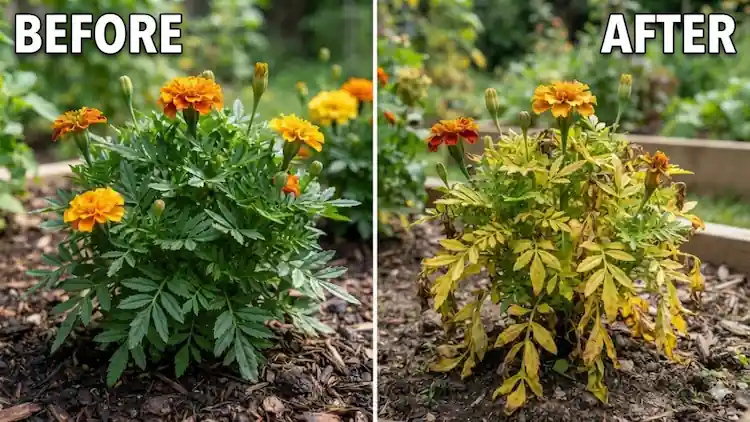
Why does one hydrangea turn crispy by July while the one across the fence looks perfect in the same blazing yard? It comes down to a few choices most people never hear about. So, can hydrangeas grow in full sun?

Short answer: yes, if you pick the right type and keep the soil moist. Plenty of gardeners write hydrangeas off for sunny spots because they only know the shade-loving kind. This guide covers which types handle heat, how to plant them, how to water and mulch them, and how to rescue one that is already burning.
What Full Sun Really Means for Hydrangeas
Full sun means at least 6 hours of direct light on the plant each day. The timing matters more than the number. Morning sun is gentle, while midday and afternoon sun is the harsh kind that scorches leaves and dries out roots.
Two beds can both get 6 hours and act totally different, one with sun from sunrise to noon and the other from noon to sunset. I tracked it with a notebook one summer, and it changed where I planted almost everything. Don’t panic if a spot gets a bit under 6 hours, because most sun types still bloom fine there.
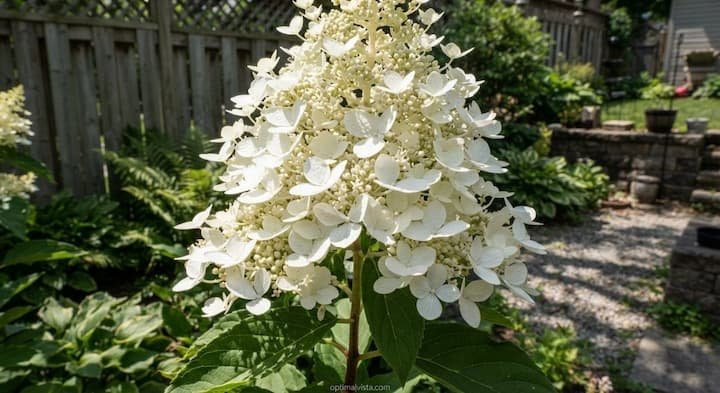
Can Hydrangeas Grow in Full Sun Where You Live
Your climate decides how much sun a hydrangea can take, so it comes down to right plant, right place. In cooler yards, sun-loving types handle all-day light easily. In hot yards, even tough ones want an afternoon break.
Heat matters too. Hydrangeas like temperatures between 65°F and 90°F, and past 90°F you will see leaf scorch and fewer flowers.
- Cooler yards (USDA Zones 3, 4, 5 and 6): panicle and smooth types usually handle all-day sun.
- Hot yards (USDA Zones 7, 8 and 9): give morning sun and afternoon shade, even to the tough ones.
The University of Connecticut’s Home and Garden Education Center says oakleaf hydrangea does well in full sun or partial shade and is the best choice for hot climates.
Full Sun Hydrangeas Compared by Type
Not every species handles heat the same way, so here is how the five main groups stack up.
| Type | Sun tolerance | Blooms on | USDA Zones | Best for |
|---|---|---|---|---|
| Panicle | Best choice, takes all-day sun | New wood | 3 to 9 | Hedges, hot spots |
| Smooth | Good in cool areas, needs afternoon shade in hot ones | New wood | 3 to 8 | Borders |
| Oakleaf | Handles sun and heat well | Old wood | 5 to 9 | Hot climates |
| Mountain (serrata) | Tolerates sun, stays small | Old and new wood | 5 to 9 | Edging |
| Bigleaf | Most sensitive, scorches fastest | Old wood | 5 to 9 | Cityline series in warm areas |
Best Hydrangeas in Full Sun: Variety Picks
Panicle types are the safest bet, and most sun tolerant hydrangeas come from this group. Silver Dollar and Pink Diamond are easy-to-find panicle options too. Gatsby Gal is the oakleaf that likes sun, and this oakleaf care routine works for it.
| Type | Variety | Size | Flower color | USDA Zones | Best for |
|---|---|---|---|---|---|
| Panicle | Limelight | 6 to 8 ft tall and wide | Green, then pink or burgundy | 3 to 9 | Hedge, privacy |
| Panicle | Little Lime | 3 to 5 ft tall | Green, then pink | 3 to 9 | Pots, small hedge |
| Panicle | Bobo | 3 ft tall | White, then antique pink | 3 to 8 | Pots, slow grower |
| Panicle | Pinky Winky | 6 to 8 ft tall and wide | White, then pink | 3 to 9 | Privacy, dry spells |
| Panicle | Quick Fire | 6 to 8 ft tall | White, pink, then deep red | 3 to 8 | Fall color, dwarf Little Quick Fire |
| Panicle | Candy Apple | 4 to 5 ft tall | Green, white, then red | 4 to 8 | Small gardens |
| Panicle | Moon Dance | 6 to 8 ft tall, 4 to 5 ft wide | White | 4 to 9 | Focal point, heat and humidity |
| Panicle | Vanilla Strawberry | 6 to 7 ft tall | White, pink, then red | 4 to 8 | Long bloom, red winter stems |
| Panicle | Strawberry Shake | 4 to 5 ft tall | White, then pink | 4 to 8 | Pots, foundation |
| Panicle | White Wedding | 4 to 6 ft tall, 3 to 5 ft wide | White | 4 to 9 | Long bloom time |
| Panicle | Little Lamb | 4 to 6 ft tall and wide | White, may turn pink | 3 to 8 | Cut flowers |
| Panicle | Sweet Summer | 4 to 5 ft tall | White, then pink | 4 to 7 | Mid-size beds, less heat tolerant |
| Panicle | Candelabra | 4 to 6 ft tall | White, then red | 3 to 9 | Pollinators, red winter stems |
| Panicle | Grandiflora (PeeGee) | up to 15 ft tall | Blush | 3 to 8 | Tree form |
| Panicle | Zinfin Doll | 4 to 6 ft tall and wide | White, pink, then red | 3 to 8 | Cold areas |
| Smooth | Incrediball | 4 to 5 ft tall and wide | White | 3 to 8 | Strong stems, new wood |
| Smooth | Invincibelle Spirit | 4 ft tall and wide | Deep pink | 3 to 8 | Rebloom, hedge |
| Smooth | Lime Rickey | 4 to 5 ft tall and wide | Light green, then darker green | 3 to 8 | Cut flowers, bees |
| Oakleaf | Gatsby Gal | 5 to 6 ft tall and wide | White, then pink | 5 to 9 | Fall color, fragrant, pots |
| Serrata | Tiny Tuff Stuff | 18 inches to 2 ft tall | Blue, pink or white | 5 to 9 | Edging, rebloom |
| Bigleaf | Cityline series | up to 3 ft tall | Red, pink or blue | 5 to 9 | Low borders |
The Cityline series is bigleaf that takes sun, though it needs a bit more patience and care than panicles.
It has five members:
- Paris: bright red flowers.
- Venice: pink flowers that fade to green, and it needs winter protection.
- Mars: blue or pink flowers with a white border.
- Vienna: pink or blue mopheads, and it handles road salt.
- Rio: blue or pink flowers with a blue or green center.
Shortlist by use:
- Pots and small spaces: Bobo, Little Lime, Strawberry Shake, Gatsby Gal, Tiny Tuff Stuff.
- Hedge or privacy screen: Limelight, Pinky Winky, Moon Dance, Quick Fire.
- Cold areas: Limelight, Pinky Winky, Incrediball and Little Lamb, all hardy to USDA Zone 3.
- Hot areas: Gatsby Gal, the Cityline series, and Pinky Winky, which is drought tolerant.
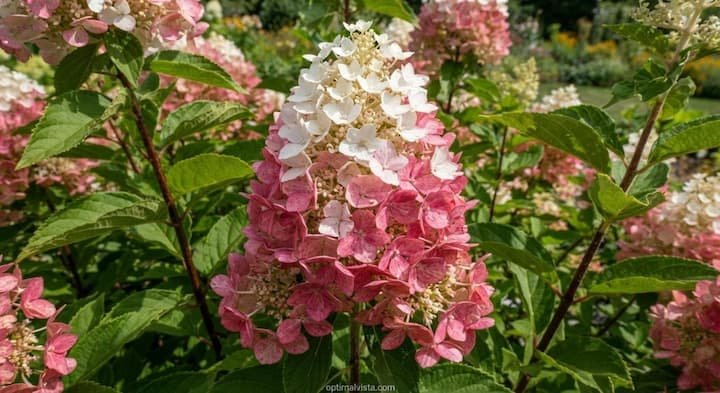
Problems Full Sun Can Cause
Most trouble with hydrangeas in full sun comes from heat and water, not the light itself.
Watch for:
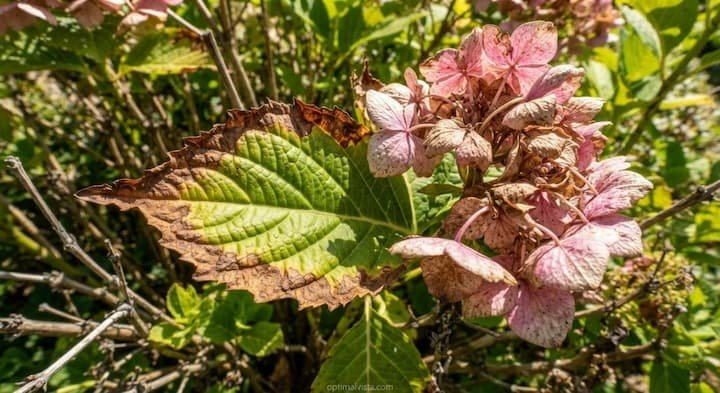
- Sun scorch: brown, crispy leaf edges and burned flower heads, and bigleaf types scorch first.
- Dehydration: wilted leaves, brittle stems and dropped blooms.
- Smaller, paler blooms: a stressed plant puts out fewer flowers, and the color can fade, and some people see blue blooms drift pink, though soil pH is the main driver.
Here is how I tell heat stress from thirst. A plant that droops at 3 PM but perks up by evening is just hot. One that is still limp in the morning needs water.
How to Plant for a Sunny Spot
Check the best planting time for your zone, since fall works well once nights cool off and before frost hits.
Then fix the soil: loam rich in organic matter is ideal, but sandy soil drains fast and bakes in the sun, and heavy clay can stay waterlogged.
Mix compost, leaf mold or well-rotted manure into the bed about 6 inches deep and roughly 3 times as wide as the nursery pot, because roots stay shallow and spread wide. Keep the soil moist but never soggy, with a pH between 6.0 and 7.0.
If your soil runs alkaline, elemental sulfur brings the pH down. Bigleaf and mountain types shift bloom color with pH.
- Plant on the east side of the house for morning sun and afternoon shade.
- Skip spots beside dark walls and paved driveways, since they hold heat and bounce it back.
- Buy sun tolerant hydrangeas, read the plant tag and ask a local nursery, since a sun label can still mean afternoon shade.
- Shade young plants with a sheer cloth from about 11 AM to 3 PM for the first season.
- Visit a garden center in summer to see the real size and color.
- Water young plants more often for the first year while roots settle.
Hydrangea Full Sun Care: Watering Done Right
Water is the whole game in a sunny bed. Once established, a plant needs 1 to 2 inches of water per week, and more during heat waves.
The finger test beats any schedule: push a finger in up to the first knuckle, and water if it feels dry. I like to water early, around 6 AM, and go slow so it soaks in. Deep watering pushes roots down and makes them tougher against drought.
- Cool or cloudy days: water every 2 or 3 days.
- Hot, sunny days: check the soil daily and give a big shrub about 2 gallons.
- Hot stretches: run a soaker hose or drip line slowly.
- Drooping leaves: give an extra watering that day.

Mulching Rules for Sunny Beds
Mulch keeps roots cool and stops the soil from baking hard and cracking, which makes water run off. It also cuts wind drying and helps rain soak in, and it can save a plant that is already heat stressed.
- Timing: spread it in spring and again at the end of July.
- Depth: 2 to 4 inches deep.
- Gap: keep it about 6 inches away from the stems so they don’t rot.
- Don’t dig it in: just lay it on top.
- Compost, leaf mold and rotted manure: they hold water and feed the soil.
- Bark and wood chips: they last longer and cost less.
- Gravel and rock: skip them, since they dry the soil out.
- Hydrangea full sun care is mostly moisture control, so top up thin mulch before summer peaks.
Gardeners argue about the material, but my pick is compost first, then bark on top.

Shade Cloth and Other Ways to Protect Plants
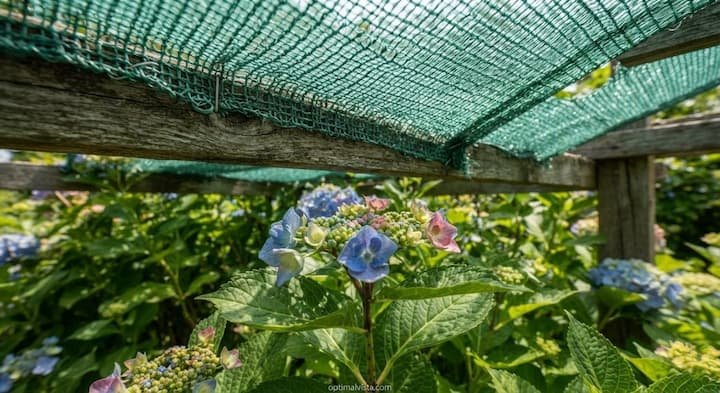
- Shade cloth: 30% to 50% cloth over a trellis or frame lets light through but cuts the scorch.
- Kaolin clay spray: makes a thin white barrier on leaves, and you reapply it every 7 to 10 days or as the label says.
- Natural shade: a house, fence, trellis or tree can block the worst afternoon rays.
- Pots: roll them out of afternoon sun.
- Combo: mulch and shade together protect hydrangeas in full sun better than either one alone.
A trellis with cloth or a retractable shade looks tidier than a big frame, and a light-colored south-facing wall beats a dark one as a sun break.
Fertilizing Without Burning Roots
Feeding is the easy part of hydrangea full sun care, because less is better in hot weather. Use a balanced fertilizer like 10-10-10 at the label rate, feed during the growing season, and skip the hottest weeks when the plant is already stressed.
Too much in dry heat burns roots, and the right fertilizer guide helps you choose. A soil test every year or two shows if pH needs a nudge, since high pH can cause iron problems.
Pruning and Deadheading in the Sun
What you cut depends on when the plant sets buds. Panicle and smooth types bloom on new wood, while bigleaf, oakleaf and mountain types bloom on old wood, so cutting at the wrong time removes flowers.
See pruning timing for the full schedule and Limelight pruning for the most popular sun type. In my experience, panicle types forgive late pruning more than bigleaf types do.
- New wood bloomers (panicle, smooth): prune in late winter or early spring.
- Old wood bloomers (bigleaf, oakleaf, serrata): trim only broken branches or shape, right after flowering.
- Tiny Tuff Stuff: blooms on old and new wood, so it needs hardly any pruning.
- Deadheading: snip spent blooms just above a growth node with clean pruners, which is optional but tidy.
Sun Tolerant Hydrangeas in Pots and Planters
Pots dry out faster than the ground in sun. This guide on growing in pots has the full walkthrough. In fall, push the pot against the house or into an unheated garage once nights hit 32°F, because roots freeze faster in a pot than in the ground.
- Use a pot at least 15 to 18 inches wide, with drain holes.
- Pick compact types like Bobo, Little Lime, Strawberry Shake or Gatsby Gal.
- Check moisture every day in hot weather.
- Keep the pot out of afternoon sun.
Winter Care and Cold Hardiness
Most sun types are hardy in USDA Zones 4, 5, 6, 7 and 8, and many panicle types go down to USDA Zone 3. Old wood types like bigleaf need more winter care because cold can kill their buds, and a late frost after buds open is the real danger. This late frost protection guide covers it.
Check your hardiness zone on the USDA Plant Hardiness Zone Map before you buy.
- Buy plants rated for your USDA zone.
- Wrap old wood types in burlap or a frost blanket in harsh winters.
- Throw a sheet over the plant when 32°F is in the forecast after buds open.
- Keep mulch over the roots through winter.
Signs of Too Much Sun
- Crispy brown leaf edges.
- Wilting that doesn’t recover by evening.
- Bleached or faded blooms.
- Slow growth and small flowers.
Fix it with shade, deeper watering and fresh mulch. If the plant still struggles after a full season, move it to an east-side spot in fall.
Rescue Plan for a Struggling Plant
Already planted in a bad spot? Follow this order, and the guide on how to revive a plant goes deeper.
- Put up temporary shade, like a sheer cloth or shade cloth.
- Water deeply and more often, and add mulch.
- Cut off dead or scorched growth.
- Be patient, because recovery can take several months.
- Move it to a shadier spot in fall if it keeps declining.
Pests and Problems in Hot Weather
- Spider mites: fine webbing under the leaves, so hose them off or use insecticidal soap.
- Powdery mildew: white powder on leaves, so give plants air space and water at the base.
- Root rot: soggy soil from overwatering, which looks like wilting even though the ground is wet.
What Happens With Too Little Sun
The opposite problem is real too. Full sun hydrangeas still need several hours of direct light to set flowers. In heavy shade you get leaves, few blooms and leggy stems stretching toward the light.
If yours is all leaves, read why it won’t bloom. And in a mostly shady yard, shade loving types fit better than forcing a sun variety.
Companion Plants and Design Ideas
Sun-loving perennials like coneflowers, black-eyed Susans, daylilies and ornamental grasses make good neighbors, and this list of companion plants has more.
A few design ideas:
- A Limelight hedge as a privacy screen along a fence.
- One big shrub in the center of a bed as a focal point.
- Little Lime or Bobo in foundation plantings or in front of a patio.
- A mass planting of one variety along a border, or a mixed border with sun perennials.
- Cut or dried blooms for a wreath or centerpiece.
I favor planting three of the same variety together, since odd numbers look natural.
Common Mistakes to Avoid
- Planting bigleaf in a blazing west-facing spot.
- Giving light sprinkles from above instead of deep watering.
- Skipping mulch, or piling it against the stems.
- Leaving a new plant in the sun without any shade.
- Overwatering until the soil stays soggy.
- Trusting the label on full sun hydrangeas without checking your zone, since even tough ones need afternoon shade in hot areas.
Conclusion:
So, can hydrangeas grow in full sun? Yes, and panicle types make it the easiest. Match the type to your climate, amend the soil, mulch twice a year, and water deep. Give young plants shade their first summer, and move any plant that keeps scorching. Pick one variety from the table and plant it this fall in your backyard.